Table of Contents
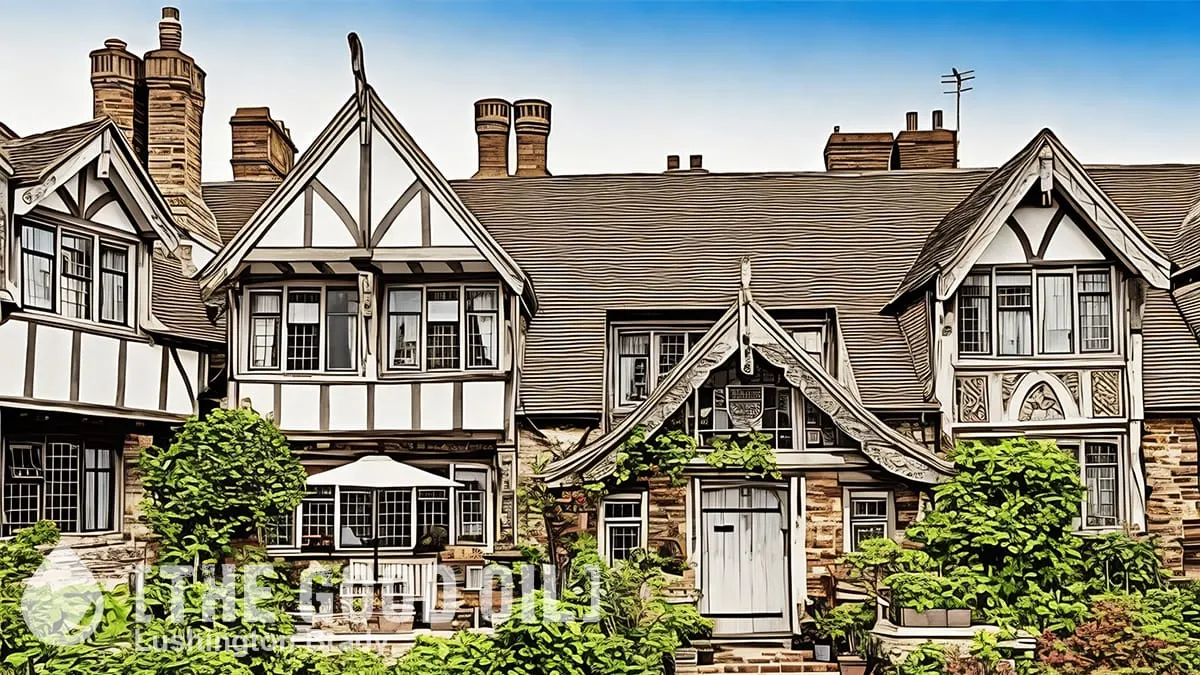
It’s the original murder-mystery board game: Cluedo or Clue, depending on which side of the Atlantic you’re on, which is kind of appropriate, given its Transatlantic origins: invented by an American and inspired by a real English mansion known as Tudor Close.
Despite its name, Tudor Close was built in the 1920s in the seaside hamlet of Rottingdean, East Sussex. Consequently, it’s a mix of Tudor beams, Art Deco elements and a whole lot of of stately English charm. And not to mention, filled with nooks, crannies and even a secret passageway. Just the place for a murder. Or so thought travelling pianist Anthony E Pratt.
Conceived as a project to keep craftsmen employed during the Depression, in the 1930s, Tudor Close was a hotel patronised by the glamorous stars of the day, including Cary Grant, Bette Davis, Errol Flynn and a young Julie Andrews. And, possibly, Anthony E Pratt.
While there’s no evidence that Pratt performed at Tudor Close specifically, the original subtitle of his game suggests that he was at least familiar with the mansion. The title read: “Murder at Tudor Close” […]
In the 1920s and 1930s, Pratt traveled to mansions, hotels, and cruise ships and played piano to entertain party guests. But music was just one part of the entertainment. At the time, parties often also featured a murder mystery game. These games fit in with another interest of Pratt’s. According to the Times, Pratt was a fan of mystery novels like those by Raymond Chandler.
When World War II began, Pratt found himself with more time on his hands. And so, during blackouts in Birmingham, he and his wife Elva started designing a board game in order to pass the time.
Drawing on his memories of the posh English country homes he’d performed in and his beloved mystery novels, Pratt came up with the famous assemblage of characters and murder weapons, including, originally, a bomb and a poison-filled syringe. The characters also originally included Mr Brown, Mr Gold, Miss Grey, and Mrs Silver, who were ultimately discarded. Keeping up the colour theme, ‘Colonel Yellow’ was changed to Colonel Mustard, avoiding connotations of cowardice in the US. Similarly, Reverend Green was changed to Mr Green in the US.
His wife Elva designed the board, basing it on Tudor mansions – including, as the game’s original subtitle suggested, one particular house: “Murder at Tudor Close”.
Beside dropping the subtitle, the Pratts also dumped the original, rather blunt, title: Murder! The title Cluedo is a portmanteau of ‘clue’ and ludo, Latin for “I play”. In the US, of course, it’s just called Clue.
They patented the game in 1944, though it wasn’t sold until 1949 due to wartime restrictions.
As of 2025, over 150 million copies of the game have been sold, and Clue even inspired a cult classic 1985 film. That said, Anthony E Pratt did not see much of the profit, as he had sold the rights for the game for £5,000 (about $14,000) in 1953. But he didn’t seem to regret any of it.
“A great deal of fun went into [the game],” he once remarked in an interview. “So why grumble?”
As for Tudor Close, it was converted to a private residence in the 1950s. It was last put on the market for $1.3 million dollars in 2021.
For the record, no: no one was ever actually murdered there.