Table of Contents
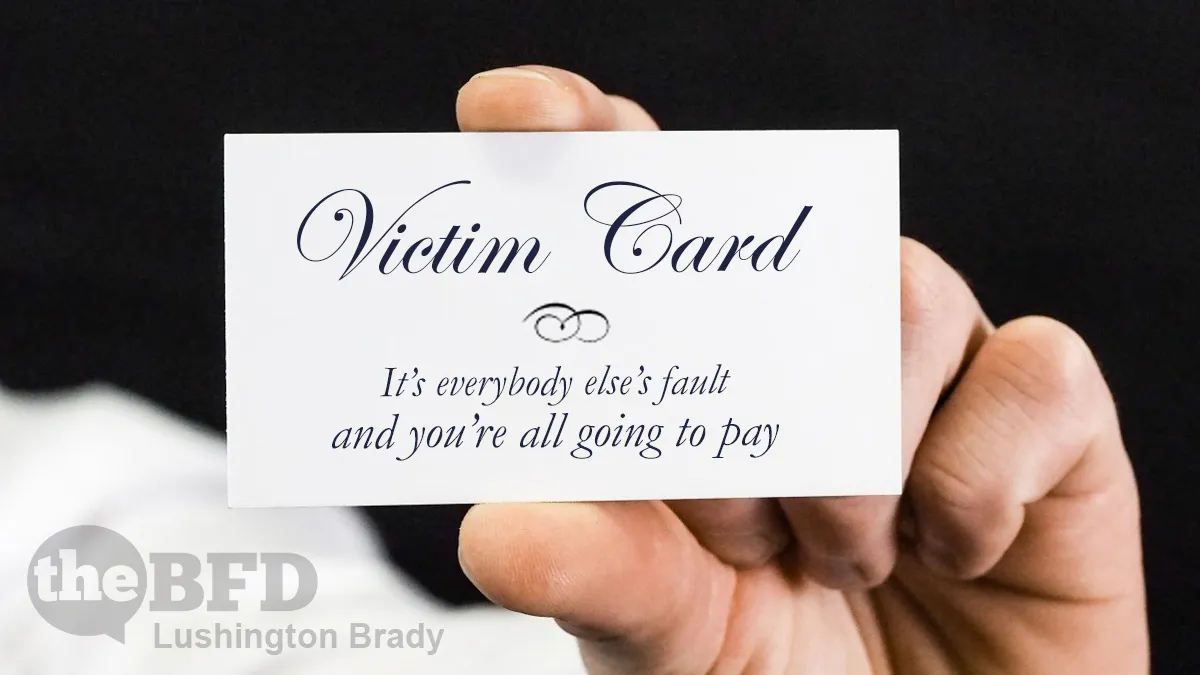
We cynics who refuse to subscribe to “progressive” ideology often dismiss leftists as addicted to victim mentality.
It turns out that “victim mentality” may well be a very real thing. Two of its key characteristics are moral elitism, coupled with attention-seeking and a lack of empathy. Those who suffer from it tend to be insecure and vindictive.
Is any of this ringing any bells?
A new personality construct has been defined that describes people who persistently see themselves as victims within interpersonal conflicts. The research was published in Personality and Individual Differences.
Study authors Rahav Gabay and team describe how the social world is satiated with interpersonal transgressions that are often unpleasant and seemingly unwarranted, such as being interrupted when speaking. While some people can easily brush off these moments of hurt, others tend to ruminate over them and persistently paint themselves as a victim. The authors present this feeling of being the victim as a novel personality construct that influences how people make sense of the world around them.
The researchers call it the Tendency for Interpersonal Victimhood (TIV), which they define as “an ongoing feeling that the self is a victim, which is generalized across many kinds of relationships.”
I’m often very wary of social “science” research, especially psychological studies which too easily seem to confirm one’s prejudices.
On the other hand, the left in general really do invest a lot of currency in assumed victimhood. To be a victim, they seem to believe, is to assume automatic moral superiority.
A suspicion which, in fact, this study supports.
An initial three studies established the TIV as a consistent and stable trait that involves four dimensions: moral elitism, a lack of empathy, the need for recognition, and rumination. A follow-up study further found that this tendency for victimhood is linked to anxious attachment — an attachment style characterized by feeling insecure in one’s relationships — suggesting that the personality trait may be rooted in early relationships with caregivers.
Next, two studies offered insight into the cognitive profile of those with TIV[…]
Interestingly, the two studies found that those who scored higher on the measure of TIV were more likely to desire revenge against the person who wronged them.
Black Lives Matter, anyone?
The authors suggest that it would be particularly interesting for future studies to explore what happens when people high in TIV are in positions of power. The researchers wonder whether leaders with this persistent tendency to see themselves as a victim might feel more inclined to behave “in a vindictive way.”
PsyPost
Which would certainly explain the behaviour of the American left in particular, especially as they prepare to assume power.
Please share this article so that others can discover The BFD