Table of Contents
What the Climate Cultists don’t get would fill volumes, but there’s a couple of biggies that have truly awful consequences in the real world.
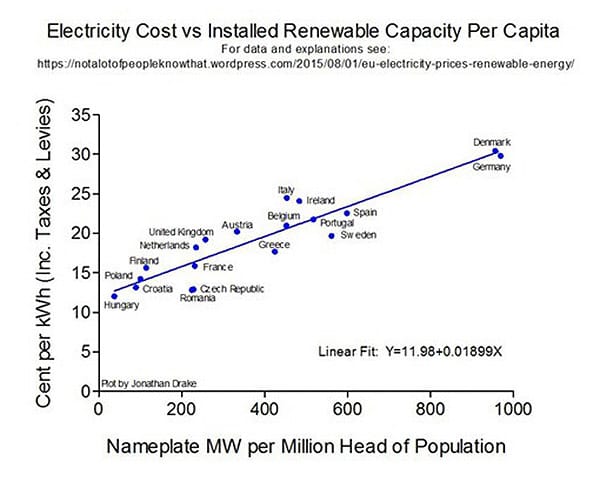
Firstly, the utter refusal to ever admit the staggering cost of ‘Net Zero’. Despite incontrovertible evidence from, well, everywhere in the world that’s tried it, that the degree of penetration of intermittent generation technology like wind and solar directly corresponds to a rise in household electricity bills, the Cultist denial is impenetrable. Rather than admit the obvious, they resort to ever-more-bizarre circumlocutions, such as blaming the rising bills on coal-fired power stations, despite the obvious fact that, when all power was coal-fired, electricity was orders of magnitude cheaper.
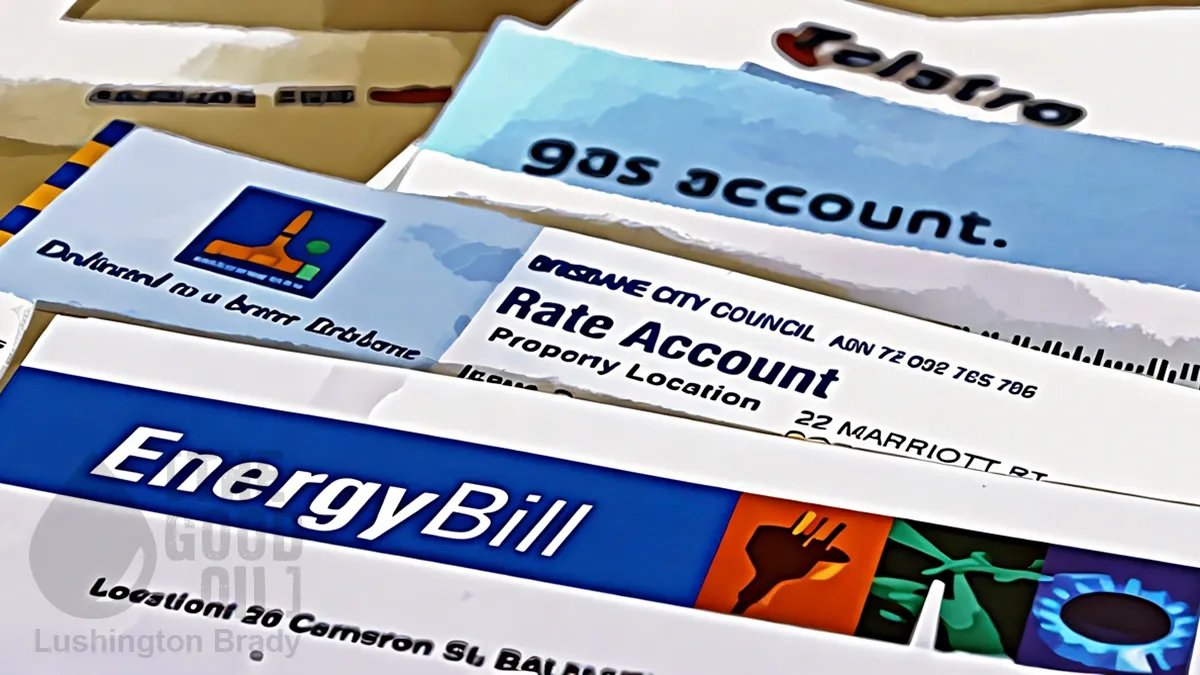
The second most damaging biggie is the complete inability to comprehend that, when the cost of energy goes up, the cost of everything goes up. We first saw this in Australia with Julia Gillard’s carbon tax: within months, small businesses were facing going to the wall by spiralling costs imposed by the carbon tax.
It’s happening all over again, with Labor’s obsessive drive for ‘Net Zero’.
A long way from overseas COP conferences and a parliament bickering over net zero, there is a baker in suburban Brisbane shutting down her third outlet, a mobile phone repairer in western Sydney cutting her staff’s working hours and an environmentally friendly brewer in inner-city Melbourne who’s trying to avoid passing on surging costs to his punters.
Remember: when the cost of energy goes up, the cost of everything goes up.
Across the country – from big businesses to small, from deep Labor and Green territory to what’s left of Liberal heartland – these are the people at the heart of Australia’s electricity price crisis, the people who were promised that their power bills would be going down in 2022.
And who were foolish enough to fall for it.
With Chris Bowen now balancing the responsibility of charting a difficult energy transition at home with his new role as the world’s primary climate negotiator ahead of COP in Turkey next year, business owners have told the Australian how they are trying to survive day-to-day while facing power bill blowouts of up to 40 per cent.
Well, you get what you vote for. Consider the businesses profiled here: hairdressers, boutique bakeries, an “environmentally and socially conscious brewery” and a mobile technology company whose website boasts of their ‘ESG metrics’, “including climate change and greenhouse gas emissions”. Who do you think these people voted for and will keep voting for, even as the policies they vote for bring their businesses down around their ears?
Because, when the cost of energy goes up, the cost of everything goes up. How many times will it take for the message to sink in?
Clearly, many, many times.
Cathy King is the owner of hairdressing business Toni&Guy, which has 22 salons across Sydney […]
Asked what she would like to see happen about energy prices, Ms King said in a “perfect world” she would “combat” rising electricity bills with solar.
“At home we’ve got solar on the roof,” she said. “But, as a business when you’re renting a premises, it’s not really possible.”

For Kylie Scott, who owns popular Brisbane bakery Flour & Chocolate with her husband Lachlan, the cost of electricity is “right up there with one of our biggest costs”.
When the of cost energy… you know what, never mind. I give up.
Cameron Kenley is the proud owner of food distributor Cadell Food Services, which is based in Echuca, in regional Victoria, and Melbourne […]
Mr Kenley said Australia, which once had some of “the cheapest energy in the world”, was now one of the most expensive places for electricity.
“At one stage, manufacturing was able to survive here because we had cheap electricity,” he said. “Now it seems like we’ve changed that dynamic.”
How have we changed that dynamic? What have we changed? Are we ready to put two-and-two together, yet, people?