Table of Contents
We tend to think of mass shootings and terror attacks, especially of the Islamic kind, as modern phenomena. But, in Australia, both have a history going back over a century. The first Islamic terror attack in Australia took place at Broken Hill in 1915, when two Muslims opened fire on a passing picnic train, killing four people and wounding seven. The pair were answering the call to jihad from the Ottoman Sultan.
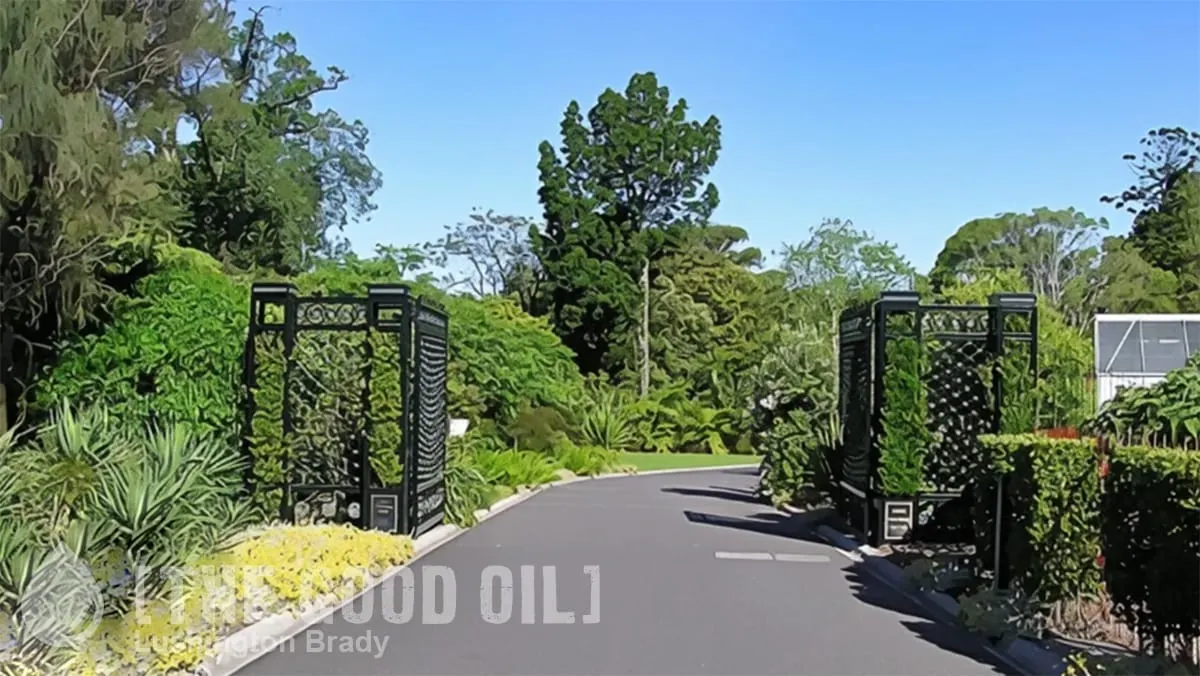
Mass shootings in Australia go back to the 19th century, but one of the earliest and deadliest random spree killings took place in Melbourne in 1924. Setting a kind of bloody template for the more infamous shootings in Melbourne in the 1980s, at Hoddle Street and at Queen Street, five people were gunned down in minutes as they enjoyed a lazy summer afternoon in the city’s sprawling botanical gardens. Four of them died.
At the botanical gardens, the afternoon was like any other. Hundreds had visited that day before heading home for tea while those living in the vicinity enjoyed a quite read in the pleasant surroundings; amongst them was Frederick William McIlwaine (c1849–1924) a widower of St Ives – Toorak Road, South Yarra who was reclining on his arm while sitting under a cypress tree on the eastern lawn. McIlwaine, described as “5 feet 7 inches high, with thin features, grey hair and a small grey moustache” was a native of Londonderry, Northern Ireland. Throughout the gardens were family groups scattered about the lawns having a picnic party taking advantage of the summer closing time at sunset (7:40pm); people such as Mrs Eugene Strohhaker (c1885–1924), of 29 Hardy Street, South Yarra with her three children enjoying a meal with Mrs Marie Parry aged 42 of Coventry Street, South Melbourne and her 11-month adopted daughter.
A few hours earlier, Norman Alfred List, a returned soldier went shopping for a rifle in the city. At a Bourke St gunsmiths, he purchased a 1894 model US-made Martin .44 repeating rifle. List, described by shop assistants as “calm and sane”, said he was “going into the backblocks and would use the rifle shooting kangaroos and wallabies”. The purchase took about 20 minutes. A short time later, List bought a box of 25 .44-calibre soft-nosed Winchester cartridges at another shop.
By 4.30pm he was armed and ready.
At the corner of Park Street and the Domain Road entrance, the man alighted the cable tram carrying the parcel and other items before entering the gardens through gate “D”. He walked a short distance to a group of thick trees near the first plot of grass on the eastern lawn, unwrapped the brown paper parcel and proceeded to load the gun. It was about 6:30pm.
Advancing behind the trees, he first shot Mrs Strohhaker as she sat crocheting on the lawn, while her children were washing under the tap nearby. She died instantly. His next victim was Mrs Parry, who was wounded in the jaw while sitting on a seat reading. The gunman then quickly moved east, toward a clump of trees.
Sitting nearby under a tree was 35-year old Miss Miriam Podbury, legs crossed reading a book with an attaché case containing some food enjoying a day off from work as a parlourmaid. She was killed with a bullet to the neck. Knelling [sic] down and levelling his gun north-east towards Tennyson lawn, the man fired across open lawn hitting McIlwaine in the chest who was about 50 yards away sitting on a seat. With little delay the gunman crawled behind a bed of flowers, crossed the footpath leading to gate “C” and took aim at Mrs Maud Moxham who was with her husband John (Melbourne General Cemetery) and children in a shady nook on the lawn near the Anderson Street rockery. She screamed on seeing the man and managed to dodge the line of fire each time it was pointed at her until the gunman aimed at her husband who had not had time to seek shelter wounding him in the back and hand.
John Moxham died of his wounds four days later.
By now the alarm was raised and bystanders were descending, frightening the gunman off. He ran into nearby bushes, dumping the gun and bullets, before climbing an iron fence and escaping.
The whole thing took just four minutes.
The death toll could have been higher: a Melbourne detective who later tried firing the rifle found that it was defective.
Special-constables Ward and Munroe were amongst the first to reach the scene (“It was pitiful to see the children running about crying, terrified at the scene around them”) and by 9:00pm some 150 constables were in the vicinity; one of the largest man-hunts ever conducted had begun. Less than 48 hours the police had issued a detailed description of the suspect:
“Age 31 years, looks about 26 or 27 years; 5 feet 2 inches in height of medium build, good shoulders, small at the waist, high cheekbones, upper portion of teeth and mouth prominent, a large mouth, well-kept teeth, a large number of teeth in upper and lower jaws crowned and filled with gold: dark complexion, brown eyes, thin nose, with a lump just below the bridge, black hair; not of very smart appearance wearing a dark grey suit (clerical grey) of rough material, dark grey hat, and stripped cotton shirt. Generally wears soft collars and board-end ties, and brown boots. Never wears watch, chain or rings.”
Despite a massive manhunt, List disappeared. Nine days later, an orchardist named Charles Johnstone was picking bracken fern for his hens on the Deep Creek, some 60 km away, at Pakenham. Johnstone noticed flies swarming and went to investigate. Near a pool of water he found a body that turned out to be Norman List. List had suicided by slitting his left wrist.
It was not the first time the List family had been involved in a shooting. In 1915, Alfred List’s brother Wilfred shot one Hugh Bell, engaged to marry List’s sister. Bell was shot in the back of the head while working on the family’s property at Cockatoo, in the Dandenong Ranges outside Melbourne. Despite Wilfred giving conflicting stories as to what happened, the shooting was ruled accidental. A further court case arose because the List family would not return the belongings of Bell to his family.
Alfred List was described as being introverted, scholarly and a hard worker, but also possessing a persecution complex. No explanation was ever found for his murder spree.