Table of Contents
Daniel Hirst
amateurreviewspace.com
Information
Opinion
Within the health policy literature, the preferred approach to managing the competing tensions between individual liberty and collective good has in recent times been “nudging”. This approach involves persuading, or influencing, people to act in a certain way by making use of their cognitive tendencies, including inbuilt biases. The theory was popularised by the book Nudge: Improving Decisions about Health, Wealth, and Happiness by Richard Thaler and Cass Sunstein, and gained a deep foothold in public policy development with the formal creation of the Nudge Unit within the UK government.
Nudge was presented as a middle position located between coercion (paternalism) and libertarianism, and is also called “libertarian paternalism”. By coercion I mean forcing individuals either to do or not to do something that is deemed for the collective or the particular individual’s good under the threat of punishment; for example, alcohol and tobacco prohibition, and forced vaccinations.
At the other end of the spectrum is the libertarian position, which is broadly aligned with John Stuart Mill’s harm principle, arguing the state should not interfere with an individual’s private behaviour unless they physically harm another person without their consent: according to this view, people are allowed to take risks, such as driving vehicles, boxing, and drinking large amounts of alcohol, and the state should not force individuals into behaviours it deems good for the individual or society as a whole.
Proponents of “nudging” argue that society can avoid the reduction in personal freedoms and the negative impacts of mandates and prohibitions, including black markets and social division, by influencing behaviour rather than forcing people to act in particular ways under the threat of punishment.
They argue that humans have a series of cognitive biases that can be used to successfully nudge them towards behaviours without resorting to coercion. Such cognitive tendencies include: the ‘status quo bias’, where we are likely to stay in a program such as health insurance if we have to opt out of it rather than opt into it; being more likely to do something if everyone else is doing it: the ‘herd mentality bias’; and the tendency to judge the likelihood of an event in proportion to the ease in which this event comes to mind: the ‘availability heuristic’. The authors of Nudge are behavioural psychologists, and use evidence from their field to make their case.
We see examples of nudging all around us, and in many ways now take its existence for granted. For example, processed sugar intake puts a strain on both the individual’s body and the healthcare system, but instead of criminalising its intake, legislation is passed so supermarkets cannot put sweets near the checkout, and healthy eating is encouraged via media campaigns. Alcohol consumption is allowed, but limitations are placed on how many bottle shops are allowed in certain regions, or in some global regions, such as Scandinavia, caps are placed on how much one person can buy at any given time.
The argument gets tricky when the risk of physical harm an individual is taking is excessive in relation to the benefits of non-interference, particularly when it involves potential harm to another. We have agreed that drinking alcohol over a particular level and then driving sits in this category, although not everyone who drives drunk causes a car accident. The risk of harm from driving drunk is too great and the drawbacks of the prohibition are non-existent.
However, we have not mandated the influenza vaccination, as those who want to get it can get it, and the threat posed to others from being unvaccinated is deemed not to warrant coercion. We also allow individuals to drive motor vehicles even though they pose a physical risk to themselves and others in doing so, but we make them drive with a seatbelt under threat of penalty, and prohibit them from driving over particular limits.
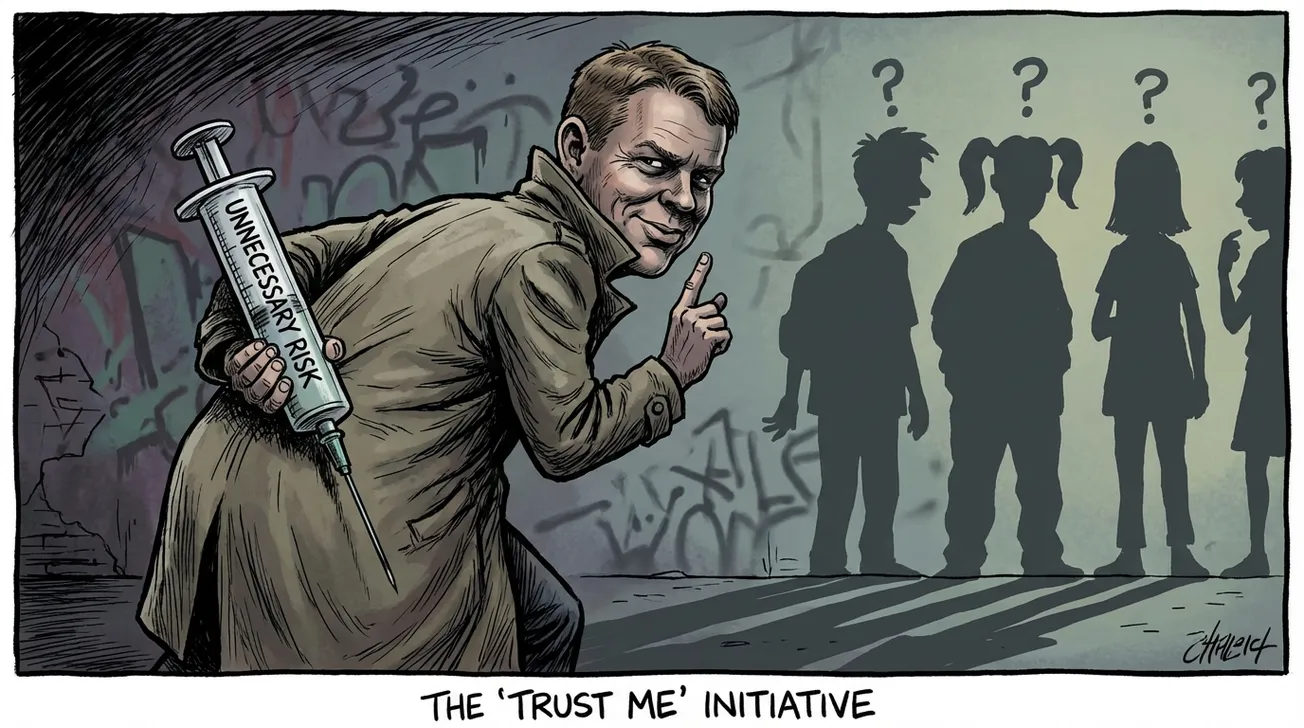
I would argue that during the recent COVID pandemic, humanity witnessed the most aggressive example of nudging ever witnessed, which led to a loss of perspective around the trade-off between the acceptance of risk and the demand for greater restrictions. This is a conclusion supported by a group of 40 psychologists in the UK who wrote an open letter criticising the Nudge Unit for instilling excessive fear in the population. In the letter they note:
More disturbingly, the inflated fear levels will have significantly contributed to the many thousands of excess non-Covid deaths that have occurred in people’s homes, the strategically-increased anxieties discouraging many from seeking help for other illnesses…
Government scientists deploying fear, shame and scapegoating to change minds is an ethically dubious practice that in some respects resembles the tactics used by totalitarian regimes such as China, where the state inflicts pain on a subset of its population in an attempt to eliminate beliefs and behaviour they perceive to be deviant.
Criticism has even come from the group’s co-founder Simon Ruda who accused the Nudge Unit of using propagandistic modelling and data, with an emphasis on worst-case scenarios. Ruda argues that such techniques led to a fear-driven feedback loop in decision-making. It is a curious fact that given the intensity of the nudging involved that governments also decided to mandate. Large amounts of the population were already willing to take vaccines and wear masks due to the psychological techniques deployed on them, so it was hardly necessary to use coercion.
According to Ruda’s theory, opinion polls drove the escalation in that the more fearful the population was driven, the more restrictions they wanted, which in turn drove further government action. One may speculate whether such momentum towards mandates was designed from the outset via the initiation of the fear-driven loop.
In policy-making, one quality that is always preferred is proportionality and a two-sided debate. Without this, citizens begin to question the intentions of those making the decisions, and many feel unfairly treated. The example of the Nudge Unit presented above gives some indication as to how such extreme measures were accepted, and why many individuals were so disproportionately terrified of catching what was/is for most a relatively-benign virus.
There was also no attempt to provide balance in terms of those that were dying with COVID versus those dying of COVID, nor between COVID and other causes of fatalities. Moreover, those individuals that believed greatly in the efficacy of the vaccines demanded other people have them too, when according to their own logic they should have felt safe.
Either to drive up vaccination, accept lockdown measures, or to advance the case for mandates, it was determined that fear was necessary to get people to abide by the public-health measures governments required of its citizens. However, the desire to advance fear necessitated the shunning and demonising of those that attempted to present any information or way of thinking that departed from the fear-based model. The divisions and hurt caused by the gas-lighting, labelling and suppression during the last two years will have repercussions that live on beyond the end of the pandemic narrative.