Pretty much any time One Nation leader Pauline Hanson opens her mouth you can guarantee that a deafening chorus of demented screeching from the shrieking left will ensue. Hanson could say that water is wet and the dementoids would bellow that water is really dry and that any claim to the contrary is racist misinformation.
The howler monkeys of the left went into an especially deranged outbreak, though, when Hanson asserted that domestic violence is a “two-way street”. As always, the last thing that any of them bothered to ask was: is she correct? Who cares, when there’s offence to be taken? Because, the simple fact is that Hanson was neither justifying domestic violence – she explicitly stated, “It is wrong” – nor was she wrong.
Naturally, of course, the legacy media trotted out ‘experts’ to clutch their pearls. But, as is so often the case, there’s a vast gulf between ‘expert opinion’ and actual evidence.
A common finding in community-based IPV studies is that violence is frequently bidirectional, with both partners engaging in violence, a fact rarely highlighted by mainstream media.
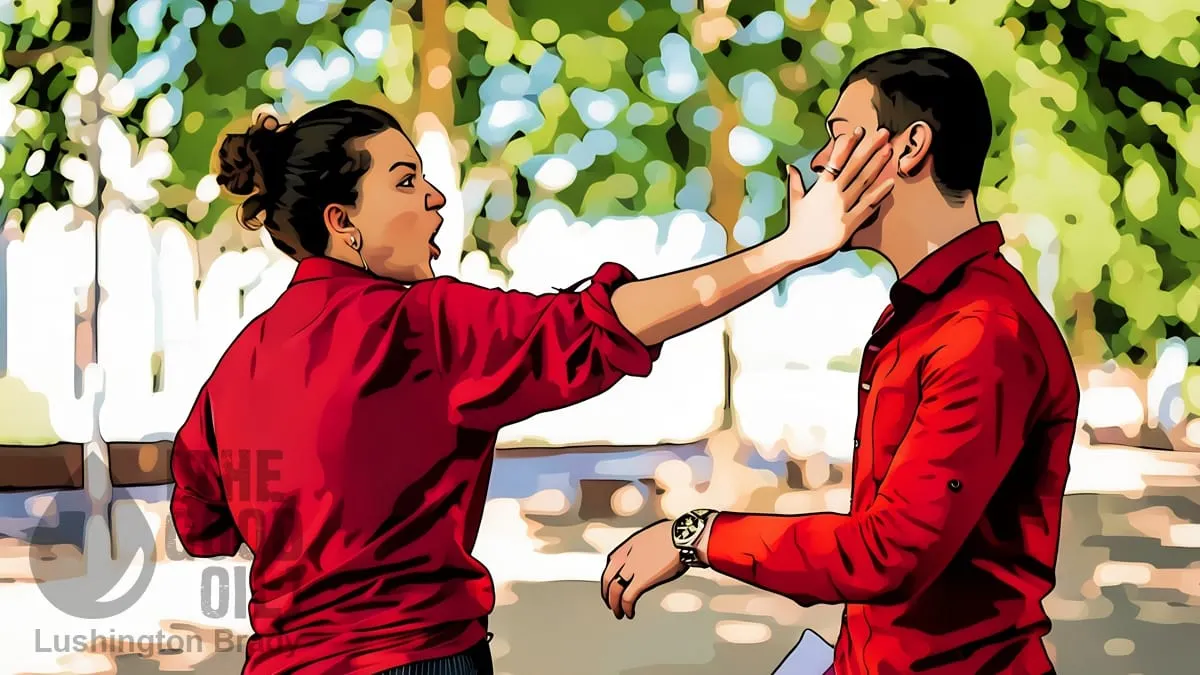
The Partner Abuse State of Knowledge Project 2025–2026 found 53 per cent of intimate partner violence was bidirectional, with female-perpetrated violence outstripping the male variety. Roughly 17.5 per cent of women and 10.6 per cent of men commit such acts – one in six women, one in nine men. This is not some fringe discovery cooked up by men’s rights cranks: it has held steady since the 2012 PASK reviews.
Professor Murray Straus, no friend of fashionable ideology, analysed two hundred studies and concluded men and women are equally likely to engage in domestic violence. Self-defence? Less than 15 per cent of female violence qualifies. Bidirectional violence is the most common pattern, followed by female-only then male-only. Severe violence and homicide remain rarer and more male-dominated, which is precisely why the activists fixate on the extreme end and pretend it is the whole story.
Understandably, the picture becomes more complicated when IPV is defined narrowly, focusing only on serious physical assault. These forms of abuse are more commonly perpetrated by men and are associated with greater physical injury and a higher risk of homicide, which is why the public conversation is skewed towards the politically convenient and easy-to-digest assessment that men are always villains and women are always victims.
That is the classic Appeal to Extreme. A tiny minority of either sex murder their partners. The vast majority of violence is committed by a very small cohort of serial offenders. Yet the shrieking class presents that minority as the universal male condition, while airbrushing female perpetrators out of existence. If men alone were responsible, one might reasonably ask why lesbian relationships consistently show the highest rates of intimate partner violence. Same-sex female couples top the charts for physical aggression in multiple studies: a data point that rather spoils the patriarchal power narrative.
Numerous studies report female perpetration of physical aggression, with some finding comparable perpetration rates between men and women, while others report that women commit domestic violence at higher rates than men. In cases of nonreciprocal violence, women accounted for over 70 per cent of violence, and in 80 per cent of cases where a man attended a behaviour change program, his female partner was the one who reinitiated violence. This highlights that in some cases involving women in behaviour change programs alongside their male partners could be vital, as most male violence rarely occurs in isolation.
Male victims exist in substantial numbers: they simply report far less often, deterred by stigma, disbelief and the near-total absence of services designed for them. Anecdotally, men who do turn to violence services report that blame-shifting is a common response. ‘You must have done something to deserve it,’ is the attitude.
The feminist framework that treats IPV as a one-way street of male power has captured the research grants, the advocacy industry and the policy machine. It secures funding by painting half the population as perpetual villains and the other half as perpetual victims. Acknowledging bidirectional violence and female perpetration does not diminish the suffering of female victims. It simply refuses to lie about the full picture.
Public policy should not be determined by the popularity or unpopularity of the person making a claim. Instead, each claim should be evaluated on its own merits against the available evidence.
Like her or not, Hanson is right. The evidence is not ambiguous. Relationships are messy. People of both sexes lose their tempers, throw punches and inflict damage. Pretending otherwise may soothe activist egos and keep the grant money flowing, but it does nothing to reduce the actual violence. Australia’s domestic violence debate will remain stuck in the ideological mud until it starts dealing with the data rather than the feelings of feminist activists filling in grant applications.