Table of Contents
With the death of Pope Francis, an ancient ritual is about to begin in the Vatican. The Papal Conclave, which traditionally convenes within weeks of a pope’s death, has evolved from its fairly informal beginnings in the centuries after the death of St Peter, acclaimed as the first pope even if he was never accorded that name, or even dubbed a bishop (or, in the original Greek, episkopos, or ‘overseer’).
Little is known of the first bishops of Rome. Traditions recorded within a few centuries of Peter’s life relate that he personally appointed popes Linus, Cletus/Anacletus, and Clement, as his successors. By the third century AD, legends record popes elected by acclimation of clergy and laity in Rome. Over the next half-millennium or so, as Christianity became the official religion of the Roman Empire, then of its putative successor, the gaggle of Germanic states which constituted the Holy Roman Empire, papal elections became much more nakedly political appointments.
By the 11th century, though, the College of Cardinals was designated the sole body of electors. In the 13th century, the process of locking cardinals in seclusion in a conclave (from the Latin cum clave, ‘with a key’) was established. The details of the process have continued to be adjusted, but the principle of locking cardinals in seclusion until a successor is chosen remains.
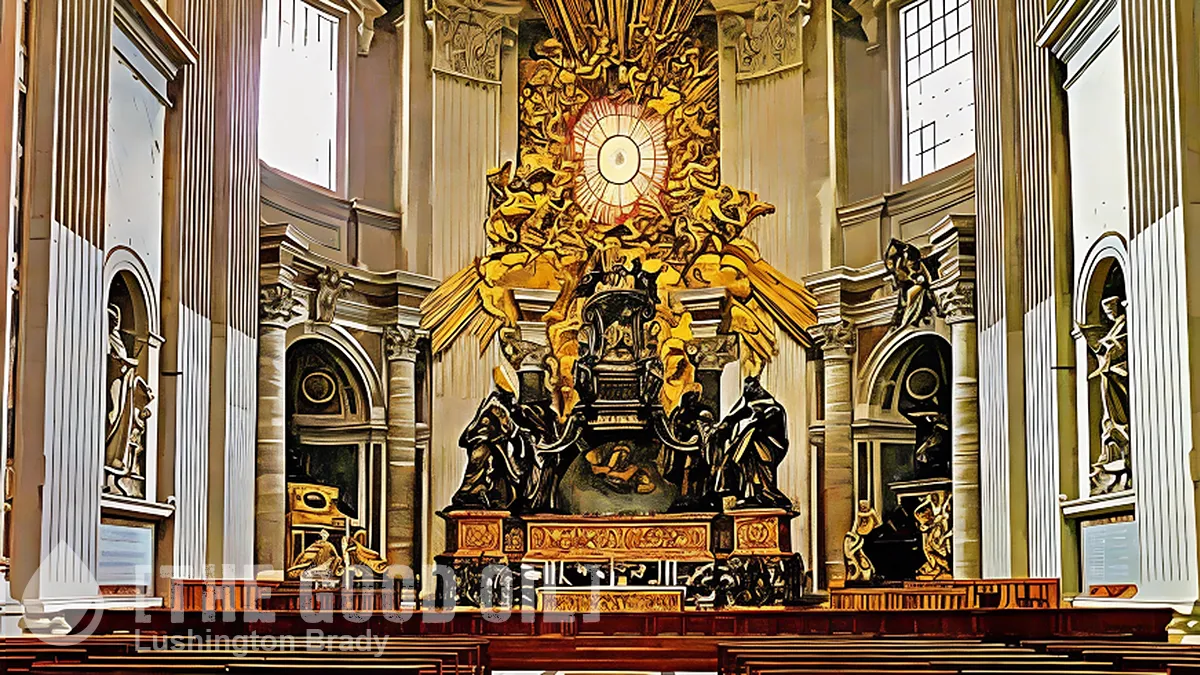
Following Pope Francis’ funeral, the conclave, a solemn and secretive process, will begin in the Sistine Chapel, with cardinals under the age of 80 voting in successive ballots until one candidate receives a two-thirds majority […]
Born in Buenos Aires, Argentina, on December 17, 1936. Pope Francis has remained a figure of both admiration and controversy for more than a decade.
While Europe has long dominated the papacy, growing attention is being given to candidates from the Global South, reflecting shifting influence within the Church.
So, who are the possible frontrunners, in a few weeks’ time? While many Catholics around the world openly yearn for a more traditionalist pope, Francis’ careful stacking of cardinals over the years means that his successor is likely to pursue the same left-leaning goals as their predecessor.
Cardinal Peter Turkson of Ghana is considered one of Africa’s most energetic and internationally respected church leaders.
The 76-year-old former Archbishop of Cape Coast was appointed cardinal by Pope John Paul II in 2003 and played a key role under Pope Francis as the head of the Pontifical Council for Justice and Peace.
While the earliest centuries of the church record three African popes – Victor I, Miltiades, and Gelasius I – all three were born in the Roman North Africa and are unlikely to have been black. Turkson would therefore not only be the first African pope in over 1500 years, he would also be the first black pope, which would certainly make some sense, given that Africa today is home to the majority of the world’s Christians, with the faith growing strongly in the continent over the past century, even in the face of brutal persecution by Muslims.
That’s the good bit.
Turkson is widely known in the church’s social justice circles as an advocate for climate change, poverty, and economic justice, and was sent by Pope Francis as a peace envoy to South Sudan.
Another front-runner is Luis Antonio Tagle, former Archbishop of Manila. For Catholic traditionalists, the ‘Asian Francis’ doesn’t offer much hope.
The 67-year-old is now Prefect of the Congregation for the Evangelization of Peoples at the Vatican. Considered a liberal cardinal, he has emerged as a passionate advocate for social justice and inclusivity, emphasizing compassion for the poor and marginalized.
Tagle’s election would mark another significant milestone in Church history, as he would become the first Asian pope.
And so it goes with a leading European candidate.
Cardinal Pietro Parolin, an Italian Catholic prelate, has been the Vatican’s Secretary of State since 2013 […]
He is widely regarded as an advocate for poverty, economic justice, and climate change.
Conservatives can hold out some hope for Hungarian Peter Erdo, like John Paul II, a child of the Soviet Bloc in Europe. Erdo has expressed hardline views of allowing divorced and remarried Catholics to receive communion, and dubbed Angela Merkel’s policies on ‘refugees’ as tantamount to human trafficking.
Other candidates include French Guinea’s Robert Sarah, Italy’s Matteo Zuppi, archbishop of Bologna, and Malta’s Mario Grech.
Sarah, another black African candidate, is, like many African Christians, staunchly conservative on many issues, including mass immigration. While Malta’s Grech advised the island’s Catholics to vote against legalising divorce in 2011, he allowed that divorced Catholics may be allowed communion, subject to stipulations. Grech has also spoken of extending Christian charity to homosexuals.
Finally, could there be an Australian pope?
A rank outsider is the church’s youngest cardinal, Ukrainian-born bishop of St Peter and Paul’s (my dad’s old church) in Melbourne, Mykola Bychok. Bychok was born in the former Soviet Union in 1980.