Peter Williams
Writer and broadcaster for half a century. Now watching from the sidelines although verbalising thoughts on www.reality check.radio three days a week.
There are no official records for New Zealand’s longest delay between a court hearing and the judgement.
High Court guidelines say judges expect 90 per cent of reserved decisions to be delivered within three months of the last day of the hearing. The Chief High Court Judge regards a reserved judgement as being “outstanding beyond a reasonable time” once six months have elapsed.
So where does that leave Justice Melanie Harland and her decision on the Ngāi Tahu Freshwater Statement of Claim hearing, which finished on April 4th last year?
That’s 16 months since the hearing ended. Although records on the longest delay are not kept, it’s entirely possible this is the largest time lapse ever between hearing and judgement in our judicial history.
With an election now less than three months away it’s entirely possible Her Honour will not be delivering anything this side of November 7th.
To recap: Ngāi Tahu were beneficiaries of a $170 million Treaty settlement in 1998 and subsequent top-up relativity payments of $276 million. That’s been invested in a variety of business and property ventures so successfully that Ngāi Tahu Holdings now has assets worth in excess of $2 billion.
But that’s not enough. They want more, and more.
In 2024 the iwi extracted at least $100 million from Meridian and Genesis so the power companies could continue using Waitaki River water to generate 16 per cent of the country’s electricity.
In recent weeks the Department of Conservation named Ngāi Tahu as the preferred operator for the Crown-owned Molesworth Station, the country’s largest farm.
Then in an eight-week hearing in the High Court at Christchurch early last year Ngāi Tahu asked that declarations be made giving Ngāi Tahu rangatiratanga over all freshwater in the iwi’s takiwā or region, effectively all the South Island apart from some areas around Nelson and Marlborough.
To quote the former Ngāi Tahu boss Lisa Tumahai: “Rangatiratanga is not ownership. Owning something means using it however you like. Rangatiratanga as a concept and a practice encompasses rights, responsibilities and obligations. And that includes the obligation to do what we can to stop the continued degradation of our freshwater systems.”
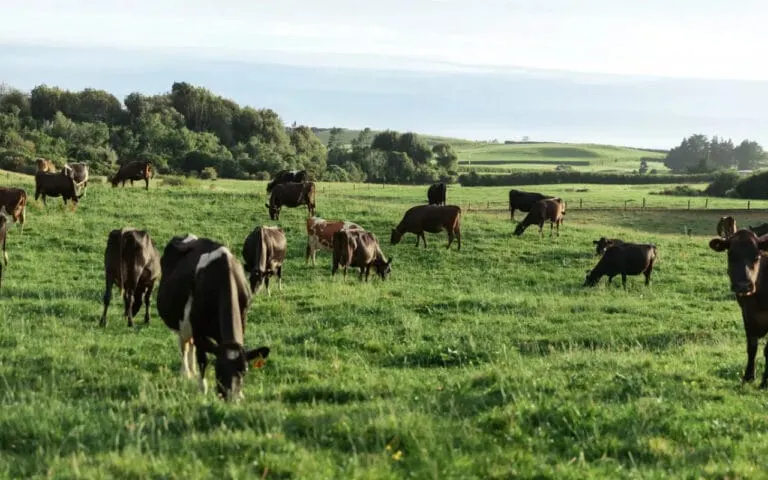
Ngāi Tahu believe that much South Island water has become polluted because of intensive dairying.
The case reported on 1News on August 9th of a school in Mid Canterbury having a nitrate level in its water supply of 11.5 milligrams per litre of water (mg/l) would reinforce that claim.
The World Health Organisation approved level for safe drinking water is 11.3 mg/l.
Some scientists claim that high nitrate levels in water cause both birth defects and colorectal cancer.
The claim by Ngāi Tahu is complicated from a scientific, environmental and political perspective.
That some rivers and lakes in the South Island have high nitrate levels cannot be denied. There are also some other rivers which are almost pure. I live beside the Clutha and we take our water from a bore 27 metres down in the Bendigo Aquifer. Our nitrate level is a negligible 0.114 mg/cubic metre or 1000 litres, and that’s with a 2,800 hectare corporate dairy operation about 40 kilometres upstream near Hāwea.
But the braided rivers of the Canterbury Plains are under severe pressure from the intensive dairying operations, which have converted the traditional Canterbury mixed-farming operation that prevailed till the 1990s.
As of the 2023/24 season there were 1200 dairy herds in Canterbury making up 971,500 milking cows and 280,500 effective hectares of dairy production. The average of 3.4 cows per hectare is significantly higher than the New Zealand average of 2.7.
Canterbury now has about 17 per cent of the country’s entire dairy farming land. But then we’re talking about the country’s largest export earner here. To the end of June this year, the country’s dairy farmers and processors earned over $28 billion selling their product around the world.
So it’s a conundrum. What’s more important? Making a living or keeping the Canterbury Plains water safe for drinking and playing in.
The answer surely lies in having balance between the two.
Ngāi Tahu believes they should be given a prominent role in decisions about freshwater, but their own role in creating the problem can’t be ignored either. Ngāi Tahu owns eight dairy farms with over 8000 cows. It’s the second largest dairy farmer in Canterbury.
The iwi also has two appointed councillors on the Canterbury Regional Council, the body responsible for water allocation and quality in the region.
The current government wants to amend the hierarchy of what one might call a water philosophy, known as Te Mana o Te Wai or TMOTW. This was designed with a hierarchy of obligations whereby the health of the water was placed above the health of the population and the economic benefits that could be derived from use of the water.
A legislated change to TMOTW will only happen if the new resource management laws are passed before the end of this parliamentary term.
Ngāi Tahu’s claim for rangatiratanga over freshwater might have far reaching consequences. Justice Harland may well find that the iwi has ownership-like rights and that the Crown’s assumption of exclusive control over freshwater was inconsistent with Treaty guarantees. That could lead to new water allocation mechanisms, potentially including economic recognition of Ngāi Tahu interests.
Which means all bets are off when it comes to hydro-electric and irrigation schemes.
Even a middle-ground outcome whereby the judge concludes that Ngāi Tahu’s customary rights have not been adequately recognised will have consequences in the future. That’s because existing consent holders could retain their rights till those consents expire but renewals will be subject to new governance and financial arrangements.
The best outcome is that Justice Harland finds that existing legislation substantially accommodates the Crown’s obligations and that water users face no threats to their supply or the cost of water now or into the future.
Her Honour must know that whatever she decides will have a huge impact on the South Island economy.
In a worst-case scenario, Ngāi Tahu, already an economic powerhouse in Canterbury especially, and with no limit to their ambition, will effectively be calling the tune for agriculture across the country’s most productive provinces, and farmers will be paying the piper.
A judgment before the election is likely to provoke severe political backlash either way. The matter will almost certainly go to the Court of Appeal and then the Supreme Court so the case still has considerable time to run.
Even so, 16 months and counting for the initial judgment strikes this lay person as an absurdly long wait.
This article was originally published on the author’s Substack.