Table of Contents
Humans are intensely social animals. We need to belong – to be part of the group. For that reason, many of us are particularly susceptible to ‘mass movements’. Often it matters little what the movement is, so long as they know they have to be part of it to ‘belong’, they are intensely drawn to it. Homer Simpson described it, correctly, as ‘the Code of the Schoolyard’: Never say anything unless you’re sure everyone feels exactly the same way you do.
Some of us grow up: many don’t. The Code of the Schoolyard is evidenced with particular intensity in the world of entertainment. Celebrities live in perpetual terror of saying something, anything, their peers will not approve of. They know that they are only one un-approved tweet or red carpet interview away from watching their careers evaporate in a flurry of twiddling thumbs.
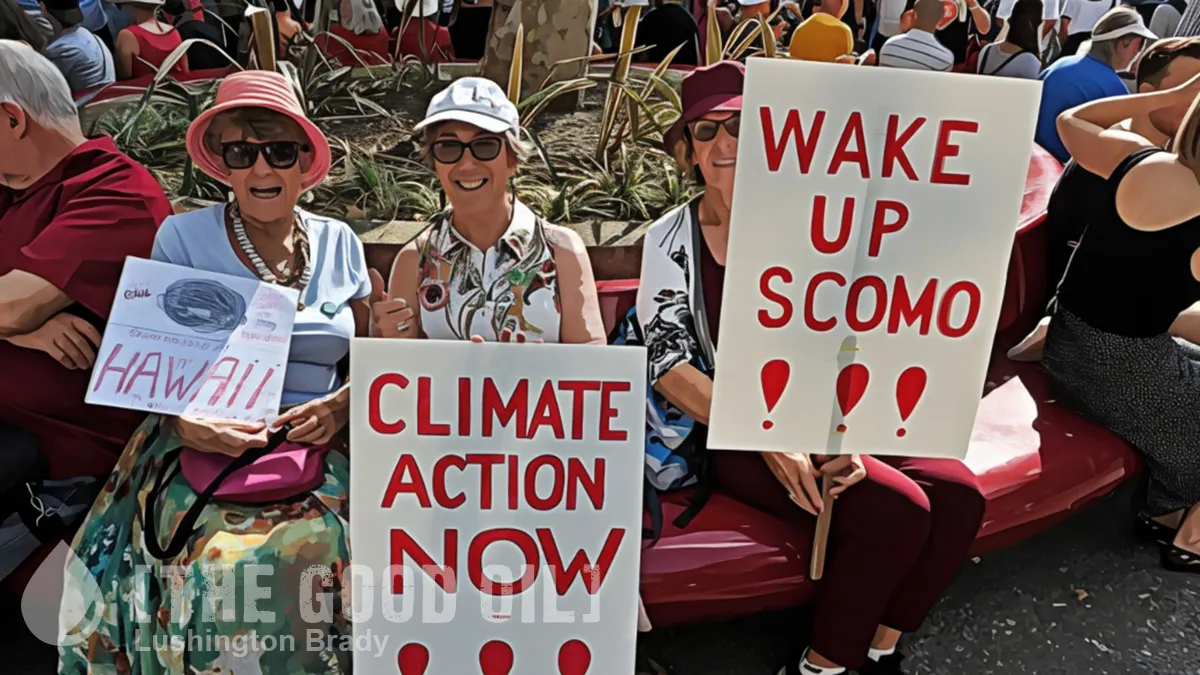
The same behaviour is also de rigeur in the contemporary left, for whom protest has been a way of life since at least the 1950s. These are people who live to protest. Observe any leftist protest, from ‘climate’ activism to ‘pro-Palestine’ anti-Semitism or ‘Pride’. Look at their little faces as they march their marches and wave their little fists: they’re having the time of their lives.
Protests are what the left live for, though. It’s their social life. Where normal people spend time with their families, go fishing, play in the park or go to church, the left protest. It’s what they do. It’s all they have. It’s their idea of a weekend outing.
More than anything, though, it’s a means of shoring up their egos.
There are several important and influential books that examine crowd psychology, but Eric Hoffer’s explanation of mass protests is a great starting point […] A person most likely to take part in a mass movement is what he calls a true believer – an individual who is frustrated with life due to a lack of purpose and meaning, as well as feelings of rejection and isolation. Beliefs are less important to the true believer than escaping from the burden of the autonomous self. They do not desire freedom because that implies responsibility. A mass movement is the acquiescence of individual liberties to a power beyond one’s control.
Protest tells them they matter. It’s why they so often repeat Margaret Mead’s pseudo-profound, ego-stroking quote: Never doubt that a small group of thoughtful, committed citizens can change the world; indeed, it’s the only thing that ever has. That’s truly what they think of themselves: they’re changing the world.
I understand the infectious energy surrounding demonstrations. As a young man, I attended numerous protests, most notably the massive march against the Iraq War in 2003. You meet like-minded folk who share your values and become engrossed in the drama, experiencing what Emile Durkheim called collective effervescence. However, going around in a ritualised fashion, shouting slogans and poorly veiled death threats at people you don’t like changes nothing about how power works. What it does, however, is more Machiavellian: it gives people the illusion of strength and power.
So mass movements need a focus. A charismatic leader, often. But, almost always, an enemy.
All mass movements have been led by charismatic leaders who exploit their emotions and make them into cohesive units, typifying all protests throughout history. For a mass movement to succeed, it is essential to have a leader who can bring together true believers. Hoffer claimed that the most commonly used and efficient strategy is to instil animosity in the crowd by inventing a common enemy, real or imagined, whom the leader blames for all the issues that the true believers face.
This is what George Orwell underscored with the character of ‘Goldstein’, in 1984: the focus of the Two Minutes of Hate. The Two Minutes of Hate not only allows the Party to keep an eye out for insufficiently committed members, but also to unite them in a singular focus.
This collective resentment serves to unify the disorganised masses, as few things can form bonds as effectively as a common enemy.
This was something I observed during a recent Pride festival […] As I looked out across a sea of semi-naked leather-clad daddies twerking inches away from children, I noticed something. While this modern-day bacchanalia always attracts a fruity bunch, the majority of the attendees were young. And angry. The leader held a microphone and chanted ‘death to terfs’ and ‘F–k JK Rowling’ in a furious Pavlovian manner, which the throng repeated ad nauseam.
In the end, the ‘cause’ is almost irrelevant. Belonging is all that matters. ‘I Support the Current Thing’ became a meme because those of us outside the mass movement notice what its members blindly ignore. The social media badge changes and the chants change because they’re essentially irrelevant.
According to Hoffer, what connects all these movements is ‘interchangeability’. When it comes to activism, the young have bought into The Omnicause.™️ Greta Thunberg is a perfect example, having quickly dropped her climate change activism to pick up a keffiyeh in solidarity with Gaza. Whilst watching this demonstration I was struck by how many were holding Socialist Worker signs with a trans message on them – like a handkerchief dispenser they pull one off and write a slogan that fits the latest burning injustice. Today: Stop the Trans Genocide! Tomorrow, Nationalise oxygen, now!
There’s something else instantly noticeable about the masses marching in support of whatever it is the left are marching about this week:
Modern activists are predominantly white and middle-class. Pretending to be a revolutionary is the ultimate pre-packaged form of rebellion. Covered in organic hemp tote bags, pierced lips and patched jackets, they use activism as a replacement for a personality.
Simply take a look at shots of the crowds obediently chanting ‘Death to the IDF’ at Glastonbury. It’s a Two Minutes of Hate for the university-educated, white middle-class.
As Orwell said, one has to belong to the ‘intelligentsia’ to want to belong to this ovine idiocy. No common person is such a fool.