Table of Contents
Jake Purvis
Jake Purvis likes movement and everything it predicates. Enjoys exercising free speech, electrolytes, Steam sales, and exercising. TF2 was better before the MYM update.
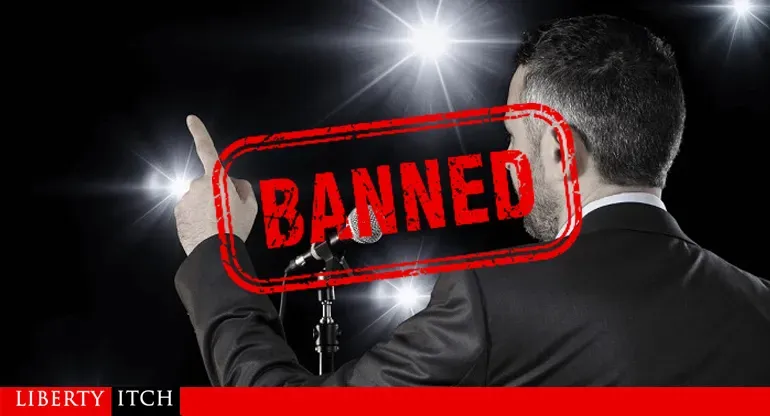
In 2018-2019 the controversial speakers denied entry to Australia included Milo Yiannopoulos, Tommy Robinson, Chelsea Manning, David Icke and Gavin McInnes.
Section 501 of the Migration Act (1958) allows the government to refuse visas on “character grounds”. Some subsections prevent people from passing the character test if there is a risk the person would “vilify a segment of the Australian community” or “incite discord in the Australian community or in a segment of that community”.
These subsections allow legitimate criticisms of communities in Australia to be interpreted as failing the character test. Criticisms and discord are a vital part of democracy, but these undermine it by allowing the government to deny entry to Australia.
Here is an example of a statement that may cause someone to fail the character test: “Aboriginals do far too many crimes”. This is a highly relevant criticism of Australian society, and needs to be discussed if the problem is to be resolved, yet simultaneously could be interpreted as “vilification” or “inciting discord” merely because it is a negative criticism.
Decentralised sources of information are harder to deplatform than centralised operations.
Unnecessary bans from Australia don’t merely have a neutral, however negative effect. Having different kinds of people from different cultures criticise Australian culture is useful to us. Every speaker denied access to Australia is a missed opportunity.
Take Tommy Robinson, who has spent over a decade providing social commentary in Great Britain. Someone with years of experience criticising immigration policy in Britain could provide nuanced advice to Australians on their immigration policy. Tommy Robinson in Australia may empower dissatisfied punters to be reinvigorated and re-engaged with politics.
There are benefits to a provocative speaker such as Milo Yiannopoulos in Australia. Milo encompasses a demographic of Australians who don’t care who they might offend when they ask difficult questions. Milo’s speaking is unfocused and often appears aimless, but in spite of that still manages to make people think far more than the highly sanitised and biased slop pumped out by the mainstream media, or someone conditioned to avoid asking important questions about our society.
A Milo Yiannopoulos university tour could be a brilliant source of divergent thought to students in an institution that ought to encourage critical thought and open-mindedness.
Barring Chelsea Manning from entering Australia is possibly the most brazen example of the state using its power for its own benefit to the detriment of all Australians. In 2010 Manning published hundreds of thousands of classified US military documents, including footage containing war crimes. In 2018 Manning was denied entry to Australia for his “substantial criminal record”. That is not related to inciting discord. However, given that he was planning a speaking tour, it was possible the government used his whistleblowing charges as an excuse to deny his entry, in order to prevent him from saying things on a speaking tour that may be critical of the government.
Criticisms and discord are a vital part of democracy, but these undermine it by allowing the government to deny entry to Australia.
Barring the entry of political speakers violates the principles of freedom. An Australian loses access to a particular experience when a speaker is denied entry to the country. It is comparable to the banning of books, movies or websites. The government needs to be particularly prudent, weighing the downsides of the lost opportunity with the purpose of the ban. The irresponsible use of subsections of the Migration Act make these losses of access for Australians more likely.
Decentralised sources of information are harder to deplatform than centralised operations. This allows speakers to be carefree with what they say and to worry less about a wealthy person starting a million dollar lawsuit if criticism is disagreeable. Allowing controversial speakers into Australia provides an alternative to the mainstream media which is good for diversity of perspectives. In a time when democratic values are concerningly lacklustre in the younger generation, perhaps they ought to reconsider banning the people who may re-engage societies’ outcasts.
This article was originally published by Liberty Itch.