Table of Contents
Blockhead
For the metal benders, I am sorry: this is a story about wood. But read on anyway – there is a bit of a grain of truth to follow.
We were given these two kitchen utensils recently. The grain and colour simply is beautiful – the photo does not do it justice.
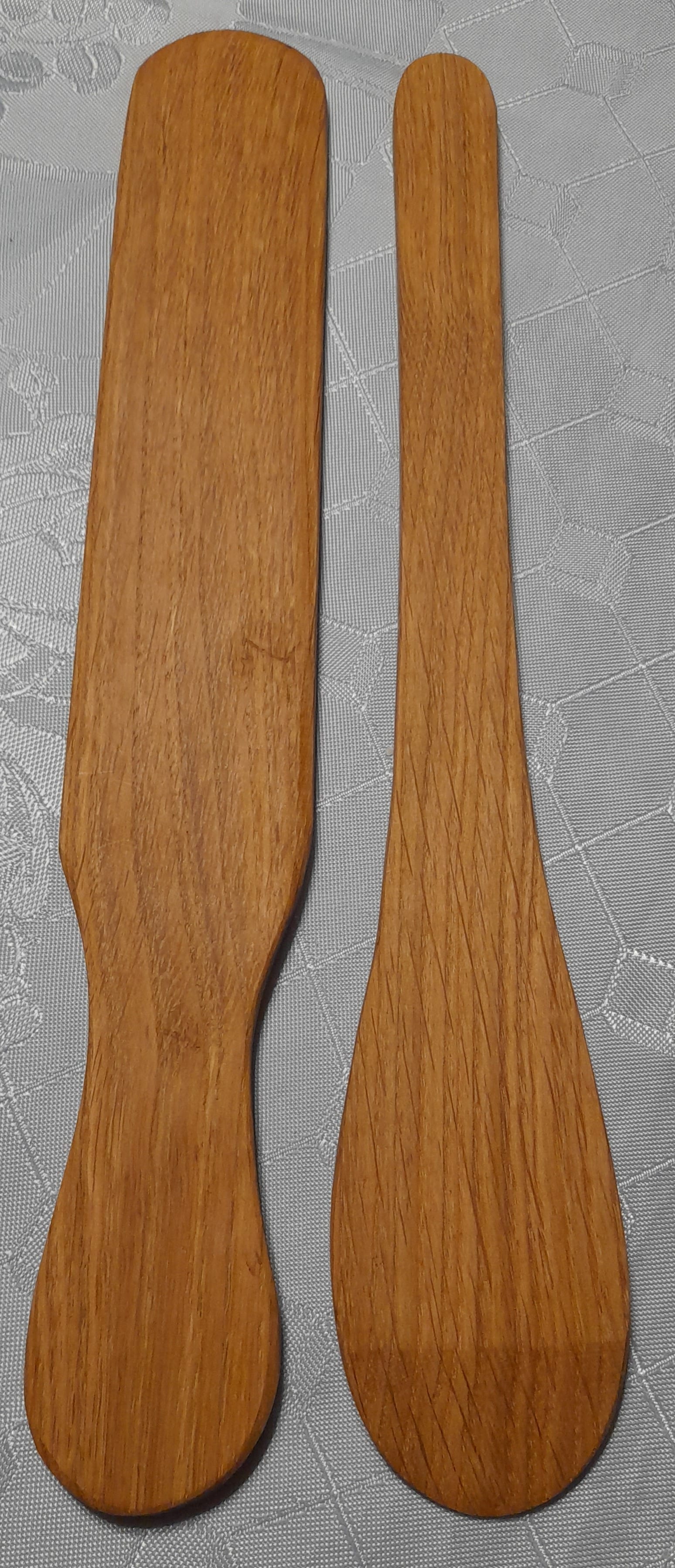
There is a bit of a back story to these fine culinary implements.
In a previous life I worked at a winery. We imported French oak barrels for wine maturation. The thing about wine barrels is they are not a very good shape for packing into a shipping container. So to keep them from banging into each other (these are quite expensive bits of woodwork, by the way) a lot of ‘scrap’ timber is used to brace and hold the barrels in place. Unsurprisingly, the timber used for bracing consists of offcuts from the barrel staves. When a consignment of barrels arrived at the winery, there was always a scramble by the winery staff to get the bracing material, as, being very hard and dry, it made great firewood. To keep things orderly, everyone who wanted the ‘firewood’ had their ‘turn’. When my turn came around I duly collected up my load of offcuts and took them home.
But I could never bring myself to put them on the fire. This wasn’t cheap pine, but beautiful French oak. So it sat in the basement until we moved back to Christchurch. It duly got put into the removal truck, then was stacked under the workbench in the garage, until that ‘one day’ arrived when it could be used for something better than creating heat.
So not quite 40 years later – kitchen utensils made from French oak. But that is only the preface.
Last year Mrs BH and I attended an art show. We got to meet our Good Oil artist Ross and viewed some great art. While Mrs BH was sorting out some pieces she would like to purchase (including an exquisite work of scrimshaw – look it up), I got chatting to a guy who made ‘art’ furniture. These are absolutely beautiful pieces using wonderful blends of different timbers. (Check out burntwood.nz if you want to see timber art.) Knowing Mrs BH was giving the credit card a good work out, I kept my hands in my pockets, other than to put this woodworking guy’s business card safely away.
Forty years ago I planted out my ‘dream’ garden in natives. Not the stuff you see in garden centres, but ‘real’ trees. Varieties of beech, podocarps, even kauri and more. But over the years some trees have got too large and been removed and replaced, and thoughts of what is still appropriate change. Last year, as it was our 40th wedding anniversary, we thought it would be nice to plant a couple of ‘ruby’ rhododendrons. We sought some advice and I pruned branches off a couple of trees to give space underneath for the new plants. And the more we looked at the ‘bush’ area and where the new plants could go, the more it seemed too small. Some advice from a rhodo specialist gave ‘grander’ ideas, which were keenly received. But more space was needed. (I now have over 20 holes ready to receive new rhodos.) So advice from an arborist resulted in two very large (for a residential section) tōtara and a mataī being removed.
I have no problem cutting up eucalypts from my woodlot for firewood, but there is always this nagging guilt about turning lovely straight trunks of tōtara and mataī into firewood. Ah! That business card from last year… I made contact with the woodworker and it turned out he lives within a few hundred metres of our place. Would he be interested in some ‘logs’ of native timber? “Can I come and have a look?” Inspection before the arborist’s chainsaw get anywhere near the trees allows him to select what he would like. My conscience is assuaged and the arborists get their instructions.
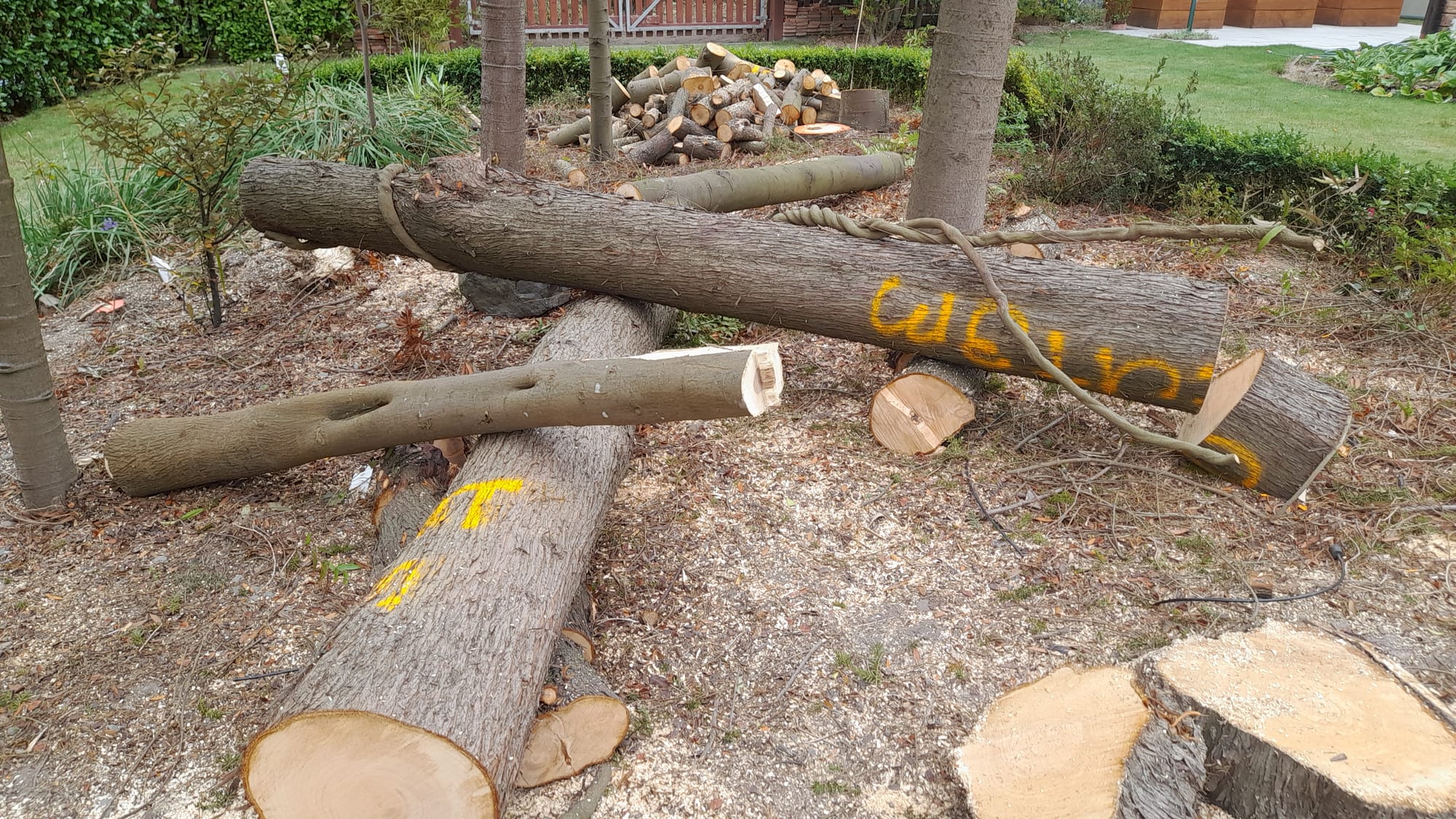
The logs are duly collected. They will need to be dried for a year or so before they are applied to a creative purpose. The only thing I asked for in return was for this transformer of wood to art to take a piece of old French oak off cut and make a couple of kitchen utensils from it.
If only that were the end of the story…
The long arm of the bureaucrat has reached into my space. You see, a woodworker cannot possess native timbers without proving they have come from legitimate sources. And so I have three pages of forms in front of me to provide that legitimacy.
My dilemma is this – there is no box on the form for me to tick which says ‘I planted these trees 40 years ago. They now have become too large, and we want to change the layout of our garden. I thought it would be good to give the timber to someone who could do something better with it than turn it into heat and CO2.’
And so for the sake of an implement used for stirring, I fear I could become the stirred rather than the stirrer.