Table of Contents
I recently wrote a guide for New Zealanders on what to do and what your rights are should the police knock on your door. Some of you may be inclined to dismiss this as alarmism, and, ‘if you haven’t got anything to hide, you’ve got nothing to worry about”.
If you do think that, you’re not paying attention.
Already, ordinary Kiwis are discovering the hard way that if you have centre-right political views and aren’t afraid to say so publicly, especially if you own guns, you may well find the coppers knocking on the door. You don’t need to have committed a crime. Just ask Lee Williams, or ‘Gareth’, or indeed the Good Oil’s own Dieuwe de Boer. Here in Australia, Ballarat mum Zoe Buhler was handcuffed, pregnant and crying, in her own home and in front of her children, because of a Facebook post – charges that were eventually withdrawn, but only after years of legal intimidation.
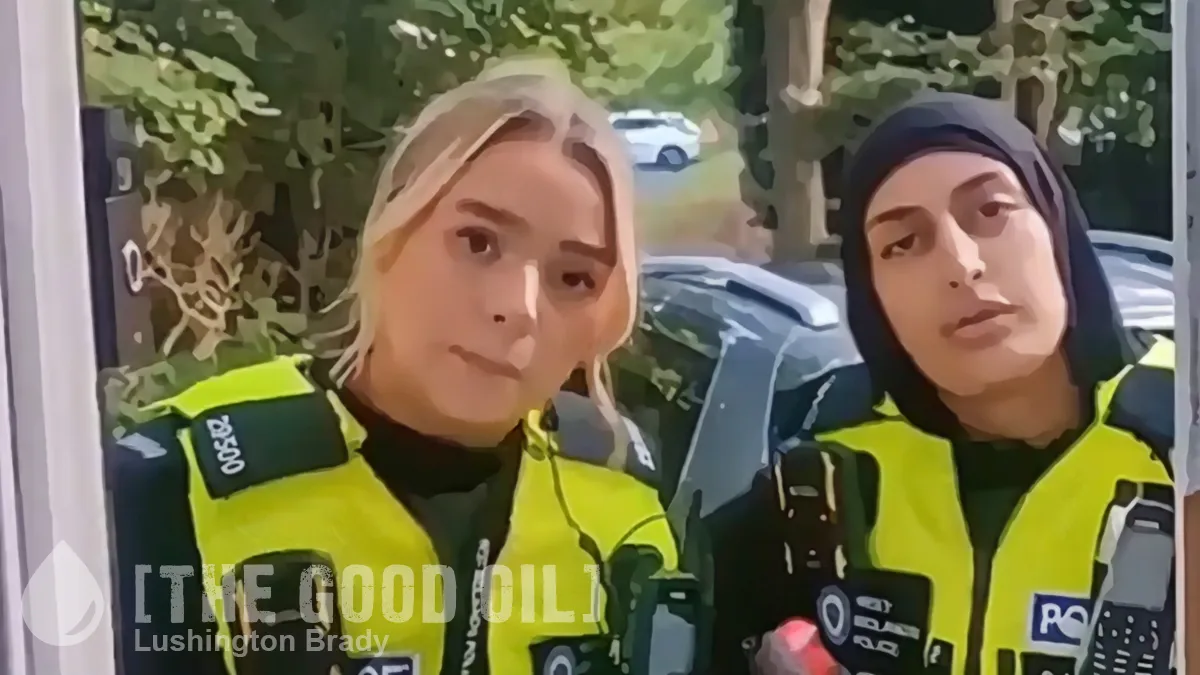
If you still think ordinary citizens have nothing to worry about, just look a year or two down the track to Britain, where police regularly arrest people over social media jokes or even saying in public ‘I love bacon’. With the Albanese government tooling up its inquisitorial ‘e-safety commissioner’, we’re not far from the same abyss. Nor is New Zealand, barring dramatic change.
So, know your rights – and use them.
Above all else, your right to silence.
As British barrister Daniel ShenSmith says, the sad fact is that ordinary citizens increasingly cannot trust the police. When police won’t investigate burglaries but will knock on doors over ‘non-crime hate incidents’, they cannot be trusted. The same police who took with gusto to harassing, arresting, tear-gassing and beating ordinary citizens during Covid are the same police now watching everything you do or say on social media.
Do you really trust them?
You have a general right to silence and privacy – use it.
These are your legal rights as a New Zealand citizen:
You do not have to answer the door unless police have a warrant or a lawful reason to enter (such as preventing harm or chasing someone).
You do not have to let police inside unless they show you a valid warrant or meet one of the limited exceptions.
You do not have to answer questions beyond providing your name, date of birth and address if lawfully required.
When police knock on your door:
• You can choose not to open the door. You may speak through a locked door or a window.
• If you do open the door, step outside and close the door behind you. This avoids giving ‘implied consent’ for them to step into your home.
Now, most of you being law-abiding citizens who’ve likely never encountered the police in an official capacity in your life, might think staying silent when the police show up makes you look shifty. ‘I’ve got nothing to hide.’
Maybe you don’t – but that doesn’t matter. It also doesn’t matter if you think you look shifty.
Because police can and will use anything you say against you.
As ShenSmith says:
Sometimes it is better to say nothing because if you say quote the wrong thing, and I’m not saying lie to the police. What I’m saying is you may think that you’re saying something that is better for you or the the right thing to say which might be the wrong thing and in doing so you may tie yourself up in some kind of offense which you may not have been tied up in before […] But just bear in mind that anything you say may be used against you. And that’s particularly problematic if that might amount to a confession.
ShenSmith emphasises that a ‘confession’ need not be ‘Yeah, alright, guv, it were me wot dun it’.
A confession includes a statement wholly or partly adverse to the person who made it whether made to a person in authority or not, and whether made in words or otherwise. So if, for example, a police officer came to the door and told you that someone had been attacked or a building had been attacked or something and you knowing that you didn’t have anything to do with it but you didn’t care and you just said ‘Ha! Good’ and shut the door.
You might think whilst most people probably agree that’s not the right thing to say you might think that was an innocent thing to say because it had nothing to do with you. You didn’t admit to doing it. You weren’t under caution. You weren’t under arrest and so on. So you might just think that’s fine and shut the door.
The next thing you might know, you’re being arrested because you’ve said something which actually amounts to a confession because it is at the very least partly adverse to you, the maker of the statement, because it’s not a good thing to say in response to somebody being attacked or a building being attacked.
Likewise, if you posted something like that on Facebook and said, ‘Good thing that happened to that person because I don’t like that person’. Again, most people would hopefully agree that that’s the wrong thing to say, but you might think that it’s innocent, but not understanding that that actually amounts to a confession.
The situation is a little more complicated if you have been cautioned by police – and ShenSmith discusses that in some detail. Generally, though, the best course of action is assert your right to a lawyer before further questioning.
But, if the police just show up ‘for a little chat’, especially if it’s something you’ve said on social media, and if they admit that there’s been no crime and you’re not under arrest, then shut up. Don’t overshare.
You have a right to silence – use it. Especially when ordinary citizens clearly cannot trust the police any more.