
This is edition 2026/082 of the Ten@10 newsletter.
Hi all,
This is the Ten@10, where I collate and summarise ten news items you generally won't see in the mainstream media.
Enjoy!
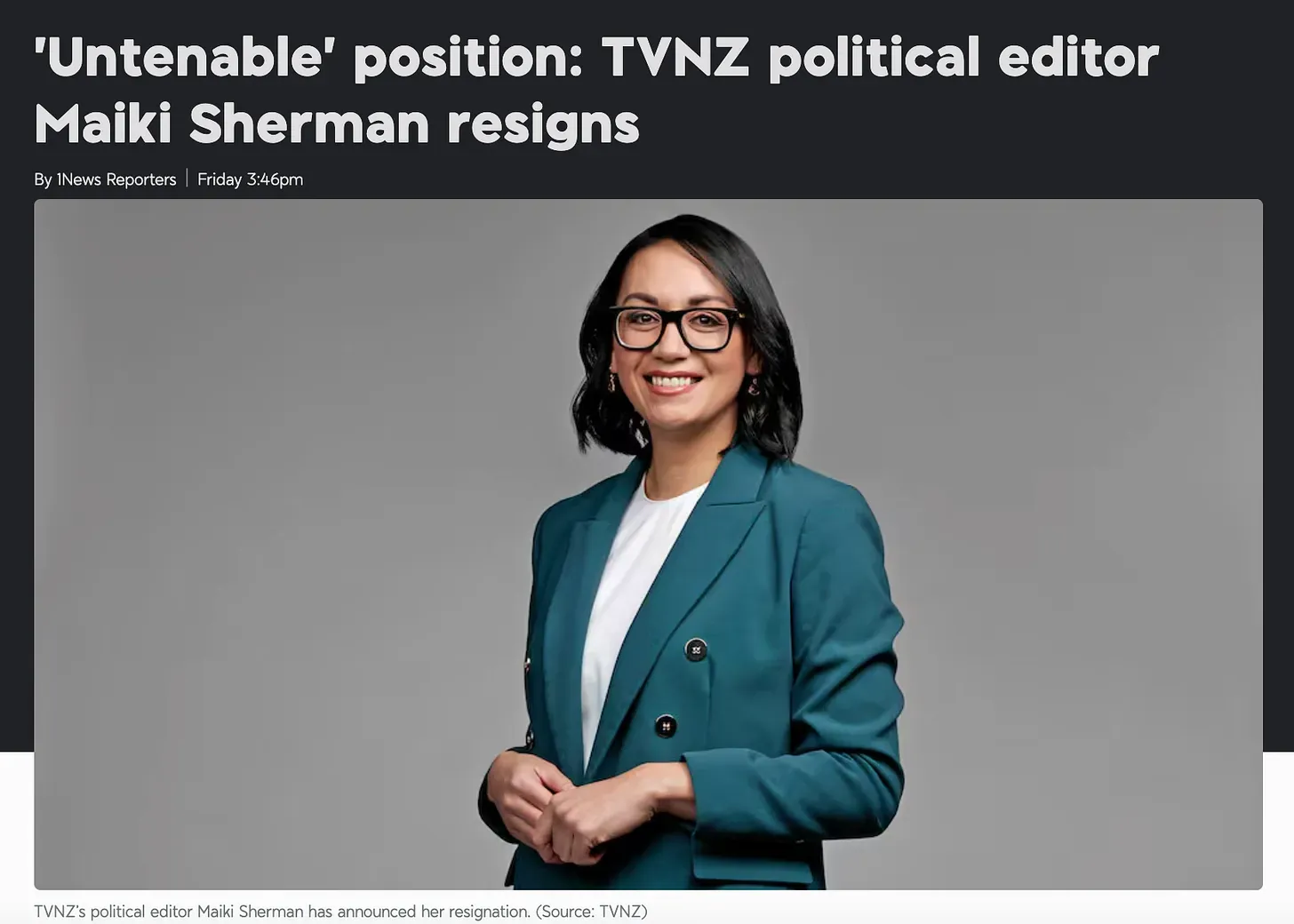
1. Maiki Sherman and the media that ate itself
Bryce Edwards
- 📰 Maiki Sherman resigned from TVNZ under “enormous pressure,” ending her role just weeks before the Budget and months before the election, in a move described as terse but dignified.
- ⚖️ While her use of a homophobic slur at a 2025 pre-Budget event was acknowledged and apologised for, the broader context — including disputed claims about what provoked it — received little public scrutiny.
- 🧩 The incident is often framed as a single mistake, but the article argues this oversimplifies a more complex situation involving media dynamics and institutional decisions.
- ❓ A key distinction is highlighted: the incident may have been newsworthy, but whether it justified ending Sherman’s career is a separate question many commentators failed to examine.
- 🗣️ Commentators like David Farrar and Stephen Parker argued for proportionality, noting that one mistake should not outweigh an individual’s full professional contribution.
- 🤐 The press gallery’s year-long silence on the incident became problematic, raising concerns about selective reporting and internal media culture.
- 🔥 When the story eventually broke, the intensity of coverage escalated beyond what some believed was justified, despite its legitimacy as a news item.
- 🏛️ TVNZ is criticised for failing to support its political editor, instead relying on legal pressure to suppress the story, which ultimately worsened the fallout.
- ⚠️ The use of legal threats against other media outlets is portrayed as creating a “chilling effect” and undermining transparency.
- 🧭 The Free Speech Union and others argue the situation reflects a deeper institutional failure: prioritising suppression over openness and accountability.
- 💬 Sherman apologised early, but TVNZ’s handling of the situation is seen as preventing that apology from being meaningfully upheld.
- 📉 The case is framed as symptomatic of wider structural issues within media culture, including trust, accountability, and the pressures of political journalism.