

This is edition 2026/189 of the Ten@10 newsletter.
Hi all,
This is the Ten@10, where I collate and summarise ten news items you generally won't see in the mainstream media.
Enjoy!
1. Democracy Briefing: The Greens are learning to ride the populist wave
Bryce Edwards - The Democracy Project
- 📈 The Greens are surging: 16% in consecutive 1News-Verian polls, 14.8% in RNZ-Reid, 14% for Freshwater and 13.3% in the latest Taxpayers’ Union-Curia poll, after often polling around 7% earlier this year.
- 💬 Andrea Vance in the Sunday Star-Times: “The turnaround is something of a miracle, given how completely the wheels had fallen off during a torrid 2024 and 2025.”
- 🔄 Edwards’ explanation: the Greens have found the populist moment. There is “considerably less Palestine and pronouns” and much more power bills and profiteering, and dialling down middle-class “woke politics” is working.
- 🛒 Since July they have campaigned for a publicly owned supermarket, cheaper electricity and higher taxes on extreme wealth, aimed at the supermarkets, power companies, banks and tech firms that dominate New Zealand’s markets.
- 🙈 Edwards admits his earlier prediction that the Greens would not embrace economic populism (“The honest answer is probably not”) was too pessimistic.
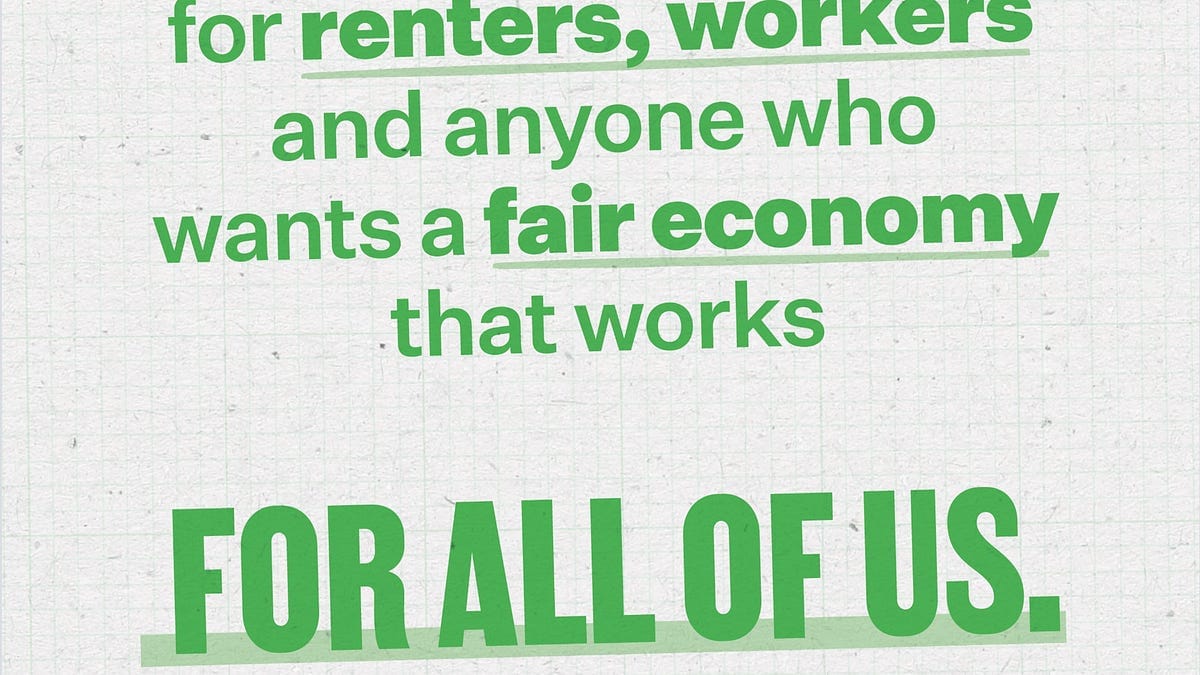
- 🗣️ At the July AGM, under the slogan “For All of Us”, Chlöe Swarbrick told members: “Nobody is ever going to be able to empathise with your world view if they feel they’re under attack.”
- 🤖 The same instinct is being applied to AI: a call in July to pause new data centres for a year, and today a policy to regulate AI under the headline “We don’t work for AI”.
- 🏴 Marama Davidson recalls the 2022 occupation of Parliament’s lawn, with Māori outside holding a tino rangatiratanga flag and a Trump sign, and asks where her movement went wrong.
- 🏠 Swarbrick told Ollie Neas that “people want to belong” and that “people understand that the system is rigged towards corporate profits”.
- 💡 Takeaway: even Chris Trotter, still a critic, calls her drive to move the camera away from the Greens’ moral lapses “impressive”. Swarbrick calls it “an evolution”.

2. Class Reps.
Chris Trotter - Chris Trotter’s Substack
- 🏭 Since 1938, Trotter says, the choice was simple: Labour, the “party of the workers”, or National, the “party of the bosses”, a binary that First-Past-the-Post reinforced.
- 💔 When the party of the workers embraces the free market, the two-party system breaks. MMP arrived in 1993, but voters’ old binary habits were much harder to replace.
- 🔵 National is still what it says on the tin: the defender of the “property-owning democracy”, funded by the richest. Properly led it can near half the vote, as with John Key’s 47.3% in 2011.
- 🟡 Act presents as classically liberal, but Trotter says its success owes more to owning-class fear of Māori and working-class claims. “If National represents the brain of New Zealand’s ruling class, then Act represents its muscle.”
- ⚫ NZ First is a cross-class alliance of small-town business owners and the blokes who work for them, retirees and young men: “the aggrieved and the bereaved”.
- 🔴 Labour no longer represents the working class, he argues, but the Professional Managerial Class that manages it, for whom capitalism’s dysfunctions are “a feature, not a bug”.
- 🟢 The Greens represent the PMC before and after its working years: “the PMC-in-training; the PMC that married money; the PMC in retirement; the PMC gone bush.”
- 🟤 Te Pāti Māori represents a people, not a class, and ethnic solidarity precedes class solidarity.
- 💡 Takeaway: for Māori voters the priority is simple: “people first, party second.” The essay first ran on interest.co.nz on 5 October.
3. RODNEY HIDE: I asked AI to find Christopher Luxon's worldview
Rodney Hide - Brash & Mitchell
- 🧭 Every politician has a worldview, Hide says, and most do not know it. His own went from libertarian to anarchist to Christian conservative.
- 🤖 He set his AI research assistant to study Luxon’s maiden speech, interviews and speeches, quote him exactly, and keep what he said separate from interpretation.
- 🚪 Its finding: Luxon keeps his beliefs in two rooms, his Christian faith and the CEO who wants “to get things done”, with the door shut: “My faith is personal to me… I believe no religion should dictate to the state.”
- 🎯 His working philosophy is management, hence the nine Government targets. Hide’s publisher notes Luxon recently called the country “the company” on Mike Hosking’s show before correcting himself.
- 📚 He describes his values as “limited yet better government”, cites no economist, and made Viktor Frankl’s Man’s Search for Meaning compulsory reading for new Air New Zealand staff.
- ⚖️ The tension: in 2021 he said “I’m a pro-life person”, then pledged abortion laws would not be relitigated. His heroes Wilberforce and King did not treat slavery or segregation as settled.
- 🏛️ The AI calls it technocratic liberalism, “a worldview that does not name itself”, and found nothing in his own words on property rights or on the Treaty and co-governance.
- 💡 Takeaway: Hide says that is why the Government cannot make the moral case for what it is doing. It thinks it only has to hit the targets. Next up: Chlöe Swarbrick, “a critical theorist, and she says so.”
4. Disestablishing the Broadcasting Standards Authority
David Harvey - A Halfling’s View
- 📄 Harvey examines the Regulatory Impact Statement of 18 June 2026 that accompanied the Bill to disestablish the BSA.
- 🎯 A RIS is meant to be frank, balanced analysis, not a sales pitch, and it may disagree with the Minister’s preferred approach.
- 🔀 It weighed three options: the status quo, reform into a platform-neutral regulator of professional media, or repeal and reliance on self-regulation mainly through the Media Council. The Minister chose repeal; the Ministry for Culture and Heritage favoured reform.
- 🧱 The reform option builds on the Ministry’s 2025 proposal but goes further, adding own-motion investigations and Ofcom and ACMA-style enforcement, including warnings, remedial directions and large fines.
- ⚠️ His critique: it would create statutory oversight of the press, which New Zealand has never had, and “professional media” is undefined, leaving podcasters, Substack writers, YouTube channels and The Platform exposed to disputes and chilling effects.
- 📉 BSA complaints are at historic lows, privacy compensation was awarded twice in five years averaging about $1,000, and reform attempts in 2011, 2014-17, 2019 and 2021-24 all stalled.
- 🧑⚖️ Ministers are not bound by officials’ advice: “They advise. They do not decide.” He sees a drift to advocacy, such as paragraph 73 saying the government should not retreat from regulation.
- 🗳️ The Bill’s future depends on the 7 November election. A left coalition would likely revive the reform and, he expects, the DIA’s Safer Online Services proposals.
- 💡 Takeaway: there has been a fine line between advice and advocacy, and one could conclude the Ministry saw the RIS as a chance to advance its 2025 proposal.

5. BRUCE LOGAN: Pay Parity
Bruce Logan - Brash & Mitchell
- ⚖️ Logan says pay equity marks a real difference between the parties: Labour supports it, with its 2020 equal pay amendment, and National opposes it, with its 2025 amendment.
- 🟰 Pay equity is not pay equality. Equality is the same pay for the same work; equity sets an occupation’s relative value, to correct claimed undervaluation of female-dominated work.
- 📊 Valuing an occupation is difficult if not impossible, he argues, given supply and demand, scarce skills, hours, conditions, training costs and workers’ own choices.
- 🧬 He says the demand rests not on the equality of men and women but on “functional equality”, which he calls a modern heresy.
- 👨👩👧 Civil society has long depended on the complementarity of men and women, and the best way to raise children is with a loving mother and father.
- 💸 By May 2025, 17 workforces had pay equity corrections covering about 162,000 workers at about $1.78 billion a year. Treasury says reviving Labour’s 2020 law would cost each household $5,295 over four years.
- 🗽 Pay equality is compatible with individual freedom, he writes, but pay equity is not, because the state decides the relative value of work.
- 💡 Takeaway: pay equity “is not a human right”, Logan says. It discourages women from working part-time and undermines family life.
6. Execution
David Harvey - A Halfling’s View
- ⚰️ The botched execution of Christa Pike in Tennessee has left her handcuffed to a hospital bed, with talk of putting her through the process again.
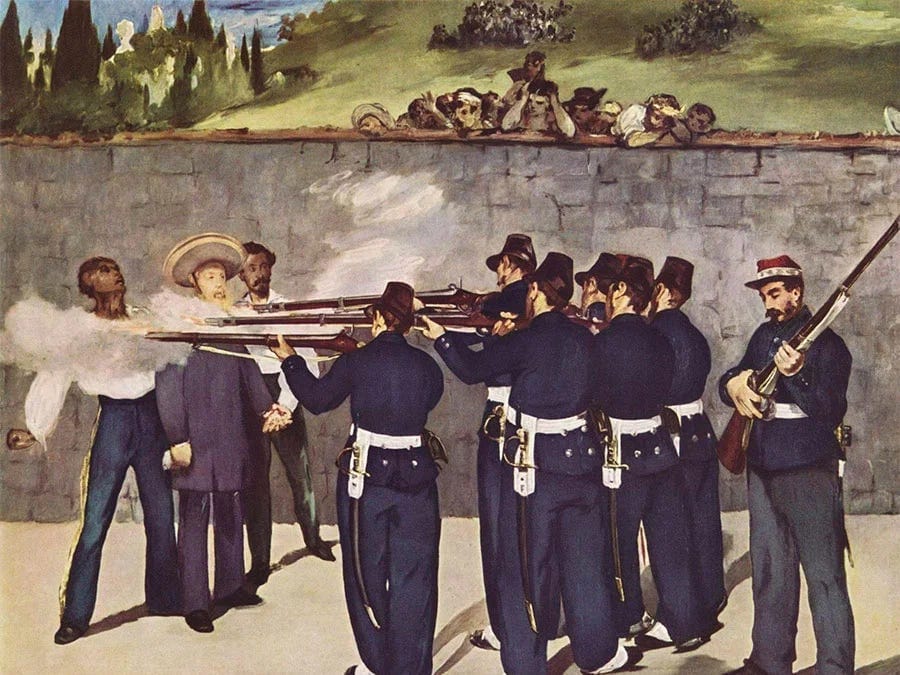
- 🎯 On 9 October it was announced that Nidal Hassan, who murdered 13 people at a military establishment in Texas, would be executed by firing squad, and that it would be livestreamed.
- 🚫 Harvey opposes the death penalty, but his piece is about the response: the immediate reaction, especially from media, was to ask how to ban it.
- 🇳🇿 He suggests this may be a kind of PTSD from the 2019 Christchurch livestream, and that “ban it” has become a New Zealand reflex, as with young people and social media.
- 📜 But content must exist before it can be classified. The Classification Office says it “cannot classify a livestream event as it is taking place”, and Chief Censor Caroline Flora: “Distressing as content may be, it is not always unlawful.”
- 🔒 Banning in advance is prior restraint, which he says strikes at the heart of freedom of expression, citing Justice Cull’s injunction over the Phillips children.
- 🗣️ He criticises Professor Al Gillespie’s “barbaric” as emotive language, no substitute for rational argument.
- 💡 Takeaway: “No one is forcing you to watch, listen or read… Everyone has the power to be their own censor.”
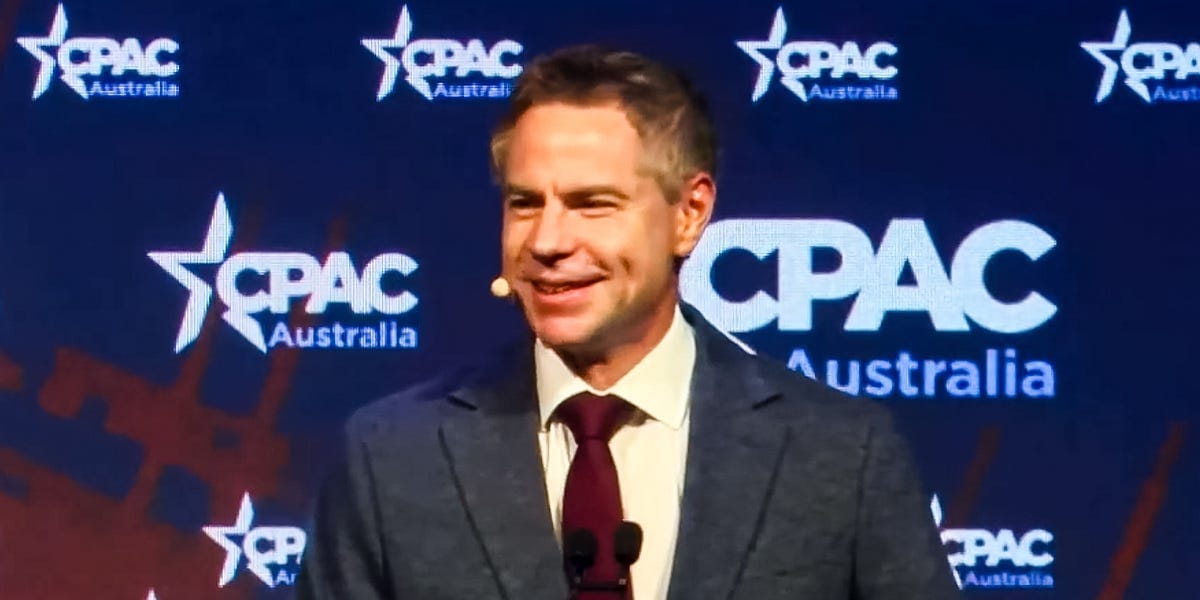
7. Whatever Bad Thing The Censors Accuse Their Enemies Of Doing Is The Very Thing They Are Doing
Michael Shellenberger - Public
- 🔁 Shellenberger’s lesson, learned “over and over again”: whatever the censors accuse their enemies of doing is the thing they want the power to do.
- 🕵️ When they say they want to stop anonymous accounts interfering in elections, he says, it means they want a monopoly on using anonymous accounts to interfere in elections.
- 🇦🇺 Public says an intelligence community deception tactic is being used by governments, including Australia’s, to mislead the public.
- 📣 Public says it is blowing the whistle on “the most totalitarian censorship legislation ever introduced in the West”.
- 💡 Takeaway: “If we want to live as free people in the West, we must fight for free speech across the West.”
8. The case for populism
Tim Black - spiked
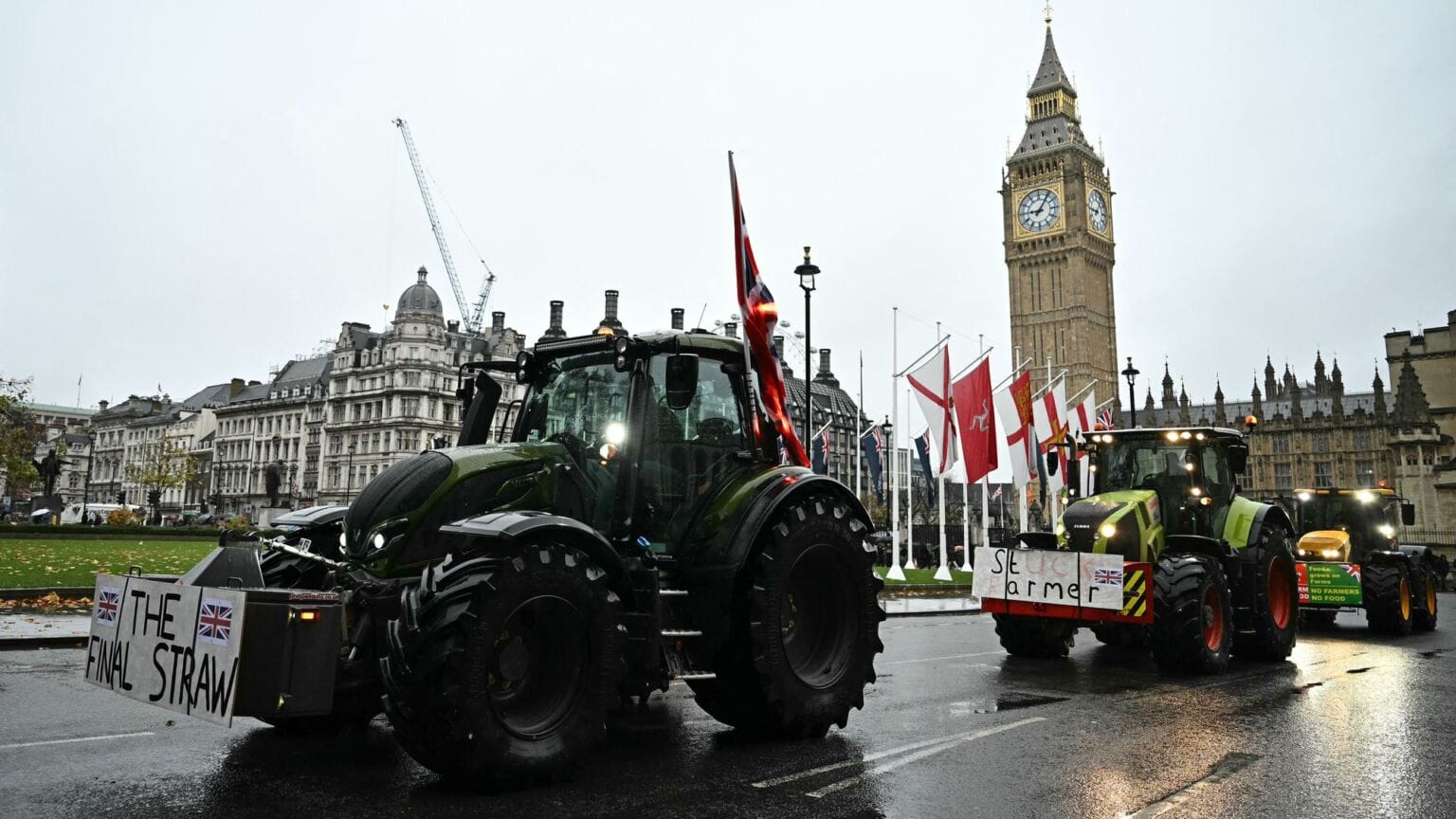
- 📘 Tim Black reviews Frank Furedi’s In Defence of Populism, calling it the definitive guide, while critics prefer to portray everything from Brexit to MAGA as proto-fascist.
- 🚜 The book was inspired by the Europe-wide farmers’ revolt against measures imposed in the name of Net Zero in the EU or raising tax revenue in the UK.
- 🔀 Furedi traces national populism to a “double betrayal of the people”: 1960s elites turning against their societies’ common culture, and a graduate New Left drifting from the working class to identity issues.
- 🏛️ After the Cold War those elites ruled technocratically through quangos, the judiciary and “expert” bodies, preaching diversity and seeing nation states as outmoded.
- 🗣️ Black cites Tony Blair’s 2005 line that the world is “indifferent to tradition” and Barack Obama’s 2008 “guns or religion” remark.
- 😟 The result was deep “cultural insecurity”, which economic troubles after 2008 compounded.
- 🏡 Populism defends the “pre-political realm” of church, unions, neighbourhood networks and associations, which the new elites turned into an object of social engineering.
- 🌍 Furedi rejects the idea that it is racial: populism can unite ethnic constituencies around a common political culture.
- 💡 Takeaway: populism versus anti-populism is now the defining conflict of our era, displacing left versus right.

9. GARETH MORGAN: Not All Tax Reform is the Same
Gareth Morgan - Brash & Mitchell
- 📉 Opportunity’s founder says wealth taxes kill entrepreneurship, which New Zealand needs to reverse its abysmal productivity record. Real incomes cannot rise without it.
- 🔴 Labour’s capital gains tax treats gains as income when they are not, he argues, and will end up taxing the income to capital twice.
- 🟢 The Greens’ wealth tax shows no understanding or respect for entrepreneurship, ignores poor income tax design as a driver of disparity, and risks wealth leaving. “Marx would be proud.”
- 🟠 Opportunity’s land tax differs crucially from TOP2017’s tax on imputed rent. He calls it a selective, regressive wealth tax much like Labour’s and the Greens’.
- 🧮 TOP2017 accounted for income already taxed and made interest deductible to avoid double taxation. The land tax includes neither, “a major step backwards”.
- ✅ He is glad Opportunity has not fatally tinkered with the UBI, which replaces cumbersome, mis-targeted welfare.
- ⚠️ By de-emphasising tax reform to win votes, Opportunity risks being swept into a left coalition and branded a lookalike Green Party.
- 🔵 For centre-right voters, the National, Act and NZ First “triumvirate” looks increasingly attractive, because the right “does not despise the poor anywhere near as much as the Greens despise the wealthy.”
- 💡 Takeaway: an opportunity lost for Opportunity, Morgan says, though he still condemns “vile racism from NZ First and the denial of the Treaty by Act.”
10. A funny thing happened on the way to abolishing the BSA…
Steven Price - Media Law Journal
- 🗑️ Price says one little-noticed effect of scrapping the BSA is that all broadcasters would become subject to the Privacy Act.
- 🔓 Broadcasters under the BSA are currently exempt for news activities. Without that, anyone featuring in a story could demand all the information a broadcaster holds about them, with only narrow exceptions.
- 🧙 Broadcasters lobbied hard for the exemption. Price recalls the media standing like Gandalf in the Mines of Moria: “You shall not pass!”
- 📰 Section 28 of the Bill also removes print media’s exemption for Media Council members: newspapers, magazines, some news sites, blogs and substacks.
- 📏 Media would face rules not designed for them: using information only for the purpose gathered, collecting it fairly and not unreasonably intrusively, and sometimes telling people when gathering from third parties.
- 🏛️ The government can recognise media bodies by regulation, but that power has never been used and no body is recognised.
- 📺 Even if the Media Council is recognised, it does not hear complaints about broadcast news, is not resourced for more, and its code was written for text-based journalism.
- 📑 The RIS’s quality assurance statement warns of “a largely untested assumption that self-regulation by broadcasters can be effective.”
- 💡 Takeaway: the government expects a lot of the Media Council, and Price sees no indication in its documents “that they even want the job.”
What our members are saying about Ten@10
Elizabeth
These articles are compulsory reading for me and the perfect addition to the usual list of Goodoil items!
Lynne
Absolutely brilliant to receive these current and thought provoking articles.
Jonathan
Just wanted to let you know that I’m loving this new 10@10. Much appreciated from someone who chooses to read/watch almost NO mainstream media.
Murray
Cam, relish your output as the newspaper in Christchurch is so intent on non news. Thankyou
Fred
Thanks for Ten @ Ten, really enjoy reading it.Keep it up. All the best, keep healthy.
Jocko
Wonderful info not otherwise available in NZ. More power to your elbow! Thanks.