\This is edition 2026/217 of the Ten@10 newsletter.
Hi all,
This is the Ten@10, where I collate and summarise ten news items you generally won't see in the mainstream media.
Enjoy!
1. Democracy Briefing: How not to fix the MMP overhang problem
Bryce Edwards - The Democracy Project
- 🗳️ Bryce Edwards says this week's open letter from 46 electoral experts, "Keep the 'P' in MMP", led by Andrew Geddis, Lara Greaves and Max Rashbrooke, is right about the problem and wrong about the method. It asks the new Parliament to set up an urgent select committee, to report by mid-2027 on how to protect proportionality before the next election. The diagnosis is sound, he writes, but MPs should not be left to design the fix, because self-interest is likely to distort it.
- 📊 On the preliminary count, 11 overhang seats have produced a Parliament of 131 MPs in which National has six more seats than Labour despite winning fewer party votes, and Te Pati Maori holds five seats on a party vote that earned one. The signatories warn that both sides now know how to manufacture an overhang and will try harder in 2029. Kerre Woodham told Newstalk ZB the letter makes academics look like poor sports, which Edwards calls unfair. When she put that to Geddis, he said the signatories thought it was not about who wins this election.
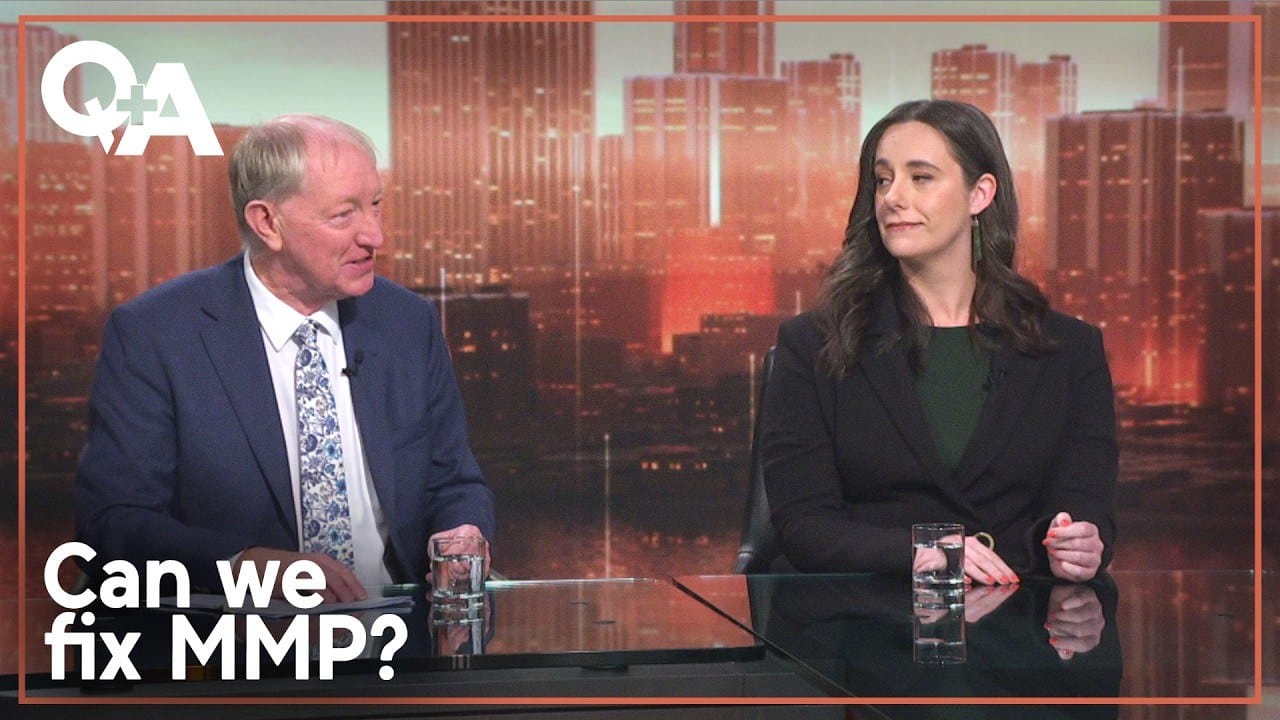
- 🔒 Greaves, a Victoria University political scientist and a member of Labour's 2023 Independent Electoral Review panel, said on TVNZ's Q+A, "Let's lock the politicians in a room," and told Ryan Bridge the country did not necessarily need more academics or retired judges: "We need the MPs to sit down with the solutions and figure it out". Edwards grants her impatience. Politicians largely ignored that 2023 review, and shelved the Electoral Commission's 2012 MMP review the same way. He still says handing the job to MPs is the wrong conclusion, and that hasty changes to electoral law often go badly, with the next scheduled election three years away.
- 🚧 Geddis has, Edwards notes, supplied a strong argument against his own letter. Some people think letting politicians design electoral systems is "like allowing panel beaters to design intersections". Those people are right. On the preliminary count every one of National's 42 MPs holds an electorate, and four of Te Pati Maori's five are overhang MPs. A Parliament enlarged by the overhang would be writing the overhang rule. The Royal Commission that designed MMP recommended 60 electorate seats and 60 list seats, but Parliament has let the list shrink to 49, which makes overhangs easier.
- 📨 Even the signatories disagree about how to proceed. Two days before the letter appeared, Oliver Hartwich of the New Zealand Initiative, who signed it, told RNZ he wanted a Royal Commission with a year to report, followed by a referendum. From the left, the blogger No Right Turn calls a select committee the wrong vehicle, and says having politicians as first reviewers is "a guarantee of a partisan, politicised outcome".
- 🏛️ Edwards wants Parliament to fund a citizens' assembly with the power to put proposals to the country, once local groups and the media have argued out the options. The assembly could call MPs as witnesses, get the Electoral Commission to run the figures, publish a shortlist, and require Parliament to respond. If a change would alter what either of the two MMP votes does, it could be put to a referendum. New Zealanders chose MMP in 1993 and voted to keep it in 2011.
- ⚖️ In a further analysis for paying subscribers, he compares five remedies and says each would take something away from voters or from MPs. Adding list seats is the mildest, but Te Pati Maori's five seats on 0.57% of the party vote would still overhang in any Parliament of plausible size, and full proportionality would take a House of 781. Under Germany's 2023 rule, a candidate who wins an electorate only enters Parliament if the party vote covers the seat. Had a national version applied this year, the seven National electorate winners with the lowest local vote shares would have missed out, along with four of Te Pati Maori's five. In Stuff's Pulse of the Nation poll of 533 people, 38% said seats should match the party vote even if some electorate winners missed out, and 34% preferred to seat every electorate winner even if Parliament grew.
- 📉 Weighting MPs' votes in the House, as electoral lawyer Graeme Edgeler has floated, would cost sitting MPs the least, because nobody loses a seat or a salary. The official reviews' preferred fix, a fixed-size Parliament that trims other parties' list seats to make room, would, on economist Lisa Meehan's modelling of the preliminary results with a 121-seat House and a 3.5% threshold, drop Labour from 36 seats to 32 and leave it ten seats behind National despite winning more party votes. The Gallagher index of disproportionality would rise from 3.55 to 5.42.
- 💡 Takeaway: Germany's rule with a small tolerance still looks to Edwards the least bad of the options, and would work better alongside a gradual increase in list seats. The remedies that restore proportionality most reliably would cost electorate MPs their seats, and the gentler ones would leave the tactic alive, which is a strong reason not to leave the choice to MPs.