Table of Contents
Roger Watson
Professor Roger Watson is Distinguished Professor of Nursing at Southwest Medical University, China. He has a PhD in biochemistry. He writes in a personal capacity.
On January 7th an inquest was held at the Old Courthouse in Hatfield into the sudden death of a young man which offers a troubling insight into how difficult it still is to ask uncomfortable questions about Covid-19 vaccine safety. The well-established links between the Covid-19 vaccines and adverse outcomes, including death, are acknowledged generally. But specific attribution remains elusive.
A young man, Kieran Duce, who was 23 years old, died unexpectedly after consuming alcohol in quantities all experts agreed were well below a level normally associated with fatality. His death was sudden, unexplained, with no suspicious circumstances, and devastating for his family.
On March 25th 2023, Kieran arrived home at 02:37 (recorded on CCTV). He vomited and went to his bedroom. Evidence suggests that he adjusted the Venetian blinds in his room before going to bed. The last recorded heart rate on his Apple Watch was at 02:52. Kieran was found dead on his bed by his brother James and emergency services were called at 10:15.
Post-mortem examination was inconclusive about the cause of death, but the following facts were recorded: Kieran had a blood alcohol level of 194 mg/dL and there was evidence of lymphocyte infiltration in one of the samples taken from Kieran’s heart. Kieran’s lungs were clear, ruling out aspiration from vomiting and asphyxiation.
Kieran, described by Senior Coroner Geoffrey Sullivan as a “tall, healthy, athletic, good-looking man”, had no significant medical history, as confirmed by his GP. Kieran had been vaccinated against Covid-19 with the Pfizer preparation three times, in June, August and December 2021. The last dose was approximately 15 months before his death. Notwithstanding, Kieran had contracted Covid-19.
The pathologist who conducted the original post-mortem was indisposed but was represented at the inquest by Dr Fiona Scott of West Hertfordshire Teaching Hospitals NHS Trust. The toxicologist involved with the case was Dr Stephanie Martin FRCPath of Sheffield Teaching Hospitals NHS Hospital Trust. Neither were specialists in cardiac pathology.
Both Dr Scott and Dr Martin were clear that the level of blood alcohol was well below the minimum level of 300 mg/dL normally associated with alcohol-induced death. Death in such cases results from suppression of the central nervous system, with suppression of respiration resulting in low blood oxygen, including in the heart circulation, leading to death.
The presence of lymphocytes – cells that are associated with immune responses – in one of the samples of heart tissue was explored but largely dismissed. In the absence of more of Kieran’s heart tissue (the three samples taken comprised only around 1.5 per cent), it was impossible to ascertain if the lymphocyte infiltration was more widespread and whether it was associated with cell death elsewhere or could have been confidently called myocarditis.
Kieran had no history of cardiac problems. Other than the presence of the lymphocytes, Kieran’s heart showed no signs of any pathology, and no pathology was found in any other organ systems. No other intoxicating substances were found in his blood.
Peter Todd, legally representing Kieran’s parents who were present at the inquest, followed up with both doctors asking questions relating to the validity of the sampling. It was established that the time between death and sampling was normal and unlikely to influence parameters such as the blood alcohol level. He also asked if blood urea, a measure for dehydration, had been tested. He was told that this was not routine. As far as could be discerned, Kieran was not dehydrated.
The coroner explored the possible involvement of the Covid-19 vaccines. While the link between the vaccines and adverse ‘Yellow Card’ events was acknowledged by all present, this was dismissed as relevant to the death due to there being no record of Kieran reporting vaccine side-effects and due to the length of time since last vaccination. The conclusion of Drs Scott and Martin’s deliberations was that death was probably related to Kieran’s alcohol intake, notwithstanding that the level in Kieran’s blood was well below what would normally be considered fatal.
Dr David Berry FRCPath, a retired and experienced toxicologist and expert witness on behalf of the family, confirmed that Kieran’s blood alcohol level was well below what he would consider to be fatal. He said that the lower level was more commonly understood to be 350 mg/dL and that he had never seen an alcohol related death, in hundreds he had examined, at the level found in Kieran’s blood.
Also acting as an expert witness on behalf of the family was Dr Clare Craig FRCPath, author of Expired and Spiked, books about the spread of Covid-19 and the Covid-19 vaccines respectively. At the invitation of the coroner, Dr Craig briefly outlined her concerns with the overall response to Covid-19. She emphasised that the vaccines had not prevented Kieran contracting Covid-19.
Asked by the coroner about the nature of myocarditis and the presence of lymphocytes in Kieran’s heart, Dr Craig said that any evidence of lymphocytes in the heart should not be dismissed. There was “nothing trivial” about any cardiac abnormality. Unfortunately, due to the sampling of cardiac tissue which she acknowledged was standard practice but considered “inadequate”, the extent of lymphocyte infiltration could not be investigated further.
Asked about the length of time since the last Covid vaccine, Dr Craig referred to robust epidemiological evidence which showed that in 2020 there were no reports of myocarditis related to Covid-19. Reports of myocarditis followed the vaccine rollout from mid-2021. On whether the possible myocarditis in Kieran’s heart could be traced back to the vaccine, Dr Craig pointed out that the unvaccinated were not at risk of myocarditis after infection and that the risk was increased in the vaccinated, especially after contracting Covid, and that some patients had to increase medication every time they were exposed to Covid-19.
Dr Craig concluded that Kieran had died of a cardiac event due to myocarditis, probably an arrhythmia. An arrhythmia could be exacerbated by dehydration but there was no evidence of dehydration, and the death could not be attributed to alcohol.
Peter Todd was admonished for using the cross questioning to raise the question of testing heart tissue for spike protein. Kieran’s mother pointed out that such testing had been requested in writing some time before with no response. However, the coroner felt he had all the information required to draw a conclusion.
In a final round of questions from the coroner to the original witnesses, Dr Martin produced evidence of urinary creatinine suggesting Kieran was well hydrated but said dehydration could not be excluded. Dr Scott considered that sampling not only followed published procedures but was “adequate for a case that looked like alcohol toxicity”. She said she would not diagnose myocarditis based on the evidence regarding lymphocyte infiltration and, in any case, that the Covid vaccine-associated myocarditis was “mild and self-limiting”.
Pushed on her conclusion, Dr Scott retracted her hypotheses of aspiration, positional hypoxia and central nervous system depression and despite not previously mentioning arrhythmias explained how alcohol can exacerbate them. On that basis, she now concluded that the probable cause of death was a cardiac arrest due to an alcohol-exacerbated arrhythmia.
After consideration, the coroner, not convinced that the Covid vaccine played any role in Kieran’s death and that the explanation was most likely the one offered by Dr Scott of an alcohol-exacerbated arrhythmia, concluded that this was the probable cause of death. The death of Kieran Duce was to be recorded as an “alcohol related death”.
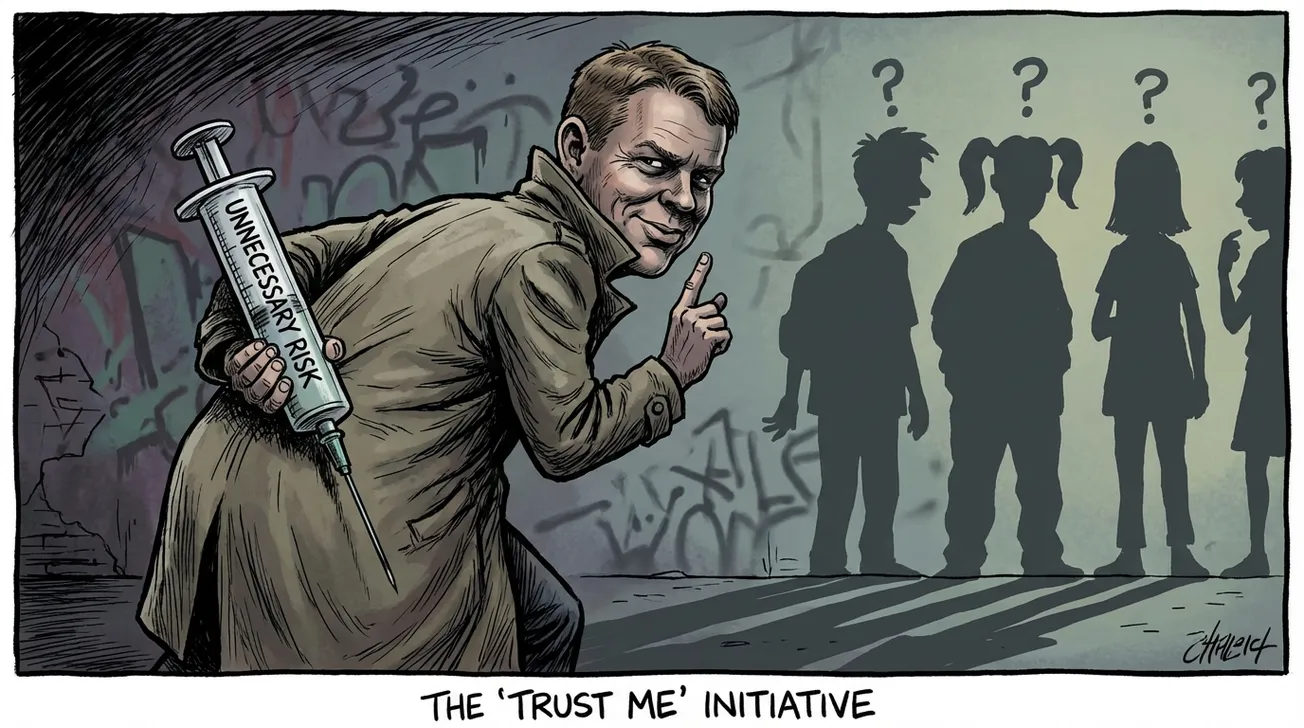
The alcohol hypothesis had been allowed to evolve, adapt and persist despite the low blood levels. The vaccine-related hypothesis, by contrast, was excluded despite acknowledged association, evidence of cardiac inflammation, limited sampling and unanswered questions.
Inquests exist to establish how someone died, not to protect public narratives. In the case of Kieran Duce, closure appears to have taken precedence over curiosity. We are left with another reminder that, when it comes to Covid vaccines, the threshold for dismissal remains lower than the threshold for scrutiny.
This article was originally published by the Daily Sceptic.