Table of Contents
If there’s one thing we should have learned from the Covid pandemic, it’s never mistake The Science™ for actual science. Especially when it comes to climate change.
The Science™ you read about in the legacy media is the end result of a long game of Chinese Whispers played by left-wing morons. It starts with actual science, then gets filtered through ‘summaries for policy-makers’ (politically-driven screeds mostly written by activists, not scientists). But even those are too long and hard for the Arts-Law degree-credentialled cretins who make up the political class, so they get dumbed-down even further into snappy press releases, tailored for little more than justifying left-wing, globalist policies already set in stone.
Then the legacy media get involved. You know exactly how that’s going to go.
Case in point: the unhinged hysteria over ‘melting permafrost’. How scary do you think the media will make this sound?
A Wisconsin-sized slab of Alaskan permafrost is thawing faster than many predicted, flushing ancient carbon into rivers that eventually reach the ocean. According to a major April 2026 study led by geoscientist Michael Rawlins at the University of Massachusetts Amherst, 44 years of high-resolution modelling (one km grid) across Alaska’s North Slope shows dramatically increased runoff, a lengthening thaw season into late summer and fall, and rising loads of dissolved organic carbon (DOC), much of it ‘ancient’ carbon frozen for millennia.
Leaving aside reservations on relying too heavily on modelling, this is still clear-eyed and data-driven science: as ground ice melts, more water comes from deeper groundwater rather than surface snowmelt. That groundwater leaches stored carbon, shifting some tundra regions from carbon sinks toward sources. Rivers are changing too: some now run orange with iron and metals mobilised by thawing minerals, a phenomenon dubbed “rusting rivers” that can degrade water quality and fish habitat.
Oh, you know exactly what the legacy media are going to make of this. They’re already slotting it into their pre-prepared doomsday scripts: feedback loop! Tipping point! Runaway warming!
Yet the science (not The Science™) itself demands far more caution. Permafrost holds an enormous carbon store – estimates hover around 1,400–1,500 billion tonnes – but the rate, timing, and ultimate climate impact of its release remain riddled with uncertainty. Not all DOC reaching coastal waters turns into atmospheric CO₂ – some sequesters or dilutes.
At the same time, the Arctic is far from isolated from the ‘global greening’ NASA has rigorously mapped over the last few decades. CO₂ is plant food in the Arctic, too. And in that greening Arctic, expanding shrubs and vegetation are greedily gobbling up all the delicious plant food they can. That plant uptake at least partially offsets the release of DOC. Recent modelling even shows trade-offs: warming can strengthen greenhouse gas sinks in some Arctic zones while weakening them in alpine permafrost.
A similar story of an adaptive planet dealing with change much as it always has is playing out in the Rocky Mountains.
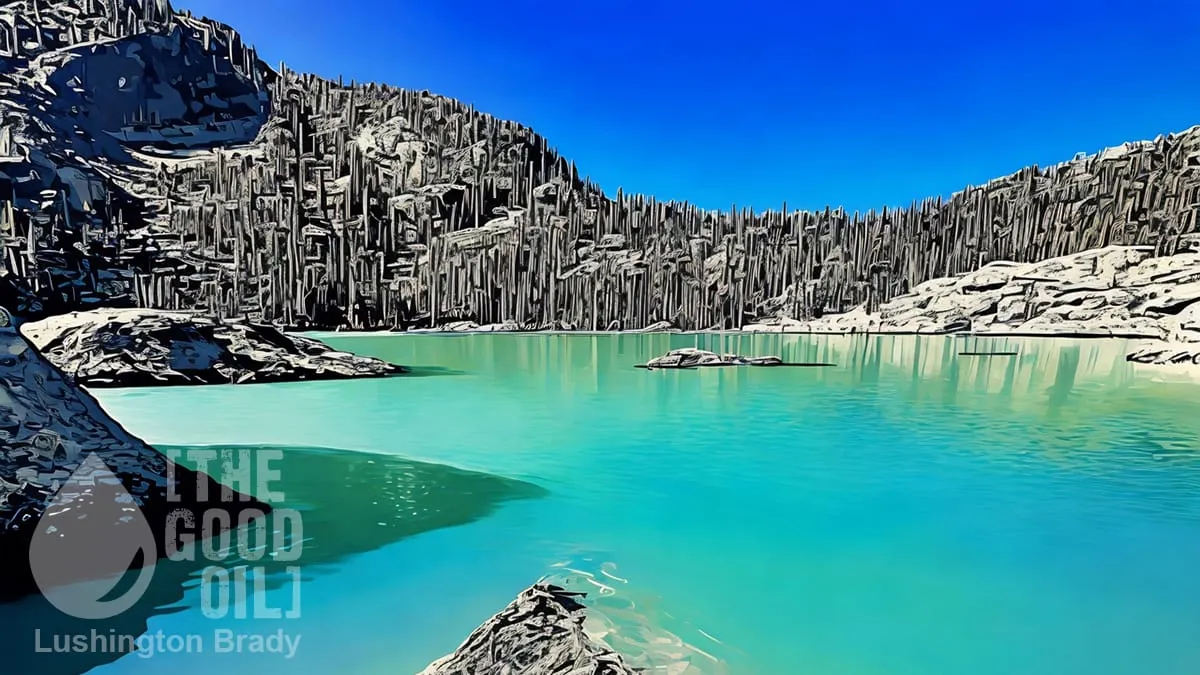
Once-crystal-clear alpine lakes are developing green tints and algal blooms. Research from Rocky Mountain National Park and Colorado’s Loch Vale watershed links this to atmospheric nitrogen deposition (from distant agriculture, industry and transport) plus warmer air and longer ice-free periods. Nitrogen acts like fertiliser for algae: heat accelerates growth. Similar shifts appear in Europe’s Pyrenees.
Again, the data is real – but the framing often isn’t.
These ‘pristine’ lakes have never been isolated from long-range pollution. Historical land-use legacies, wildfire smoke and dust also contribute. Ecosystems show resilience – not every bloom spells collapse. Unless, of course, you’re the legacy media dumb hammers who can only ever see great, big, scary nails.
So, headlines leap straight to ‘climate emergency’, conveniently ignoring that targeted local stewardship – better monitoring, reduced unnecessary nutrient inputs – could address much of the problem without global emission hysteria.
For Good Oil readers rightly weary of panic porn, both stories illustrate a pattern: measurable environmental shifts driven by warming, yes, but exaggerated into existential threats that justify ever-tighter bureaucratic control. The permafrost carbon feedback has been in climate models for years, yet estimates still swing wildly. No credible evidence supports a ‘compost bomb’ runaway scenario. Abrupt thaw and wildfires add complexity, but so do natural variability and adaptation potential.
The practical costs are serious enough without the hype. Thawing ground destabilises roads, pipelines, buildings and entire communities across Alaska, Canada, Russia and Scandinavia: infrastructure repairs could run into tens of billions. Fisheries and indigenous livelihoods face new pressures from altered rivers and coastal dynamics. In Australia, the ripple effects matter: potential shifts in global energy markets, Northern Sea Route shipping or even our Antarctic research programs, which study analogous cold-region processes.
The problem is that we’re run by idiots like Boofhead Bowen, who are dementedly wasting tens of billions on disastrous boondoggles like ‘Net Zero’, the Cnut-like vain attempt to stop the tide coming in.
The sensible response is not net-zero zealotry that cripples affordable energy and economic resilience. It is pragmatic adaptation: engineering permafrost-resistant designs, advanced monitoring tech, methane-capture pilots where feasible, and – crucially – maintaining reliable baseload power so societies can afford to innovate, rather than ration. Australia’s own energy security and defence posture depend on rejecting alarm-driven fantasies that treat every environmental change as proof we must dismantle modern industry.
Arctic rivers carrying ancient carbon and mountain lakes turning green are not harbingers of the end times. They are reminders that nature is dynamic, data must trump dogma and real challenges reward practical solutions over performative panic.
This will probably occur to the politicians and legacy media hacks some time after the New Ice Age causes Hell to freeze over.