Table of Contents
From eugenics to cloning, the history of biotechnology is littered with grandiose claims, outrageous fearmongering and startling medical breakthroughs that have improved the lives of many. The cloning of Dolly the Sheep sent the hype machine into overdrive. More pragmatically, humourist Mark Steel satirically mused on the shocking fact that ‘one of those sheep looks exactly like one of the others!’
Four years later, when the human genome was first mapped, the over-excited boosters were at it again. When they weren’t shrieking about clones, they were babbling excitedly as if the days of human infirmity were at an end. There was much over-excited talk about ‘genetically tailored medications’, and so on. A quarter-century on, you could be forgiven for wondering where it all vanished to.
But genuine and significant medical progress is, even if with much less fanfare, being made.
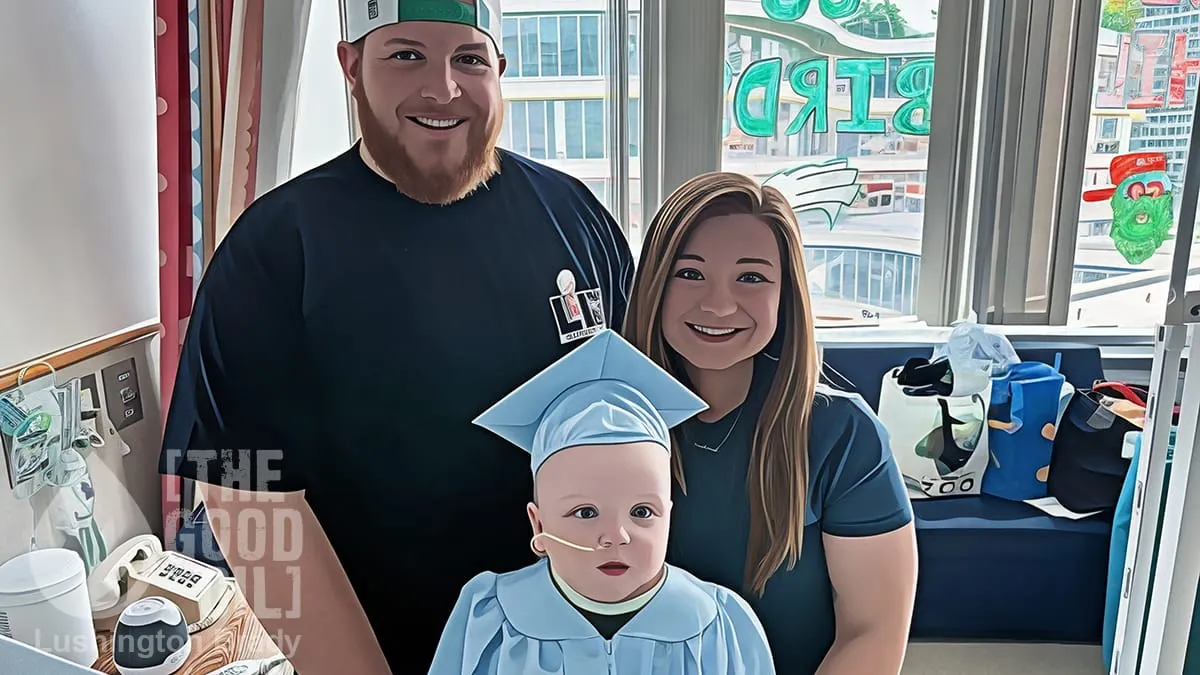
In August 2024, Nicole and Kyle Muldoon welcomed their son KJ into the world at the Children’s Hospital of Philadelphia (CHOP). What should have been a time of joy quickly turned into a medical nightmare. Within days, doctors diagnosed the infant with severe carbamoyl phosphate synthetase 1 (CPS1) deficiency, an ultra-rare urea cycle disorder affecting roughly one in a million births. KJ’s liver couldn’t properly process ammonia, a toxic byproduct of protein metabolism. Without swift intervention, the condition risked brain damage, coma, or death. Standard treatments meant a lifetime of a severely restricted diet, expensive medications and often a costly liver transplant.
His parents faced the grim reality that their son’s life would be defined by constant medical management. Then, in a remarkable display of scientific ingenuity and urgency, a team led by doctors Rebecca Ahrens-Nicklas and Kiran Musunuru at CHOP and Penn Medicine stepped in. In just six months, they designed, tested and manufactured a bespoke gene-editing therapy tailored precisely to KJ’s genetic mutation. In February 2025, at around seven months old, KJ became the first person in the world to receive a personalised base-editing treatment, a refined form of CRISPR (Clustered Regularly Interspaced Short Palindromic Repeats: I trust you’re cleared up on that, now!) gene-editing technology.
Unlike traditional CRISPR-Cas9, which cuts both strands of DNA and risks unintended mutations or chromosomal chaos, base editing acts like a molecular spell-checker. It uses a modified ‘nickase’ enzyme paired with a deaminase (enzyme that acts on RNA molecules, the ‘messengers’ which carry ‘instructions’ from our DNA to manufacture the proteins that run our bodies) to convert one DNA base to another. Essentially correcting errors in the ‘letters’ of a strand of DNA. These ‘editing instructions’ are delivered via lipid nanoparticles straight into the bloodstream (targeting the liver). The therapy aimed to fix KJ’s specific CPS1 variant in his liver cells. He received three infusions between February and April 2025. No serious side effects emerged.
Fast-forward to early 2026: KJ is thriving. One year after his first dose, his mother reports he is meeting developmental milestones, walking, talking, and enjoying a protein intake far beyond what doctors once deemed possible. He recovers from common childhood illnesses without dangerous ammonia spikes.
His disease hasn’t vanished entirely, but it has transformed into a much milder form, sparing him the harshest restrictions and potentially delaying or avoiding a transplant. The Muldoons describe their son as a lively toddler who loves football and family life.
Unlike so much of the over-excited claims made about ‘DNA medicine’, this isn’t hype: it’s documented progress. KJ’s case earned recognition as one of MIT Technology Review’s 10 Breakthrough Technologies for 2026, highlighting how personalised base editing can move from concept to clinic at unprecedented speed. Researchers published details in the New England Journal of Medicine, and the story has drawn global attention, including features in Nature’s 10 for 2025.
For those inclined to fret about gene therapy, somatic editing concerns changes limited to KJ’s body cells, rather than his gametes. In other words, it’s not heritable. It fixes the problem in the patient without altering sperm, eggs or embryos passed to future generations.
This is an important caveat: when Chinese scientist He Jiankui claimed to have created genetically edited human embryos, with the birth of three gene-edited babies, in 2018, it rightly sparked a huge scandal over safety, consent and eugenics risks. Base editing for germline (heritable) purposes remains experimental and heavily restricted: in Australia, heritable genome alterations carry up to 15 years’ imprisonment under the Prohibition of Human Cloning for Reproduction Act.
Somatic therapies, by contrast, face fewer ethical minefields and focus squarely on treating existing patients.
There remain valid concerns over long-term durability and side-effects, of course. KJ requires ongoing monitoring, and while results are encouraging after one year, decades of data will be needed.
KJ Muldoon’s journey is neither a science fiction utopia nor a cautionary tale of playing God. It’s a grounded example of human ingenuity meeting desperate need. The lesson is clear: when innovation serves the individual rather than grand social engineering, real progress follows. For families battling rare diseases worldwide, this base-edited breakthrough isn’t just hope on the horizon. It’s already walking, talking and taking first steps.