Why are incompetents routinely called ‘experts’ these days? The election campaign brings them out in their droves. Thursday’s Herald headline:
Child poverty experts urge politicians to adopt recommendations before election
Eleven of them are demanding a range of actions “including lifting the minimum wage to the living wage, increasing benefits and indexing them to average wage growth or inflation, and replacing ‘Working for Families’ with a tax credit that is not connected to parents’ work or benefits status”.
For context, two salient facts:
- At April 1, 2025, a sole parent with two or more children received on average $1,110 weekly; a couple with two or more children, $1,255 net.
- In the year to the June 2025 quarter, median weekly income from wages and salaries was $1,380 gross or $1,111 after tax.
How high do the ‘experts’ want benefits for caregivers to go?
There are already a quarter million children living in benefit-dependent homes.
Many of these homes are in low-income neighbourhoods where, the ‘experts’ tell us, it’s a struggle to provide essentials like food and clothing.
Neighbourhoods where alcohol outlets cluster, along with vape shops and tattoo parlours. Where gangs deal meth. Let’s pump some more cash their way, say the ‘experts’.
More money is not the answer.
Yesterday I received a postcard from World Vision showing me where the money I send to them goes.
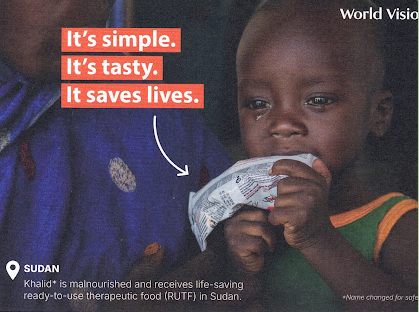
That is a malnourished child receiving therapeutic life-saving food. That is a child whose mother cannot feed it.
It isn’t a child whose mother receives over a thousand dollars cash from the government every week and still manages to have the ‘experts’ telling us is living in material hardship.
My non-expert list for the next government contains one urgent and do-able action. Stop paying cash and start providing assistance-in-kind.
A government that wants better for children whose parents can’t or won’t care for them properly would ensure that the substantial resource going into these homes was practical and effective.
https://www.stats.govt.nz/information-releases/labour-market-statistics-income-june-2025-quarter/
https://lindsaymitchell.blogspot.com/2026/06/quarter-of-million-children-are-now.html
This article was originally published on the author’s blog.