Table of Contents
As I wrote recently, for all the whinging of pampered moderns about the ‘drudgery’ of modern housework, women especially have never had it better. Women in Western countries have had generations to forget just what a labour-saving miracle the washing machine really is. Swedish statistician Hans Rosling called them “the greatest invention of the industrial revolution”.
Even in living memory, talking recently to my 90-year-old Maltese mother-in-law, simple (today) tasks such as laundry and cooking involved hours of back-breaking labour. She was ecstatic, on moving to Australia, to get her first washing machine.
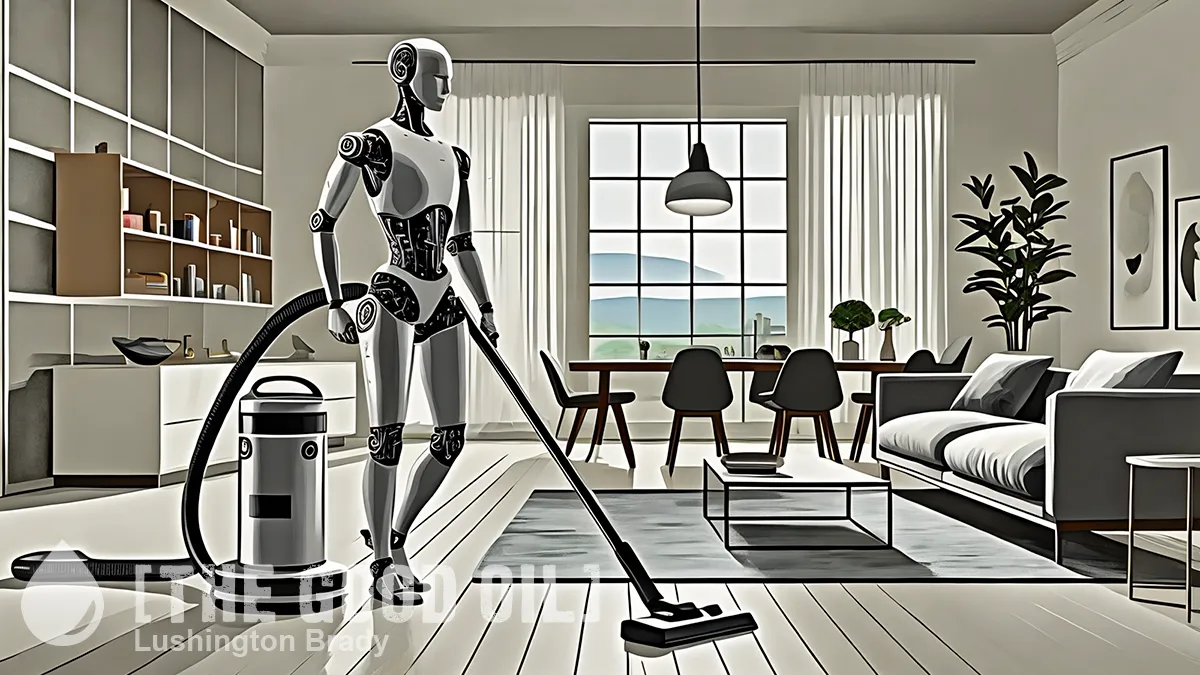
A new revolution in household labour-saving is underway. What’s begun with the Roomba and the robot lawnmower will soon expand to cover almost any domestic task you could imagine. The revolution is only in its infancy.
The debut of the robot butler NEO has drawn widespread ridicule. Unable to perform many chores without a remote human operator, the machine has become a target of social media backlash. Videos circulating online show the robot struggling with basic tasks, such as closing a dishwasher.
As my dad was fond of saying, “Fools and little boys criticise unfinished work.” It’s easy to sneer at infant technologies, but underestimate how quickly they develop, at your peril. People used to laugh at those foolish inventions of Gottlieb Daimler and Karl Benz. There were only 33 years from the first 30m hop at Kittyhawk and the Spitfire conquering the skies. The internet was a toy for a handful of nerds just a few decades ago.
So, we may not all be owning a Jetsons-style Rosie the Robot in the next few years, but the age of the robot domestic is not far off.
This begs the question of just what its social spin-offs will be. One suggestion is that it may be the key to reversing demographic decline in the West.
The technology is dawning at an opportune time. Consider the growing concerns about plummeting birth rates. Last year saw the lowest fertility rate ever recorded in the United States, below 1.6 children per woman.
Could robots help to reverse the trend by relieving the burden of household drudgery associated with child-rearing?
The last time the West experienced a demographic surge was the famous post-War Baby Boom. While the Baby Boom was traditionally ascribed to returning soldiers keen on building a world of domestic tranquility from the ashes of WWII, it must be remembered that it takes two to make a baby. It’s surely not accidental that the Baby Boom coincided with a wave of domestic appliances that relieved mostly still at-home women from hours of drudgery.
Between the 1920s and 1950s, domestic responsibilities were transformed as the number of households equipped with electric appliances, including refrigerators, stoves, vacuums and washing machines, rose dramatically. The new machines lessened the burden of household labor, freeing up time and making parenthood easier.
For all the Luddite technofear around AI, the technology is yet to find its true niche application. At present, AI is mostly being used as a novelty for enjoyable and creative tasks. In fact, the famous lament of an internet user that, “I don’t want AI to do my art so I can do my laundry and dishes. I want AI to do my laundry and dishes so I can do my art,” may well come to fruition.
Most of us, I suspect, would welcome our own Rosie the Robot into our homes, even with the snarky humour.
The potential of technology to free humanity from the burden of household labor deserves more attention. Perhaps no group would benefit more than parents. The more children one has, the more laundry piles up and dishes fill the sink.
Various companies are racing to offer the public affordable robots to do housework. Robotic housekeepers might be here sooner than you think — even if NEO is seemingly not yet able to live up to its creator’s vision of a robot butler able to effortlessly empty the dishwasher, water house plants and do other chores. Tesla’s Optimus robot can fold laundry and take out the garbage, among other tasks. There are even robots that can wash dishes as fast as a human can.
If such technologies become widely available, everyday life will be far easier, and so will parenthood.
Already, some 13 per cent of US homes own a robotic lawn mower. Fifteen per cent own a robotic vacuum. The UK is not far behind and more households plan on buying one soon. The armies of domestics who used to spend hours on their hands and knees, using tea leaves to clean the carpets of well-to-do homes, would be astonished.
Of course, outsourcing all household chores to robots wouldn’t guarantee higher fertility. One lesson from the history of demographic forecasting is the need for humility.
After all, birth rates have dropped faster than demographers anticipated. But one thing is clear: Technological advancements have the potential to raise the standard of living, free up time and allow people to pursue their dreams. For many, this means having children.
If nothing else, for middle-class Californians, it means they can go back to living like Antebellum plantation owners even when all the Mexicans have been deported.