Table of Contents
Simon O’Connor
Husband, step-father, foster dad, and longtime student of philosophy and history. Also happen to be a former politician, including chairing New Zealand’s Foreign Affairs, Defense, and Trade Committee.
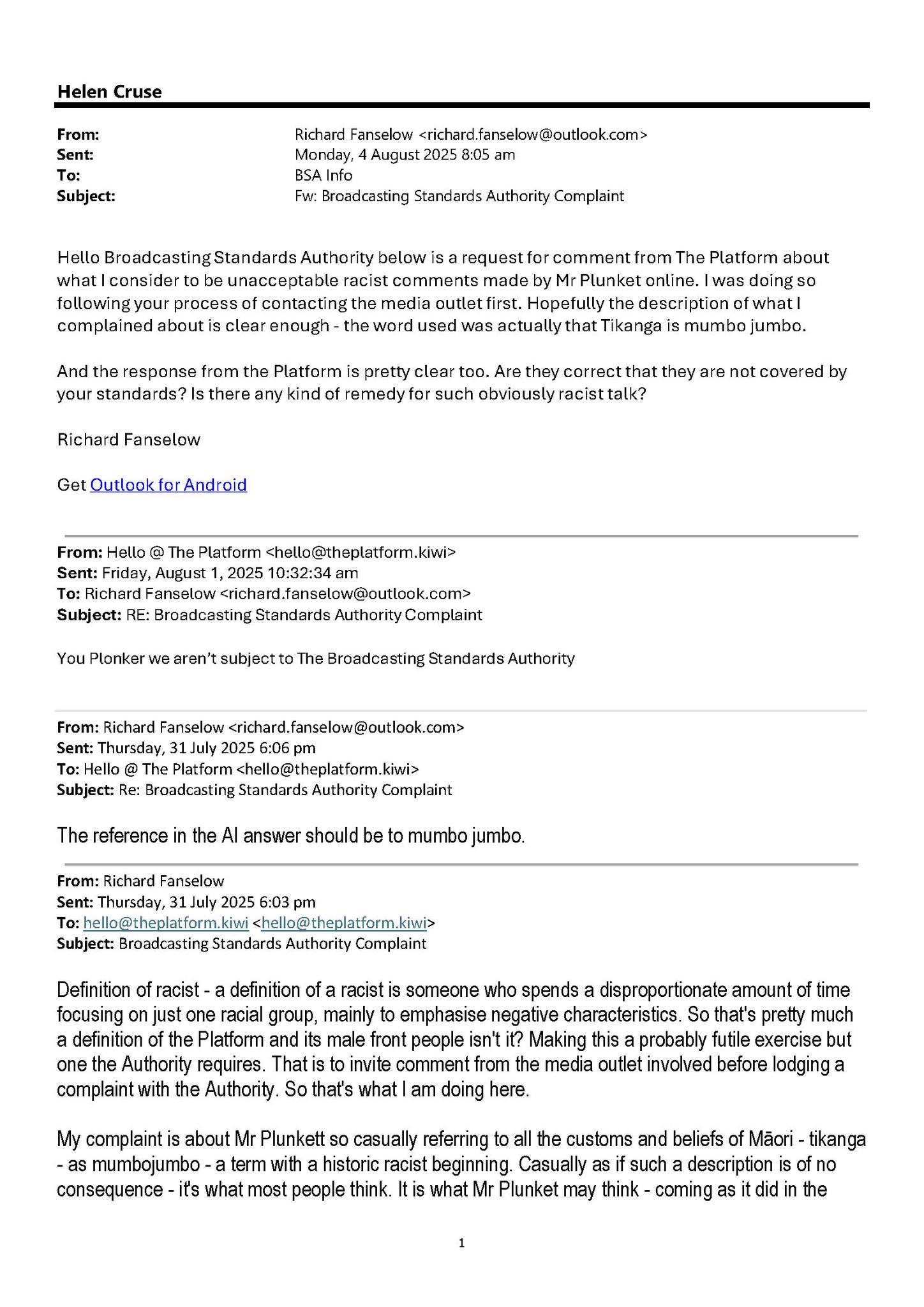
The Broadcasting Standards Authority (BSA) has recently decided to go after Sean Plunket and his online radio show, the Platform. The BSA has unilaterally decided that they have the legal authority to oversee his online presence and consequently, I would argue, the work that Bob McCoskrie and I do via our social media platforms as well as the work of Reality Check Radio (which I also host a show on). In particular, the BSA is entertaining a complaint from someone who is offended that Sean said tikanga is “mumbo jumbo”.
Yes, it’s that serious. Not.
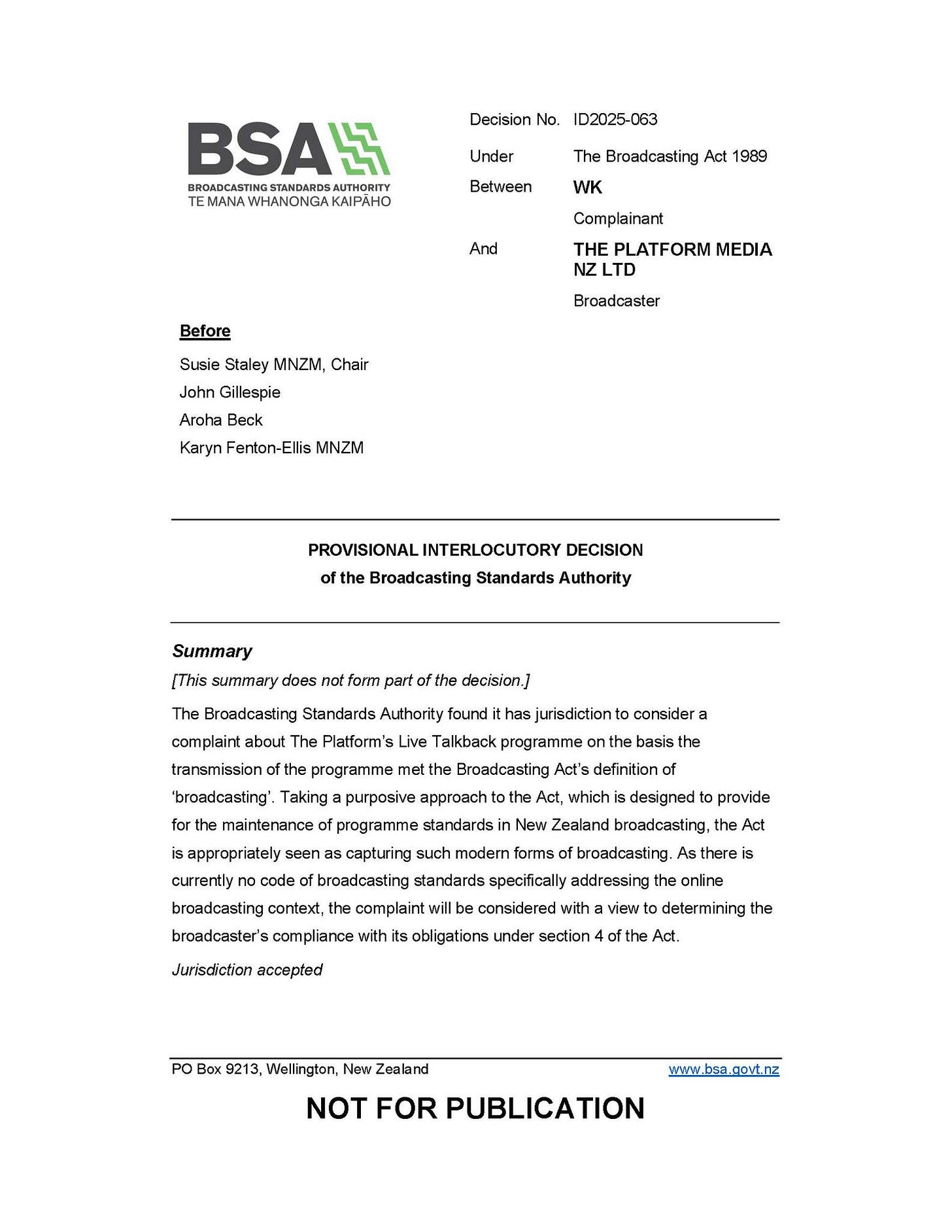
Liam Hehir and David Harvey have both done excellent legal analysis of what is happening, or rather what should not be happening. I am no lawyer, so my take is more political and general.
The first issue is organisations such as the BSA reinterpreting laws without the consent of parliament. This is undermining parliamentary sovereignty, a principle that grounds our democracy. Parliament alone makes the laws – not the courts or authorities like the BSA.
The Broadcasting Act 1989 is very clear that the BSA’s mandate is television and radio broadcasts (that which is transmitted and received) and importantly, over those who have purchased frequencies and pay the BSA an annual levy. As you would expect of a 1989 law, it does not include online radio, internet podcasts, YouTube videos or Facebook Lives.
Yet the BSA has decided it could, by its own initiative, reinterpret the law. No recourse to parliament, no discussion with ministers and MPs, no public consultation.
It should be said that parliament has had many chances to review and update the act, but has not. The only law-making body in the country – parliament – has actively chosen to leave things as they are.
I suggest, however, this is not without precedent with a growing list of entities giving parliament the figurative middle finger. For example, the Supreme Court recently decided that tikanga is now the ‘first law of New Zealand’. The same court also reinterpreted the Marine and Coastal Area (Takutai Moana) Act 2011 expressly against what the parliament intended. Whether you agree with the court’s view or not is irrelevant – the critical observation is that such decisions should be (and are) the purview of parliament, not the courts.
Family First was deregistered as a charity as, once again, the courts decided it was now their job – and not parliament’s – to define social norms. In this judgement, the court decided that promoting the traditional family was no longer relevant. Similarly, we can look at how Organ Donation New Zealand decided to create protocols to allow access to the organs of euthanised patients. Parliament never discussed this (I know, I was there!) or entertained the idea, but the bureaucrats have decided that because it is not explicitly ruled out, they can rule it in. Rather than going back to the lawmakers, they have acted unilaterally in the same was the BSA has.
There are many more examples, but in each case, it is for parliament to decide these matters. Not unelected judges and faceless bureaucrats.
It is speculative, but the BSA’s motivation appears censorious. They want to control more than simply radio and television, but also alternative channels like the Platform, RCR, and Family First (among others). In fact, if the BSA were to succeed in widening its mandate to include these groups, it would also be able to claim jurisdiction over any group or individual sharing (‘broadcasting’) their views online. As attempts to introduce hate speech laws have failed, the progressive left continue to seek other means to impose their restrictions.
Such censorship via the BSA can be easily be exercised simply by indulging the vexatious progressive activists. The complaint against the Platform is a nonsense. But if the BSA gets its way, the process will become the punishment. Every complaint takes time and money to process, no matter how puerile or groundless. It won’t matter if 99.9 per cent of complaints fail, because 100 per cent of them will distract the entity being targeted – be this Sean Plunket, myself and Bob McCoskrie, Paul Brennan, and anyone else.
It is encouraging to see so many people, from donors to lawyers and everyone in between, rallying behind Sean and pushing back against this excess of the BSA. Like me, they can see the bigger issues here and are keen to put a stop to this now.
But there are two important opportunities here as well. Firstly, it is a chance for parliament to reassert its rightful authority and put the likes of the BSA and courts in their place. Government ministers, and parliament, should take this moment to reassert the principle of parliamentary sovereignty. As I noted at the start, it is parliament alone that makes the laws – not courts, not bureaucrats, and not authorities like the BSA. Secondly, this BSA overreach also raises the question why we need the authority at all. Just as the law is arguably outdated, so too is the BSA.
It would be ironic if the BSA’s attempt to control what Kiwis see and hear, leads to kiwis ultimately seeing and hearing no more of the BSA.
In Media
Earlier today, I did an online radio interview on RCR with Jillaine Heather from the Free Speech Union on this very topic. Jillaine and I discuss the BSA’s actions more widely, so check it out here or below:

This article was originally published by On Point.