Table of Contents
As Thomas Sowell has said of the declining American education system: “The problem isn’t that Johnny can’t read. The problem isn’t even that Johnny can’t think. The problem is that Johnny doesn’t know what thinking is.” To make things even worse, Johnny can’t do basic maths, either.
Five years ago, about 30 incoming freshmen at UC San Diego arrived with math skills below high-school level. Now, according to a recent report from UC San Diego faculty and administrators, that number is more than 900 – and most of those students don’t fully meet middle-school math standards. Many students struggle with fractions and simple algebra problems.
When universities are having to implement remedial maths for high school graduates who can’t even divide a fraction by two, that’s a damning indictment on the public education system. Don’t blame the kids: blame the system that accepts such appalling failure as achievement.
It also turns out that Sowell was bang on: these kids don’t even know how to think.
One of the course’s tutors noted that students faced more issues with “logical thinking” than with math facts per se. They didn’t know how to begin solving word problems.
These are not fine arts majors for whom maths is irrelevant, either. These are STEM students. Kids who arrive at a calculus course unable to do even algebra. In fact, they can’t even master ‘quantitative literacy’: knowing which fraction is larger (i.e., 1/4 or 2/3) or that a slope on a graph is positive when it’s going up. “We are just seeing many folks without that capability,” Janine Wilson, the chair of the undergraduate economics programme at UC Davis, says.
Sure, some of it is that more students are choosing STEM majors, which is a pretty good thing. Naturally, then, more are being funneled into introductory maths courses. But, overall, the trend is real and alarming: American students are getting much worse at maths.
The trend began to show about a decade ago. What happened, in the last 10 years? DEI.
Schools across the country have been lowering standards and removing penalties for failure.
It’s not just the ‘everybody wins a prize’ generation, though that’s a large part of it. An even larger part, especially for minority students, is a ‘progressive’ obsession with ‘equity’, which in practice means that everyone is dragged down to the lowest common denominator. Black students, for instance, who can’t write a grammatically correct sentence or do basic maths, are comforted that it’s ‘racist’ to expect any better of them.
The real racism is the lowered expectations that assume that black kids can’t write or do maths properly. In pandering to kids, the simpering lefties who run the education system have simply let them down. Teachers don’t have to be a bullying tyrant like Fletcher (J K Simmons) in Whiplash, but they’re not doing anyone any favours by patting them on the head and saying, ‘Well, at least you tried,’ and then moving them up to the next grade anyway.
Raising expectations raises results.
During the George W Bush administration, federal policy emphasized accountability for public schools. Schools that saw poor performance on standardized tests received increased funding at first, but if scores still didn’t improve, they had their funding pulled. Research suggests that this helped improve math outcomes, particularly for poor black students.
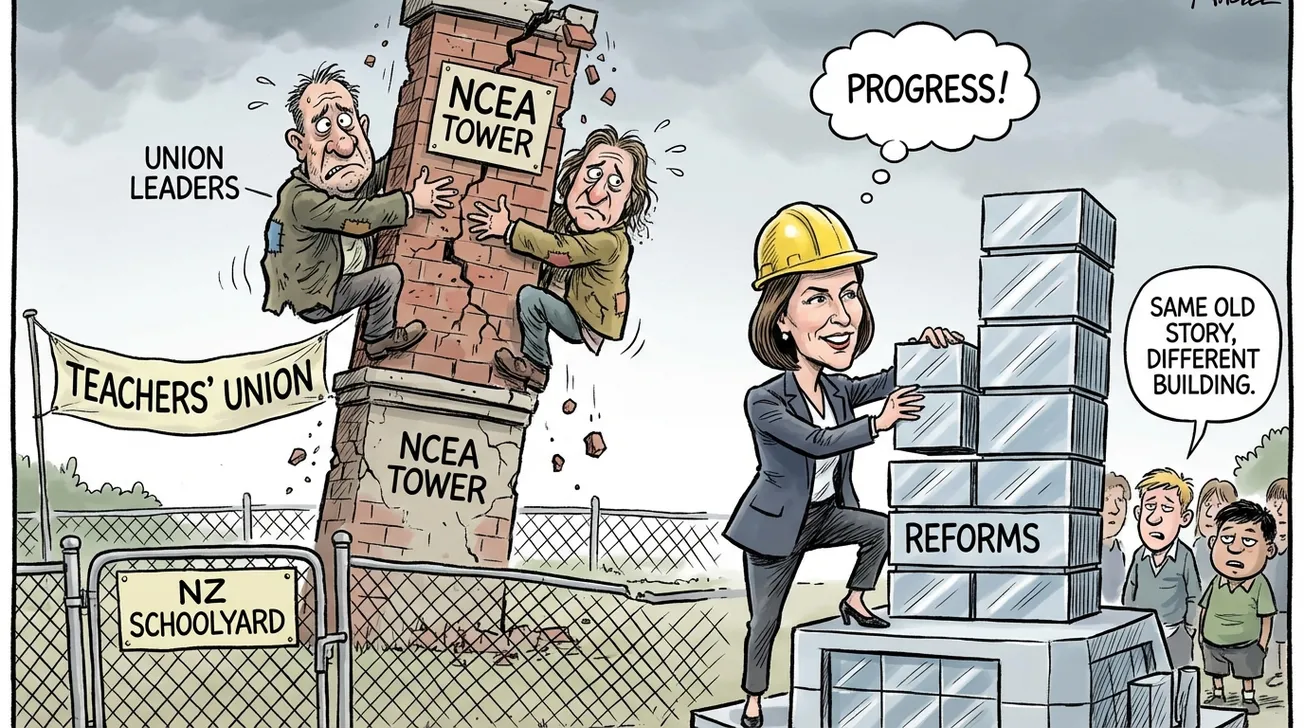
Then came the Obama era. Suddenly, to paraphrase The Simpsons, confidence-building tried to replace real learning. Teachers’ unions and activists demanded less emphasis on standardised tests and expecting students to actually get answers right. Yet, even as students’ actual maths ability was dropping like a stone, their grades were going up. More than a quarter of students placed into college remedial maths had earned straight As in high school maths.
The kids don’t know they’re failing, because their teachers won’t tell them.