One of the most damaging and counterfactual ideas to dominate the imaginations of ‘progressives’ is the completely a-historic notion of the environmental sanctity of ‘indigenous people’. This Noble Savage myth only survives because academics are all-too willing to lie through their teeth to the pampered elites who have never been closer to the natural environment than a package tour or watching David Attenborough on their big-screen TVs.
The truth is, as Jared Diamond wrote, that “tribal peoples often damage their environments and make war”. The only reason that they don’t do so more obviously devastatingly is their technological and population limitations. A tribal war may not seem like much, but proportionally, it’s more destructive to the population than even a WWII. Just ask the Moriori. If the Bongo Bongo tribe could nuke those bastards in the village across the river, you betcha they would.
Even with technology limited to sticks, stones and fire, though, they could wreak enormous environmental devastation. The Māori arrival in New Zealand led to the rapid extinction of the moa and Haast’s eagle. They also cleared vast tracts of forest across the South Island to create open land for hunting and settlement. Similar patterns appear elsewhere. Human arrival in Australia coincided with the disappearance of megafauna. Early Aboriginal populations systematically cleared large areas of east-coast forest, converting them into open hunting grounds through regular burning.
Pre-modern societies frequently damaged their environments when population pressure and technology allowed it. As Diamond wrote, the romantic notion that tribal and indigenous peoples lived in perfect harmony with nature is largely a myth. This is not a condemnation: it’s the harsh reality of trying to survive in a pre-modern world. When people are struggling to feed their families and keep warm, they will clear forests, hunt species to extinction and burn whatever fuel is available. Only after they become prosperous do they begin to value untouched wilderness and stable ecosystems.
Wealthy societies can afford to care about the environment. Poor ones cannot. The wealthiest country in the world is a textbook example.
Two hundred and fifty years into the American experiment of self-government, the United States has produced the greatest conservation success story in human history. This may sound strange in an era in which America is more commonly portrayed as an environmental villain than an environmental pioneer. According to the media, Hollywood, and the political left, the US and its capitalist system, built on the protection of property rights, care only about profit at the expense of wildlife and the environment, but the data thoroughly reject this notion.
But then, the data on almost anything thoroughly rejects the notions peddled by the media, Hollywood and the left.
In reality, the US went from nearly exterminating much of its native wildlife in the late 19th century to becoming the global gold standard for wildlife restoration and conservation. We did it not through top-down control or anti-human environmentalism, but through a culture of hunting, private stewardship, scientific management, and widespread access to the outdoors.
Like the leftist narratives of ‘Indian genocide’ and ‘stolen land’, what has happened is that the usual suspects have fixated on a distorted view of a scant few decades of the late 19th century to pretend that they characterise the entire half-millennium of modern American history.
In the late 1800s, many of America’s wildlife species, especially game species, were in catastrophic decline. For perspective, the white-tailed deer population around the turn of the 20th century dipped to between 300,000 and 500,000 animals; there are between 30 and 35 million today. The American pronghorn, often called antelope, numbered only 12,000 in 1900 and has rebounded to north of one million. Likewise, there are over one million elk in the country, versus only 41,000 a little over a century ago. Waterfowl species were all nearly eliminated, and today there are regulated waterfowl hunting seasons in all 50 states. In the mid-1900s, there were only 412–417 bald eagle nesting pairs left; today, our national bird numbers nearly 320,000, including north of 71,000 nesting pairs.
Yet, America reacted with alacrity, as soon as the scale of the devastation was realised.
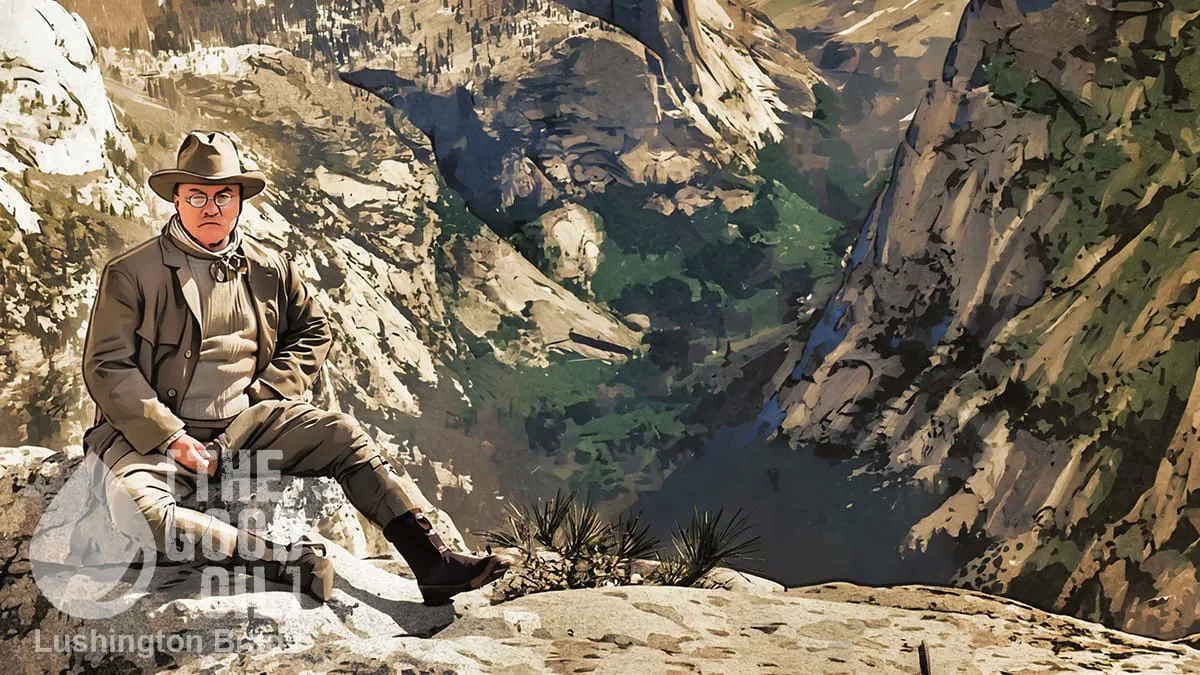
The nation’s relationship with the land and its wildlife changed with the rise of Theodore Roosevelt, America’s “conservation president.” T R was a hunter, outdoorsman, rancher, and conservationist who believed wildlife should be preserved through responsible stewardship and sustainable use.
During Roosevelt’s presidency, millions of acres of land were placed under federal protection through national forests, parks, and wildlife refuges. The conservation movement sparked by T R and others such as Aldo Leopold, the “father of wildlife management,” shifted the mindset of American hunters and outdoorsmen and became what is now known as the North American Model of Wildlife Conservation, the envy of hunters and conservationists the world over.
At the same time, America’s steamrolling prosperity afforded the union the luxury of environmentalism. It was a textbook case of what is called the “Environmental Kuznets Curve”: as societies grow richer, pollution and environmental degradation first rise with industrialisation, then fall as wealth increases. People demand cleaner air and water, invest in better technology and set aside land for conservation. This is not theory. It is visible in the data.
Wildlife became a public trust resource, not the property of kings or aristocrats, as it had often been across Europe. States implemented regulated seasons, bag limits, and science-based population management. Commercial sale of game meat was highly regulated to prevent unsustainable harvest. While these early regulations were necessary, the ultimate success of America’s conservation project was due to mass buy-in by the public and the fact that these efforts were largely funded by private citizens.
The 1937 Pittman-Robertson Act placed taxes on guns, ammunition, and archery equipment and directed that money toward habitat restoration and wildlife management. Hunting licenses, tags, and duck stamps provided additional conservation funding. Private organizations such as the Boone and Crockett Club (founded by Roosevelt), Ducks Unlimited, and the Rocky Mountain Elk Foundation helped restore wildlife habitat on an enormous scale.
While keyboard warriors shake their flabby fists in fury at modern big-game hunters, those gun totin’ tourists pour vast sums into conservation for every lion or giraffe they shoot. Similarly, in Australia and New Zealand, hunters spend a great deal of time and energy in conservation efforts, so that they actually have something to shoot. It may not be a moral path a blue-haired, septum-pierced vegan approves of, but it does far more practical good for the environment than Tarquin Hyphenated-Surname ever will.
America’s wildlife recovery shows what works: property rights, regulated use, scientific management and broad public support funded by those who actually value the resource. These are the tools of prosperous societies. Poor ones are still busy securing the basics. Conservation on any meaningful scale has always followed wealth, not preceded it.