Table of Contents
Peter Murphy
Peter Murphy is senior fellow at CFACT. He has researched and advocated for a variety of policy issues, including education reform and fiscal policy, both in the non-profit sector and in government.
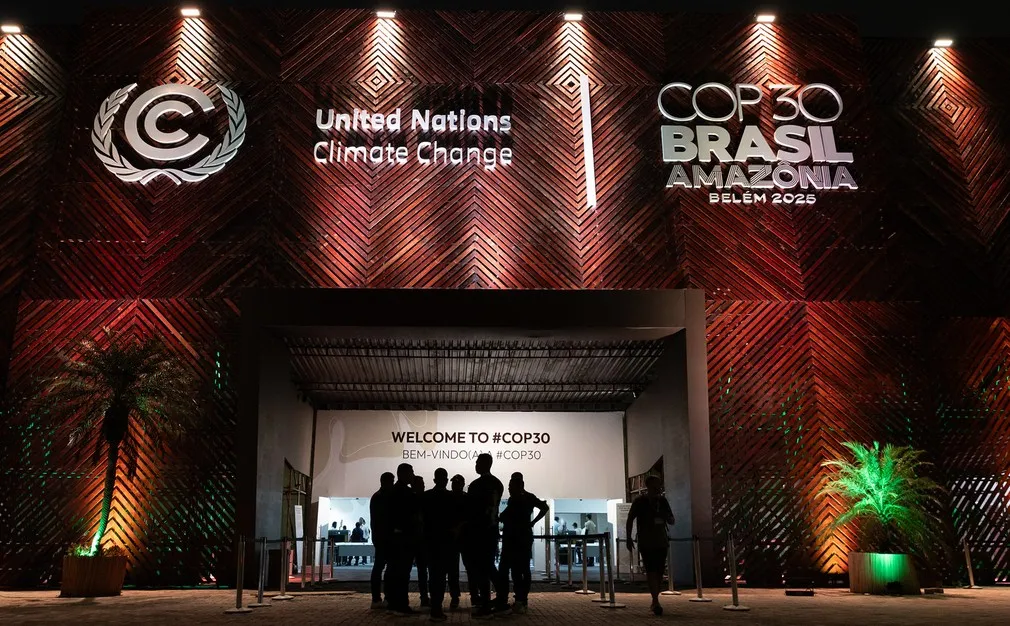
The CFACT crew has descended upon this year’s United Nations 30th Conference of the Parties, hosted by the nation of Brazil in the northern city of Belém. The adjacent and thought-to-be precious Amazon rainforest received a major haircut to make way for the new Avenida Liberdade highway and hotel space for this annual gabfest on climate existentialism. Right on cue, world leaders began the proceedings to sound the alarm.
The wrinkle for this year’s conference is that fewer people are listening to the familiar and shopworn admonitions about climate existentialism to the planet, starting with the executive branch of the wealthiest nation and one of the top climate donors.
Let’s start with the future king of the rapidly declining British Empire, William, the Prince of Wales. Following in his father’s climate footsteps, “Wills,” as his late mother, Diana, affectionately referred to him, warned: “All of us here today understand that we are edging dangerously close to the earth’s critical tipping points … The melting of polar ice, the loss of the Amazon, the disruption of ocean currents … these are not distant threats. They are fast-approaching and will affect every one of us, no matter where we live.”
Despite his vapid claim, “The science is clear,” the prince provided none in his speech. He should try next time with CFACT’s latest “Climate Fact Check” (here).
William also praised his father, King Charles III, for inspiring him on the climate issue, and it shows. His speech had a familiar ring, since then-Prince Charles said pretty much the same thing at COP26 in Scotland back in 2021, which he summed up as the “last-chance saloon” for the planet Earth.
His Royal Majesty the King has a long record of climate exaggerations and scaremongering that continue to be discredited with the passage of time, yet it gives his son and successor no pause or humility on the subject. In 2009, Charles warned that “irretrievable climate collapse” was just 100 months away. Just before 2017 came and went, he recalculated the point of no return to around 2050, thereby falling in line with the UN groupthink goal of achieving “net-zero” carbon emissions worldwide.
At this COP30, more than climate is changing, with at least one long-time activist and funder having second thoughts. Bill Gates, founder and former long-time head of the Microsoft Corporation and for a time the wealthiest man on planet Earth, has been rethinking his approach to climate by shifting his fortune to other, more urgent priorities. This matters greatly since he presides over the largest private foundation, valued at $86 billion.
While he still views climate change as a “problem,” Mr Gates said last month, “It will not lead to humanity’s demise” – a statement that cuts the legs out from under the entire climate agenda. That is because if the planet’s future and humanity itself no longer hang in the balance, there is no reason to light everyone’s hair on fire – and extract trillions of taxpayer dollars and debt – to purportedly deal with the matter.
Rather, Gates writes, “Our chief goal should be to prevent suffering, particularly for those in the toughest conditions who live in the world’s poorest countries.” This means curbing CO2 emissions will take a distant back seat.
The financial implications of this shift are significant. The massive Gates Foundation fortune shifting its priorities to fighting global poverty and disease in developing countries is money better spent. Trying to stop natural climate variations in one direction over the next 30 years will not feed one malnourished child, nor will it stop another diseased child from dying well before adulthood and the supposed climate Armageddon.
Another big change at COP30 is the effect of democracy leading to the re-election of Donald Trump as president of the US, resulting in the absence of his administration at COP30. The president is defunding the “Green New Scam,” as he describes it, which we will explore later this week.
Money is the mother’s milk of the climate industry. Having the richest country and the richest benefactor either pull the plug or shift priorities is a very big deal.
Which brings us back to Prince William. Notwithstanding the British royal family’s climate silliness and hypocrisy, I give credit to William and his lovely wife, Kate, who otherwise are genuine and committed public servants, in contrast to their pretentious grifter relatives residing eight time zones westward. With King Charles, who turns 77 this week and has been fighting cancer for two years, William will soon ascend to the throne as head of state to a rapidly declining Great Britain with a growing litany of troubles and crises that eclipse esoteric climate change.
Now that Prince William’s climate trek to Brazil and his virtue-signaling speech are behind him, he should focus his nation on energy development, the economy, migrant issues, and his nation’s assault on free speech, to name a few much higher priorities than climate.
This article was originally published by CFACT.