Table of Contents
Wait, I hear you cry: Captain Beefheart isn’t that obscure! I’ve heard of him. That is probably true: but Beefheart is one of those artists who plenty of people have heard of, but haven’t actually heard. Similar to Mark Twain’s apocryphal quip about books ‘much admired, but little read’, Beefheart is widely cited as a genius and an inspiration to generations of better-known musicians, but had almost no chart success.
So, what is all the obscure fuss about? Who was this weird, avant-garde singer, songwriter, multi-intrumentalist, poet, sculptor and visual artist?
This almost sounds normal. The Good Oil.
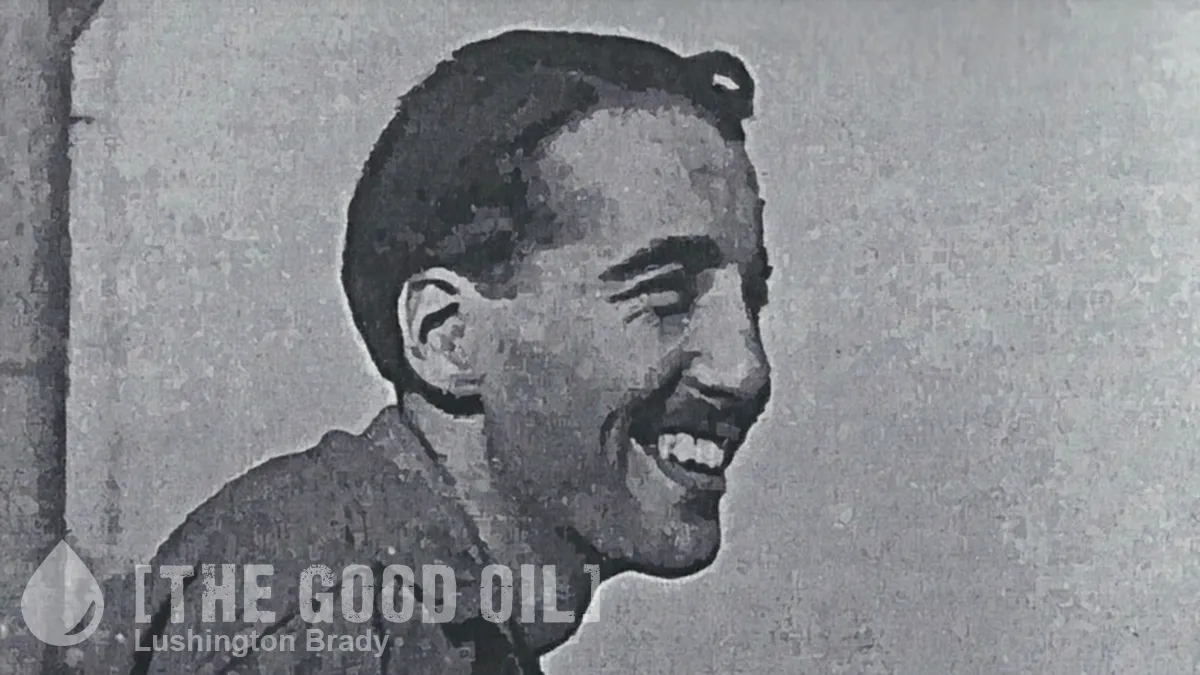
Captain Beefheart was born Don Van Vliet in Glendale, California, in 1941. He began painting and sculpting at age three and won a children’s sculpting competition at nine. However, his parents allegedly declined several scholarship offers, supposedly perceiving artists as ‘queer’. When he was 13, his family moved to a town in the Mojave Desert. The desert landscape would greatly affect his later art, as did a friend he met while hanging out with local bands: one Frank Zappa.
Zappa and Beefheart would go on to become decades-long friends and collaborators, a relationship marked by frequent tension and tumult. While acknowledging Beefheart’s eccentric, ‘difficult’ (to say the least) and often dictatorial personality, Zappa also recognised his unique talent, not to say genius. The two collaborated on early music projects, and Zappa would later produce and fund many of the 13 studio albums Beefheart released between 1967 and 1982.
The origin of the ‘Beefheart’ moniker is uncertain: Van Vliet was a notoriously unreliable narrator. The most common story is that Van Vliet’s uncle had a habit of exposing himself, urinating with the door open and describing his penis as a ‘big, beautiful beef heart’. Another story is that in an early jam, Van Vliet blew a bum note on the trumpet, which Zappa laughingly dubbed ‘b-fart’.
In 1964, Beefheart was invited by former classmate Alex St Clair to be lead singer for the band he was forming, the Magic Band. Given Beefheart’s personality, it wasn’t long before they were Captain Beefheart and His Magic Band. The Magic Band would go on to become a backing band with a rotating roster (mostly as members dropped out due to mental exhaustion) that included dozens of musicians, many of whom would also perform with Zappa’s The Mothers of Invention and other Zappa projects. The Magic Band’s lineup on the first album, Safe as Milk, featured a young Ry Cooder on guitar (Cooder quit shortly before the Monterey Pop Festival, after a gig was cut short at the first song by Beefheart walking off a 10-foot high stage: because, he said, a girl in the audience turned into a fish and blew bubbles from her mouth).
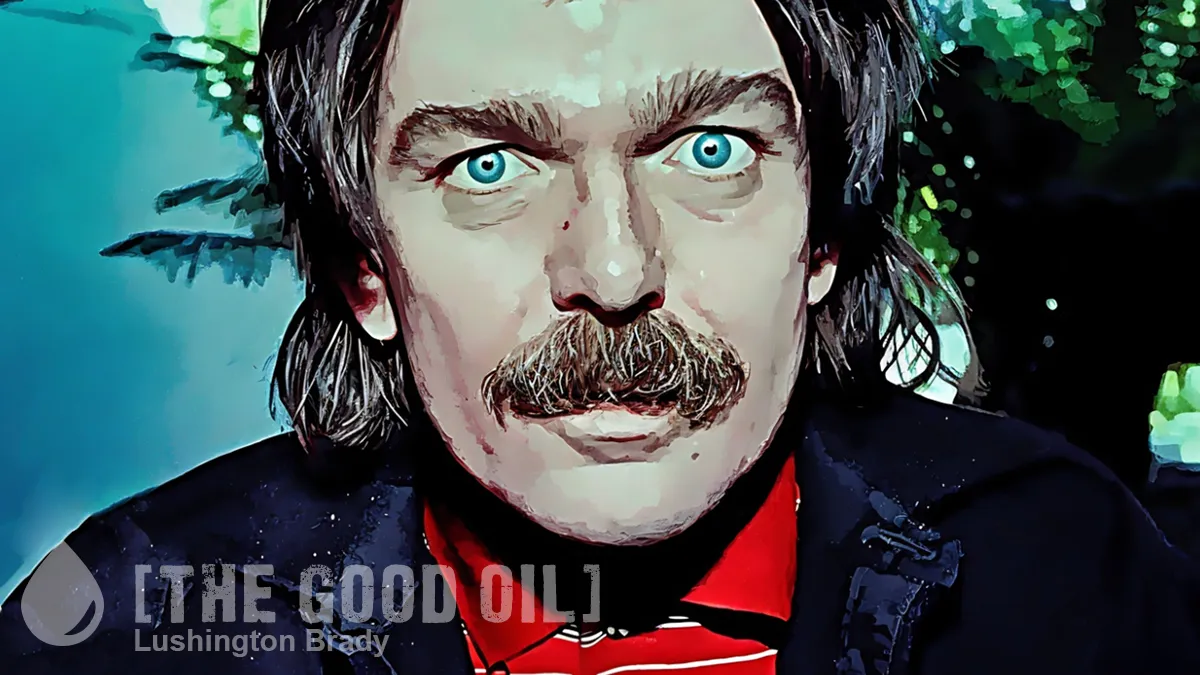
Beefheart’s music is characterised by both art rock stylings and his gravelly voice: both heavily influenced by Delta Blues. His voice is often compared to Howlin’ Wolf, with a wide vocal range, leading him to be dubbed the greatest white blues singer. His musical style is an almost indescribably fusion of blues, avant-garde jazz, psychedelic rock and just plain weirdness. Imagine Robert Johnson reeling off absurdist poetry filtered through a fractured lens of schizoid paranoia, LSD and wild, dissonant, experimentation.
The Magic Band performing “Electricity” on Venice Beach, minus theremin unfortunately. The Good Oil.
The weirdness was definitely present, if somewhat restrained, on the first few albums. Safe as Milk opens with the almost-straightforward blues-rock stomper, “Sure ’Nuff’ n’ Yes I Do”. “Dropout Boogie” could almost have been lifted from the Mothers’ Freak Out! album. “Electricity” is one of my personal favourites, with its crazy, ’50s-SF-style, use of the theremin. Supposedly, Beefheart’s vocal performance shattered a studio microphone. Other songs, like “I’m Glad”, are almost straightforward doo-wop pop.
The next album, Strictly Personal, continued in much the same vein. But neither album prepared the world for what would come next. Trout Mask Replica (1969), a double album, is both Beefheart’s magnum opus and one of the most difficult albums (for the unprepared listener) ever released. Trout Mask is perhaps best described by Simpsons and Futurama creator Matt Groening, who bought it at age 15 after reading a recommendation by Zappa:
“I thought it was the worst thing I’d ever heard. I said to myself, they’re not even trying! It was just a sloppy cacophony. Then I listened to it a couple more times, because I couldn’t believe Frank Zappa could do this to me – and because a double album cost a lot of money. About the third time, I realised they were doing it on purpose: they meant it to sound exactly this way. About the sixth or seventh time, it clicked in and I thought it was the greatest album I’d ever heard.”
This is one of the easier songs on the album. The Good Oil.
I can confirm: even after being introduced to and falling love with Beefheart, I hated Trout Mask, until I forced myself to listen to it for the fifth or sixth time. Then it all fell into place. It’s definitely not easy listening: I’d advise anyone new to Beefheart to avoid it and listen to most of his other work first. Think of it as a warm-up for the Everest of rock albums – bloody challenging, but worth it when you reach the pinnacle of its musical landscape and the stunning vista finally reveals itself.
The creation of Trout Mask was no less a trial-by-ordeal for the Magic Band. Always a dictatorial taskmaster, Beefheart effectively locked the Magic Band in a small rented house for eight months of rehearsals and mindfuck. With almost no income, the band lived on a subsistence diet of sometimes no more than a cup of soybeans a day – a visitor described them as “cadaverous”. As well, Beefheart would periodically subject band members to extreme verbal abuse, sometimes continually for days. At the same time, they rehearsed for more than 14 hours a day, in the “positively Manson-esque environment”.
The result? A stunning musical achievement, which regularly appears on lists of greatest albums of all time. Lester Bangs dubbed it “a total success… brilliant, stunning… then and now, it stands outside time, trends, fads, hypes”. John Peel ranked it as the best pop album ever made, saying, “If there has been anything in the history of popular music which could be described as a work of art in a way that people who are involved in other areas of art would understand, then Trout Mask Replica is probably that work.”
On the other hand, Robert Christgau called it “very great played at high volume when you’re feeling shitty, because you’ll never feel as shitty as this record”.
Certainly it was a pinnacle of sorts: later albums never matched its sheer experimentation, even if they slowly shifted toward an almost accessible version of the Beefheart vision. Clear Spot (1972) is probably the easiest Beefheart album and one of the better starts for new listeners. “Her Eyes are a Blue Million Miles” was later featured on the Coen brothers’ The Big Lebowski soundtrack. Ice Cream for Crow (1982), Beefheart’s last studio album, still had ‘it’ in flashes, but by then Don Van Vliet was done with music.
Beefheart’s sole concession for the MTV generation. The Good Oil.
In the mid-’80s, he abandoned music and became a recluse who dedicated his life to art and poetry. At the same time, multiple sclerosis gradually crippled his body. By the early 1990s he was confined to a wheelchair. He died from complications of MS in 2010.
He left behind a lasting legacy: not just his own music, but the massive influence he exerted on generations of musicians. John Cale, Little Feat, Laurie Anderson, Devo, the Clash, John Lydon (Sex Pistols/Public Image Ltd), XTC, Sonic Youth, Talking Heads, Blondie, the B-52s, Tom Waits, Franz Ferdinand, the Red Hot Chilli Peppers, PJ Harvey, the Pixies and Kurt Cobain all cited Beefheart as an influence. David Lynch cited Trout Mask Replica as his favourite album, which definitely makes sense.
“Once you’ve heard Beefheart”, says Tom Waits, “it’s hard to wash him out of your clothes. It stains, like coffee or blood.”