Table of Contents
For a while in the early ’80s, it was almost de rigeur for the more chin-stroking kind of self-important music critic – which is to say, music critics – to introduce any British band of a New Wave persuasion as ‘one of the few bands to survive the Punk Explosion’.
As it happens, there was a tiny kernel of truth to this: the Punk Explosion was, like the Indie scene of the mid-late ’80s (which was indeed Punk’s immediate offspring), an embarrassment of riches. Taking to heart Sideburns fanzine’s exhortation, “This is a chord. This is another. This is a third. Now form a band,” across the land there were 15-million fingers learning how to play and in every pub there was a little band with an itch to scratch.
While a select few survived to become superstars, almost all of them disappeared without a trace. A lucky few got to at least make some records and a bit of a reputation before imploding, but few became household names. Even though some of them were “just as raw, just as revolutionary, and in some cases even more ahead of their time” than the Big Three of the Sex Pistols, the Ramones and the Clash.
These are the unsung heroes who helped shape punk rock but were lost to time, geography or just plain bad luck. Let’s get started.
One of the most remarkable of them would have to be Death. Long before Ian Astbury dubbed Andi Sex Gang “the Gothic Goblin”, long before Joey Ramone shouted, “Hey, ho! Let’s go!” or the Bad Brains showed that black music wasn’t siloed in funk or reggae, Death were playing punk long before punk.
Death was formed in Detroit in 1971 by three African-American brothers: David, Bobby, and Dennis Hackney. Let that date sink in – 1971. This was before the Ramones, before the Sex Pistols, before anyone was calling it punk rock. Death was playing fast, aggressive proto-punk when their contemporaries were still doing funk and soul.
Record labels were interested, but they wanted the band to change their name. David Hackney refused. Death it was. Death it would stay.
The band broke up in the mid-’70s, completely unknown. Their recordings sat in an attic for decades until they were rediscovered in 2009. Suddenly, the world realized what had been lost.
In September of 2009, a reformed Death played three shows with original members Bobby and Dennis Hackney, with Lamb’s Bread guitarist Bobby Duncan taking the place of the late David Hackney. Death's story proves that punk rock wasn't just a white British and American phenomenon. It was a spirit that existed wherever people refused to conform.
The Drones – not to be confused with the more recent Australian band of the same name – formed in Manchester in 1975, rubbing shoulders with the likes of the Buzzcocks and the Fall. But where their contemporaries polished their sound to get record deals, the Drones “stayed deliberately primitive and confrontational. Their guitarist MJ Drone created a wall of distorted noise that was almost hypnotic in its repetition.” Only releasing a single EP during their first incarnation, the Drones, with their minimalist, noise-rock approach, influenced countless bands who came after them. Think Wire, for instance, and you won’t be far off.
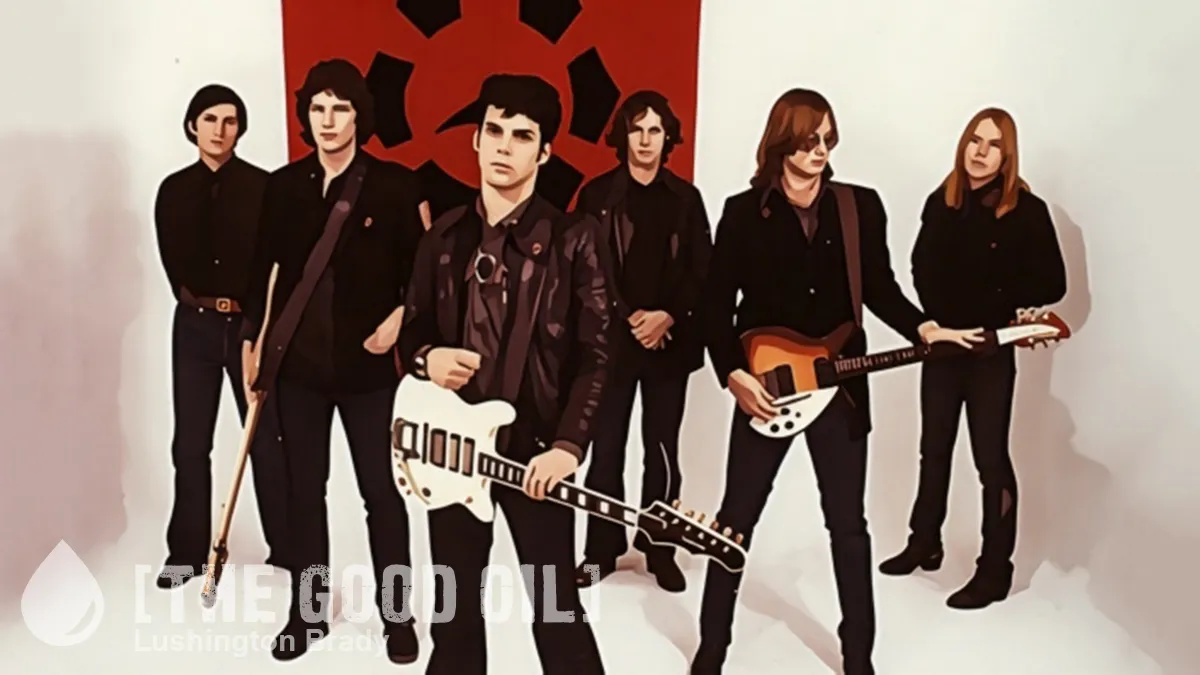
One of the more fascinating things about punk is that it exploded in so many places, independent of each other. Completely unaware that any of the others existed, the Sex Pistols in London and the Ramones in New York hit upon the same, stripped-back-to-basic, loud’n’fast sound that defined punk. So did two bands in Australia: the Saints in Brisbane, and Radio Birdman. The Saints went on to (relative) fame, with their debut single, “(I’m) Stranded”, dubbed “the single of this and every other week” by Sounds. Not so their contemporaries (the two bands played double bills occasionally in Australia), Radio Birdman.
In 1974 […] Radio Birdman combined the raw energy of Detroit proto-punk bands like the Stooges with surf rock aggression. Led by Deniz Tek, an American medical student studying in Australia, they created a sound that was fierce, intelligent, and completely out of step with mainstream Australian rock.
The problem? They were too punk for Australia’s radio-friendly rock scene and too geographically isolated to connect with the UK and US movements happening simultaneously.
Not to mention that singer Rob Younger refused to cut his hair – an unforgivable sin for the too-fashion-conscious British music press.
Their 1977 album Radios Appear is now considered a classic, but at the time it barely registered outside Australia. The band broke up in 1978, frustrated by their inability to break through. They would go on to reform and tour several times over the next four decades. In 2024, Radio Birdman toured Australia to celebrate their 50th anniversary.
The band proved punk was a global phenomenon, not just an Anglo-American one. They influenced Australia’s entire independent music scene, even if the world didn’t notice.
On the other hand, their shadow over the late ’70s/early ’80s Sydney music scene was a long one. As Blackie from the Hard-Ons recalled, it seemed like everyone in inner-city Sydney was walking around with their guitar slung low like a machine-gun, aping the pose of Birdman’s Deniz Tek. Still, when then-industry darlings Silverchair joined with Tim Rogers to perform Birdman’s explosive anthem, “New Race”, at the 1995 ARIA awards, it was maybe a kind of vindication. But post-career vindication is a dish that’s pretty cold. As Robert Forster of the Go-Betweens said of their posthumous valorisation by the music biz, “If we were so fucking great, why did no one buy our records?”
Ireland’s contribution to punk rock often gets overlooked, but Dublin’s Radiators from Space were there from the beginning. Formed in 1975, what set the Radiators apart was their lyrical intelligence. While many punk bands relied on shock value and simple slogans, the Radiators tackled social issues, Irish identity, and working-class life with wit and sophistication. Lead singer Philip Chevron was a genuine poet.
They were one of the first Irish punk bands to get a record deal, releasing their album TV Tube Heart in 1977. It should have made them stars, but being based in Dublin meant limited exposure. The British music press largely ignored them.
Still, you might recognise the name Philip Chevron. Chevron (real name, Philip Ryan) later found fame with the Pogues. He became a full-time member of the band between the release of their first and second albums. He left in 1994, but later rejoined the band on tour through the 2000s, as well as remastering their back-catalogue for CD release. He died from cancer in 2013.
The Screamers were legendary in LA’s punk underground. They headlined major clubs and influenced everyone from Devo to industrial music pioneers […]
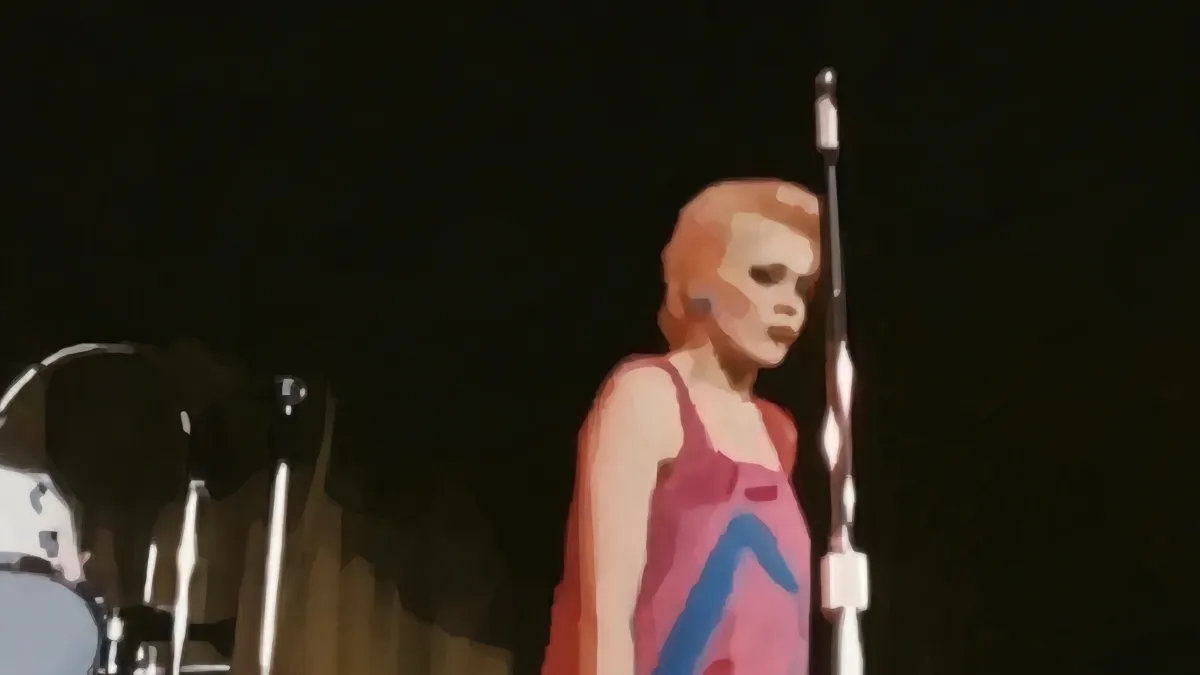
Los Angeles had a vibrant punk scene in the late ’70s, but no band was quite like the Screamers. Formed in 1975, they were punk rock’s great mystery. Here’s what made them unique: they had no guitar. Instead, keyboardist Paul Roessler created aggressive synthesizer-driven sounds that were years ahead of their time. Combined with the theatrical vocals of Tomata du Plenty, they were like a punk rock performance art piece.
The Screamers never released an official studio album. They were intent on creating a video album, but the concept was too ahead of its time in the ’70s. They broke up in 1981. All that remains are bootleg recordings from rehearsals and live shows.
These are just a few of the bands who didn’t survive the Punk Explosion. The video below has a few more, but that barely scratches the surface.
And, as the excellent double-LP compilation, It’s Bigger Than Both of Us proves, New Zealand had more than its share of unsung punk heroes, too. Maybe someday, someone will write their histories.