Table of Contents
Simon O’Connor
Husband, step-father, foster dad, and longtime student of philosophy and history. Also happen to be a former politician, including chairing New Zealand’s Foreign Affairs, Defense, and Trade Committee.
I’m not sure about you, but it is hard to reconcile the words of Jacinda Ardern who on one hand said she wanted to punch a political colleague in the face and yet on the other is discussing wanting a different type of politics, one based around kindness and decency. This contradiction has more recently come to light during an interview with UK talk show host Graham Norton.
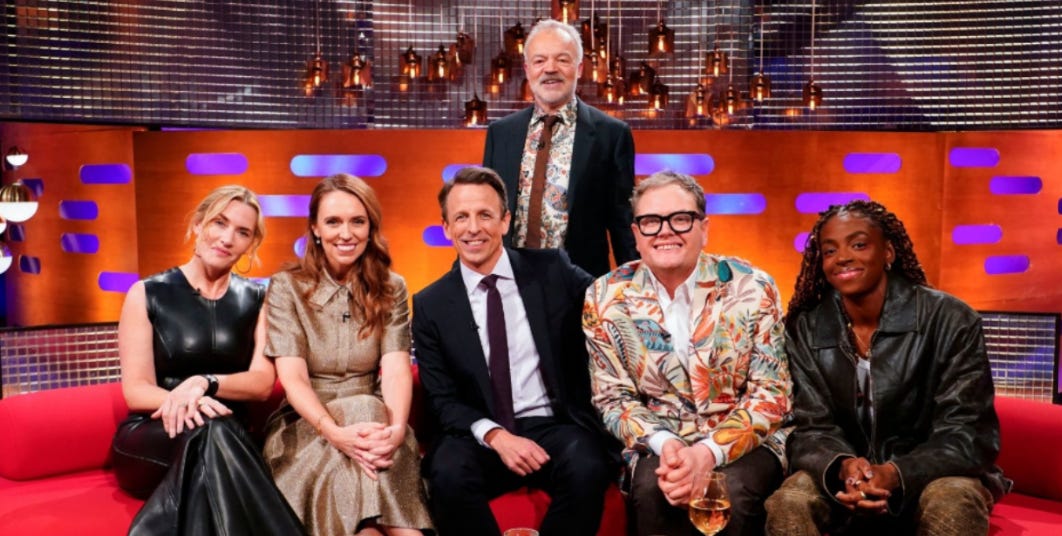
Yet in many ways, we don’t need to reconcile her utterances because we are presented with the classic ‘Do as I say, not as I do’ situation. She will talk about decency, but it doesn’t apply to her. I would argue, that those on the progressive left are very comfortable with violence (be this in word or action) when in the service of their views and ends. They will talk frequently about kindness, decency, tolerance, and diversity but these qualities only apply to their side of matters. There is to be little (or no) kindness or decency extended to people or movements that hold a contrary view.
As I have written before, woke progressives have a moral certainty that they are good and right. Ipso facto, those who disagree with them are bad and wrong. It is then rather easy to argue that tolerance and acceptance for wrong, or bad, people would be inappropriate. Taking it a step further, it is acceptable to want to punch opponents because progressive anger is justified given the provocation of hearing an alternative and ‘wrong’ view. The woke are so morally certain that erroneous views must be removed for the safety of everyone else.
It is why the progressive left are desperate for hate speech laws and codes of conduct: the latter so they can entrench their views and exact employment consequences on those who disagree. It is also why the extreme extension of this viewpoint has played out in the United States with the killing of Charlie Kirk and the assassination attempts on Donald Trump.
I wrote earlier in the year how New Zealand has a growing problem with political violence – be this words or actions. To be clear, I am not suggesting an equivalence between violent words and violent actions. Despite attempts by left-wing activists to conflate the two, they are materially different. But we can still talk about violent rhetoric and challenge its place in our society. We do not need the Jacindas of the world talking about punching someone in the face, nor the Māori Party talking of cutting down MPs they don’t agree with like grass with a weed eater.
Violence is the resort for those without reasonSimon O'Connor 11 Sept Read full story
Whether it’s Greenpeace blocking commercial operations or pro-Hamas protestors disrupting parliament several days back, trans activists beating up women in Albert Park or the likes of Extinction Rebellion gluing themselves to roads – it is all coming from the left. Yet legacy media and left-wing politicians continue to raise the presence of far-right extremism as if it is an equivalent threat. It is not.
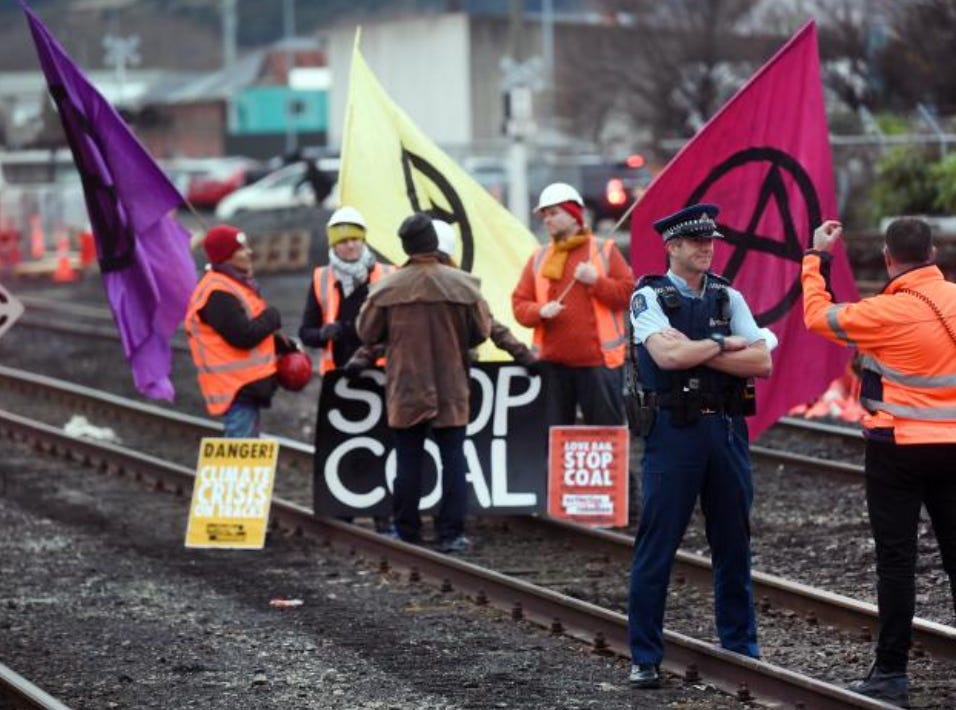
Let’s be clear, violence from any side of the political spectrum is wrong. There are also credible far-right threats. Yet the more progressives talk about the threat of the right, the more actual violence we hear and see from the left.
Returning to Jacinda’s utterances. The context is from her recently released documentary, where she is filmed after an exchange with then leader of the opposition, Simon Bridges, around the economy – saying to camera after the exchange, “I wanted to punch him in the face.” That this was kept in the documentary is striking for despite her talk of kindness, she and the producers felt perfectly comfortable for this contradiction to remain. The ‘why’ is due to what is discussed above – those in support of her views will not see inconsistency, but instead a moral certainty.
Strikingly, when I posted to social media calling out this inconsistency, her supporters were quick to say this was humour, metaphorical, situational, colloquial, or simply that we all need to move on. It seems there are plenty of excuses available for someone wanting to hit another person. Of course, as we all know, had this been an example in reverse, these same people would be crying out for a resignation and no excuse would suffice.
Legacy media have also failed to address the double standard. Almost every month we get sermon-like articles about the unacceptable abuse towards elected officials, often framed as a gender issue (that is, women politicians are targeted more). Yet this example is overlooked, with no commentary of the contradiction. It is akin to reporter Andrea Vance using the c-word of a female government minister while also decrying the abuse of female politicians.
Ironically, at the same time as Jacinda was on The Graham Norton Show discussing her documentary, former Wellington mayor Tory Whanau and others were at parliament presenting a petition in response to earlier comments made by the ACT Party. Petitioners were upset that ACT MPs had generated memes to criticise those who opposed their Regulatory Standards Bill (now law). So while little has been said about a prime minister wanting to punch someone in the face, there is much commentary around the supposed problem of ‘hurtful’ words.
So why are these contradictions tolerated and reported in different ways? It is simply that progressives and far-left activists are happy to support whatever means ensure their view wins. It is a coercive approach. Whether threatening to punch someone or seeking to silence opposition voices, both are acceptable. The end justifies the means.
This article was originally published by On Point.


![[The Good Oil] Stuff Up of the Day](/content/images/size/w1304/format/webp/2024/09/Stuff-up-image-1.webp)