Table of Contents
Peter MacDonald
South Dunedin, originally known as “The Flats”, was once a vast expanse of swamps, tidal flats, sand dunes; low-lying land stretching from the Otago Harbour to the ocean beach. In the mid-19th century European settlers began to reclaim this land, turning it into a functional urban suburb.
The scale and precision of this reclamation, the digging of drains, channels and culverts, and the levelling of marshy ground, tamped down with thick heavy clay brought in by horse and dray, was nothing short of an engineering marvel for its time, rivaling civil works anywhere in the world. What makes it truly extraordinary is that all of this was done without modern machinery. Picks, shovels, wheelbarrows, and horse-drawn drays were the tools of the day, yet the early engineers and labourers created a drainage and reclamation system that was durable, precise and capable of supporting a functioning urban community, employing levelling and surveying techniques remarkably similar to those used by ancient Roman engineers to manage water and gradients.
These engineers and labourers were not distant, out-of-town professionals working from plans alone. Many were locals who lived in the very homes they were building or planned to build in the first working-class sections of South Dunedin that they were reclaiming and draining. They were proud of their work and their community, ensuring that the drains and culverts were perfectly graded and positioned and that the reclaimed land would not only support homes but also roads, workshops and commercial activity. Their work demonstrated both technical skill and a deep understanding of the natural hydrology of the area. Even today, modern engineers marvel at how they achieved this feat by hand: a level of precision and efficiency that would be extremely difficult to replicate even with today’s trucks, bulldozers, and earth moving machinery.
From the 1880s to 1920s South Dunedin was growing rapidly. The suburb became home to working-class families, factory hands and immigrant labourers, primarily from across Europe, with smaller numbers from Asia. Dunedin in the mid-1880s had one of the busiest shipping harbours in Australasia at the time. Workers’ cottages, boarding houses, light industry and small commercial buildings filled the reclaimed flats. Despite this growth, the drainage infrastructure remained largely unchanged from the original Victorian design. At the time, it was adequate as the population and built environment had not yet exceeded the system’s capacity.
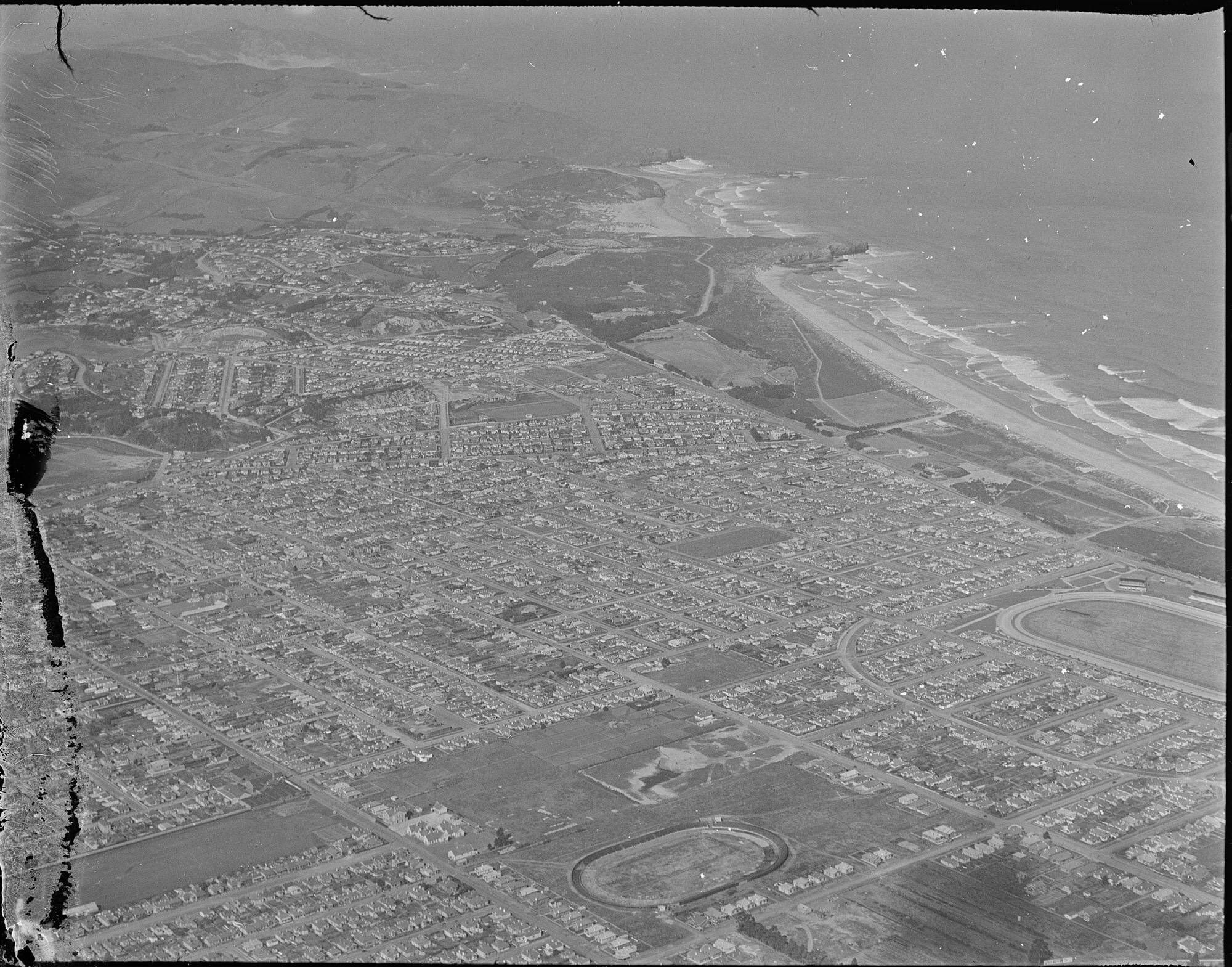
However, from the 1930s through the 1960s, South Dunedin began to experience serious densification. Land that had been originally allotted as single family plots was subdivided further – increasing housing density dramatically. Roads were sealed, more commercial buildings went up and the total volume of impermeable surfaces, roofs, pavements and industrial lots grew significantly. All of this increased stormwater runoff, yet the drainage system, still based on 19th century calculations, was never upgraded or future-proofed to handle the additional volume. Councils of the time recognised the problem but deferred large scale upgrades, allowing the system to fall increasingly behind the demands placed upon it.
From the 1970s through the early 2000s, South Dunedin reached a level of urban density unmatched in New Zealand and among the highest in the Western world. The area remained low income and working class and the same pattern of deferral continued. Critical drainage upgrades that would have allowed the system to cope with modern housing and commercial development were repeatedly delayed. Mud tanks became blocked, stormwater drains were too small and sewer and drainage systems remained intertwined: a dangerous practice by modern engineering standards but one that persisted because South Dunedin was not prioritised in council planning.
The consequences of this historical neglect became painfully evident during the major flooding of 2015. Heavy rainfall overwhelmed the century old system and large areas of South Dunedin experienced surface flooding, property damage and disruption. Experts and residents warned that without urgent and comprehensive upgrades, the floods would recur but councils continued to defer essential works, opting instead for symbolic or public relations projects. A prominent example is the $25 million South Dunedin Library, built ostensibly to improve community wellbeing. While a library is valuable, many residents, including myself, felt strongly that the funds would have been far better spent upgrading the drainage and stormwater systems, which remained critically under capacity.
The pattern repeated in October 2024, when another heavy rain event once again caused surface flooding in South Dunedin. The same pipes, mud tanks, and drains that were overwhelmed in 2015 remained blocked, undersized or under maintained. The council had still not implemented comprehensive future proofing measures such as:
· Installing larger stormwater pipes, like those already installed in other parts of Dunedin [e.g., St Andrews Street],
· Separating stormwater from the sewer system,
· Upgrading the entire network to cope with modern housing and commercial density.
Despite repeated surface flooding, the Dunedin City Council and local media have long framed these events as the result of climate change, conveniently supporting a decades-long ‘climate adaptation’ agenda. In reality, the floods are caused by overloaded, outdated drainage infrastructure that has never been future-proofed to cope with the suburb’s high density housing, commercial development and sealed surfaces. Early engineers and labourers designed an ingenious drainage system for a small working-class settlement, but successive councils have deferred upgrades for over a century.
South Dunedin does not need symbolic, long-term climate projects: it needs urgent and practical action, modernised drains, separated sewer systems, and pipes sized to handle today’s population and development. Yet politics have distorted the narrative. The DCC, the Otago Regional Council, the University of Otago and aligned media outlets have promoted the suburb as a focal point for climate emergency adaptations, projecting billions in spending over the next 50 years.
Residents and engineers know the real cause is man-made neglect of infrastructure, yet this inconvenient truth is largely ignored. Some argue this misrepresentation has been weaponised – creating the impression that climate change is the primary culprit to justify the ongoing corporate welfare dream of climate adaptation funding, rather than addressing the preventable, practical infrastructure failures that would protect the community today.
Only by confronting the real causes, investing in modern drainage systems and separating stormwater from sewerage can South Dunedin be protected while honouring the legacy of those who originally reclaimed The Flats with skill and pride.
South Dunedin today is still one of New Zealand’s lowest socioeconomic urban areas. Its residents, historically marginalised, have had little influence over council planning. Their concerns about flooding and infrastructure are pushed to the bottom of agendas, deferred for decades while councils allocate resources elsewhere. Even symbolic projects intended to ‘improve wellbeing’ cannot substitute for basic infrastructure maintenance and upgrade, which is both urgent and long overdue.
If the new mayor and council are serious about improving the wellbeing of all Dunedin residents, the priority must be clear: honour the legacy of the early engineers and labourers by finally upgrading and future proofing South Dunedin’s drainage and sewer systems. This is not only a practical necessity to prevent further flooding, but also a moral imperative to treat the city’s most vulnerable residents with the same respect, foresight and engineering excellence that their forebears brought to the creation of South Dunedin.
South Dunedin stands today as a testament both to historic ingenuity and to modern neglect. Only through decisive and well-planned infrastructure investment can it continue to be a liveable, resilient community and only then will the genius of the original engineers be truly honoured.