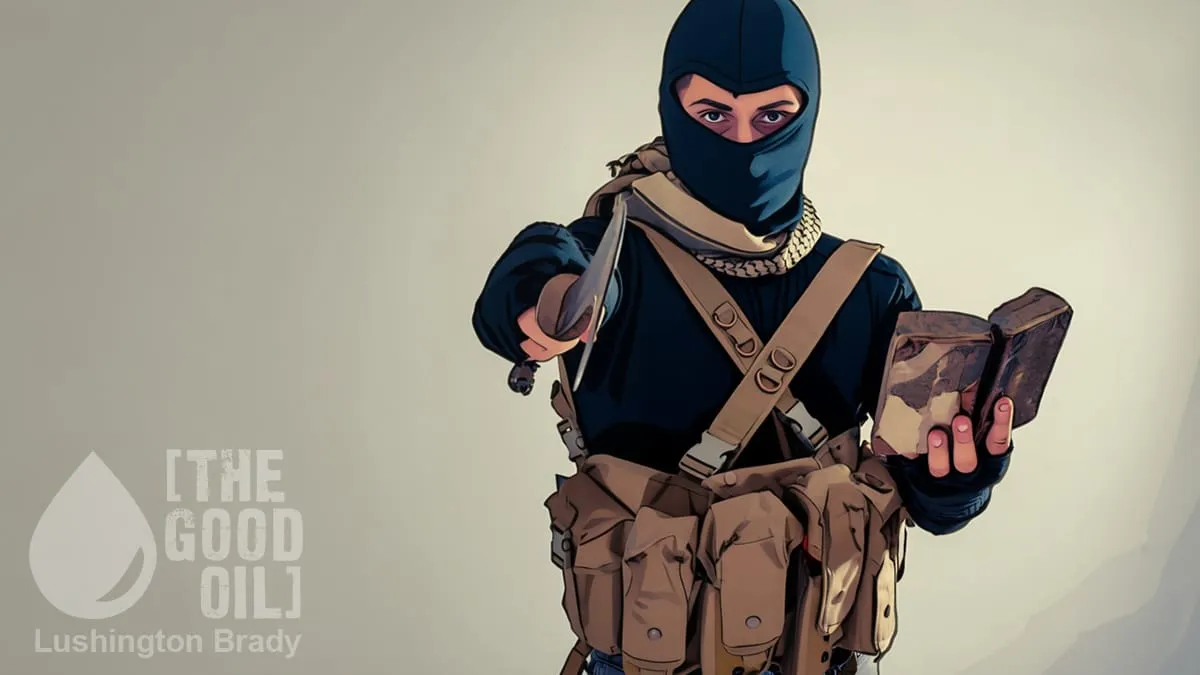
What is it with Muslims and decapitation? As Ireland erupts in fury and horror, and the politicians and legacy media scramble to run cover over the brutal attempted beheading in Belfast, by a Sudanese Muslim, one question it seems no-one is asking is, Why is Islam like this? Because, to quote Graeme Wood’s famous Atlantic article, beheading seems to be “very Islamic”.
ISIS made beheading videos one of their most potent recruiting tools. When Muslims stormed the Bataclan theatre in Paris, they also beheaded their victims, as well as, like the Belfast attacker, gouging out eyes and other, more horrific, mutilations. The two Muslims who murdered British soldier Lee Rigby also attempted to decapitate him. An Australian jihadi proudly posted photos of his pre-teen son holding up a severed head.
What is the link between Islam and beheading? Is it some sort of aberration or is it intrinsic to Islamic scripture and jurisprudence?
The answer is in the founding texts and the example of the prophet himself. The usual crowd will insist the Belfast attacker, the Bataclan butchers and every other jihadist beheader are ‘misinterpreting’ Islam. Douglas Murray demolished that evasion years ago when discussing ISIS savagery on the BBC. The radicals, he noted, may have the worst interpretation – but it is still a plausible one.
“I shall cast into the unbelievers’ hearts terror; so smite above the necks, and smite every finger of them.”
That is Koran 8:12, plain as day. Murray pointed out that many ordinary Muslims are as ignorant of such verses as nominal Christians are of the Old Testament’s bloodier bits. The extremists, however, know them, cite them and take Allah’s direct commands as seriously as their faith requires them to. This is something many apologists fail to understand, or deliberately ignore, when they blither their bog-standard whataboutisms: the Koran is not just divinely inspired, like the Bible, it is the directly-transmitted, literal and unalterable speech of Allah.
But Islamic scripture doesn’t end with the Koran: the voluminous body of the Sunnah is a direct prescription of examples all Muslims must attempt to follow, in all ways. Muhammad, ‘the best example of humanity’, set the precedents all Muslims must follow. Muhammad ordered the beheading of Uqba ibn Abi Mu’ayt after the battle of Badr. Muhammad endorsed the mass execution of 600 to 900 Jewish men of the Banu Qurayza tribe after the Battle of the Trench, with their bodies thrown into trenches dug for the purpose.
The Hadith collections record Muhammad’s orders for mutilation and execution of those who displeased him. Devout Muslims – as they must – take those orders very seriously, to this day.
He (The Prophet) had their hands and feet cut off. Then he ordered that nails should be heated and passed over their eyes, and they were left in the rocky land of Medina. They asked for water, but none provided them with water till they died.
This is not some later corruption. It is the Sunnah, the perfect example Muslims are commanded to emulate. Muhammad is held up as the ideal man for all time. When his followers read that he personally ordered or approved decapitations, mutilations and mass killings of enemies, including Jews, the lesson is obvious to those inclined to take the texts seriously.
Islamic jurisprudence simply codified what the prophet did. Beheading is prescribed under qisās for intentional murder, under hudud for apostasy and hirābah (brigandage or terrorism that spreads corruption in the land) and as a ta'zir punishment in strict applications for blasphemy or sorcery. The four major Sunni schools of law all accept the sword as the approved method for these capital offences. It is swift, public and scripturally grounded.
The Sudanese Muslim who tried to behead his victim in Belfast was not inventing a new horror. He was acting out a tradition that runs from the seventh century through ISIS propaganda videos to European streets. The political and media class refuses to say so because the implications are unbearable: that importing large numbers of people from cultures steeped in this doctrine carries predictable risks. Ireland is discovering what Britain, France and Sweden already know.
The ‘it’s not real Islam’ line is not an argument. It is a shield against uncomfortable facts. The texts are there. The prophet’s example is there. The legal tradition is there. The recurring pattern of beheadings by jihadists across decades and continents is there. Pretending otherwise does not make the next Sudanese migrant, or the next radicalised local, any less likely to reach for the knife.
They can keep denying the link. The bodies keep piling up anyway – minus their heads.