Table of Contents
Another day, another box-ticker exposed. These grifting fakers are a grim commonplace across the Anglosphere: wherever Britain colonised, there’s no shortage of lily-white chancers jumping on the bandwagon of ‘indigenous’ grievance and money grubbing. And why wouldn’t they? There’s big money and endless career-opportunity in being a Pretendian, a Fauxborigine or a Pākehā blacking it up with a brand-new moko.
Buffy Sainte-Marie and Maria Cruz (aka ‘Sacheen Littlefeather’) and Elizabeth ‘Fauxcahontas’ Warren made their entire careers out of lying through their teeth about their non-existent ‘Native American’ ancestry. In the case of Warren, she piled theft on insult, with decades of scarfing up jobs and other benefits that were intended for real Native Americans.
In Australia, too, pasty-white Cornishman Bruce Pascoe rakes in millions in government grants and an academic sinecure by pretending to be Aboriginal. That’s on top of the fortune he’s made from his ridiculous, lying, fake history book, Dark Emu. Then there’s the endless parade of blindingly white, blue-eyed rangas, dubbing themselves ‘Uncle’ this and ‘Auntie’ that, holding their hands out for a few grand a pop for yet another tiresome ‘Welcome to Country’.
The literary world is particularly prone to this egregious fakery. Besides Pascoe, there were Colin ‘Mudrooroo’ Johnson and Leon ‘Wanda Koolmatrie’ Johnson, who faked both race and gender to get on the ‘Aboriginal Industry’ gravy train. In Canada, Joseph Boyden was another literary fraud.
He’s got some company.
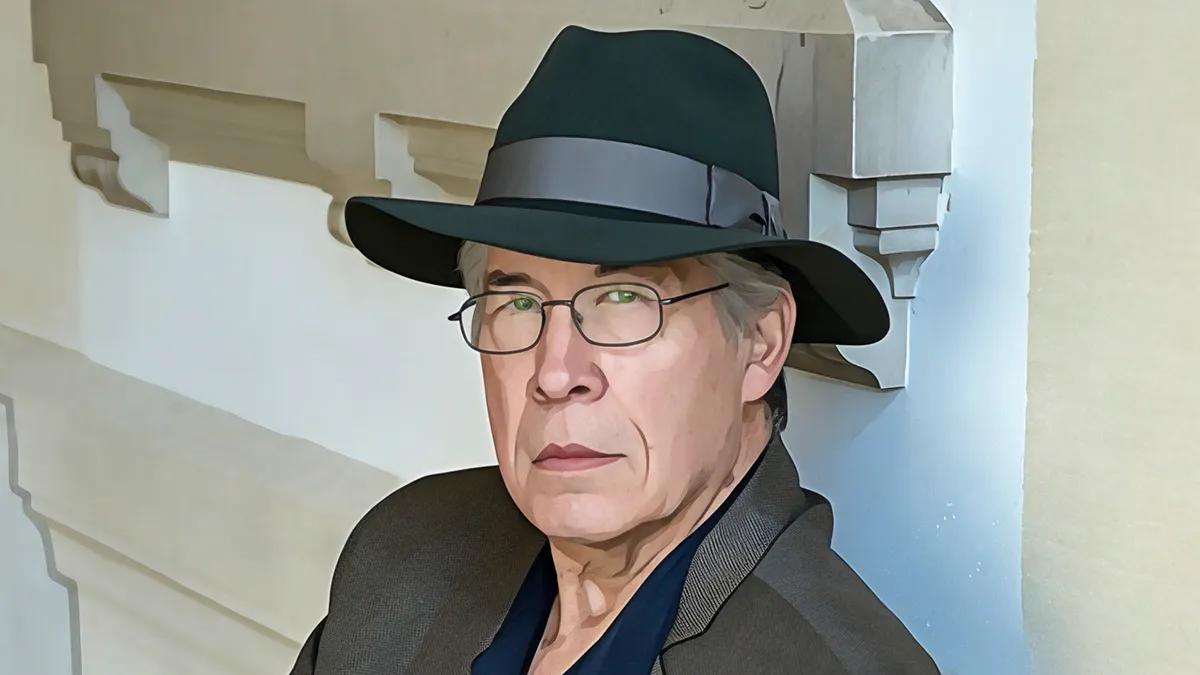
A prominent Canadian-American author, who has long claimed indigenous ancestry and whose work exposed “the hard truths of the injustices of the indigenous peoples of North America”, has learned from a genealogist that he has no Cherokee ancestry.
In an essay titled “A most inconvenient Indian” published on Monday for Canada’s Globe and Mail, Thomas King said he had learned of rumours circulating in recent years within both the arts and indigenous communities that questioned his Cherokee heritage.
Translation: ‘Oh, shit, they’re onto me!’
Unlike Aborigines and Māori, the Native American community takes the question of who gets to be ‘indigenous’ or not pretty seriously. Hard genealogical evidence is required. Once ancestry is watered down too much, box-tickers are booted out of the tribe. The issue is taken so seriously that, in the case of one acquaintance of mine, if he marries outside the tribe his children won’t be able to claim membership.
Consequently, they have an entire taskforce for sniffing out Pretendians. Gentlemen, start your genealogists.
In mid-November, he met with members of the Tribal Alliance Against Frauds (Taaf), a group based in the state of North Carolina that exposes perpetrators of indigenous identity fraud. King says this group was the main source of the rumours.
The genealogist working with Taaf told King she found no evidence of Cherokee ancestry on either side of his family lineage.
To damn him with faint praise, he’s more or less copping it on the chin.
King says he accepts the findings.
“It’s been a couple of weeks since that video call, and I’m still reeling. At 82, I feel as though I’ve been ripped in half, a one-legged man in a two-legged story,” he wrote. “Not the Indian I had in mind. Not an Indian at all.”
So, is he going to hand back the awards and accolades? Sort of.
King won the 2014 RBC Taylor prize for non-fiction for his book The Inconvenient Indian and in 2020 won the Stephen Leacock memorial medal for humour for his work Indians on Vacation. That same year, he was promoted to companion of the Order of Canada, commended for his “prolific and groundbreaking work [which] continues to enrich our country’s culture, and has changed our perception of Canadian history”.
In an interview with the Globe and Mail published on Monday, King said he intended to return the National Aboriginal Achievement award, which he received in 2003. “The rest of my awards are based on my writing, not my ethnicity,” he said.
But the writing was all grounded in the false supposition of his ethnicity.
He’s not apologising, either.
“Taaf suggested that I might want to offer up an apology for my life, but an apology assumes a crime, an offence, a misdeed,” he wrote in his essay. “And I don’t think that’s appropriate. Throughout my career – activist, academic, administrator, writer – I’ve conducted myself in the belief that I was mixed-blood Cherokee.”
Well, here’s a suggestion: stop handing out prizes, awards, grants, funding and sinecures based solely on ethnicity.
If not, here’s another suggestion: make the government fund white people awards. Then sit back and enjoy the exploding heads.