Itai Shapira
Itai Shapira is a brigadier general in the Israeli Defense Forces (IDF) Reserves, with more than 25 years of service in the Israeli Defense Intelligence (IDI) at the strategic, operational, and tactical levels.
Introduction
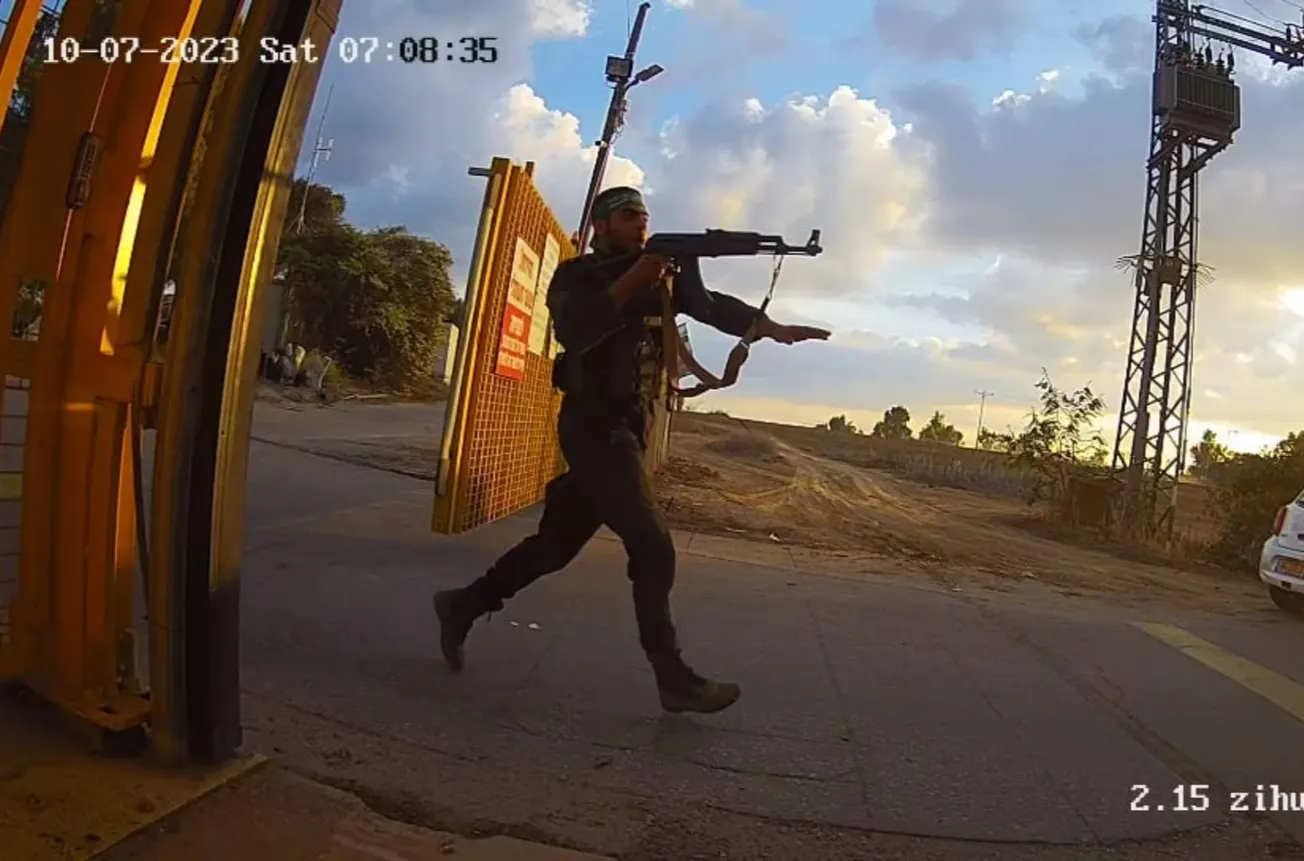
October 7, 2023, marks one of the lowest points in Israel’s history. The Hamas surprise attack, killing more than 1200 Israelis and taking more than 250 hostages into the Gaza Strip, was a colossal policy, military, and intelligence failure. One of the main lessons Israel has drawn from its reliance on deterrence prior to October 2023, which proved to be a colossal mistake, is the need to implement a new security approach which focuses on prevention, at almost any cost. This approach is currently applied in Israel’s campaign against Iran, reflecting an unfolding change in Israeli security doctrine.
Prevention in Israeli traditional security approaches
Prevention has always been a core part of Israeli strategic culture and its corresponding security doctrine. This doctrine, formulated as early as the 1950s in the context of a conventional military attack by Israel’s Arab neighbors, is mostly known for relying on the concepts of deterrence, early warning, battlefield decision, and defense (added only in the 2000s) – all underpinned by Israel’s aim to postpone wars as much as possible, maintain a qualitative edge, and conduct short wars in the enemy’s territory.
In the past, Israel focused on preventing existential threats from materializing, mainly nuclear projects. This was the case with the Iraqi reactor destroyed by Israel in 1981, and with the Syrian reactor destroyed by Israel in 2007. Furthermore, Israel has been declaring for many years that it will not allow Iran to have nuclear weapons, an approach culminating in the Israeli strike (followed by US ones) against the Iranian nuclear project in June 2025.
However, Israel never limited the application of a preventive approach to the nuclear realm and to existential threats alone. Since the early 2010s, for instance, Israel has employed a “Campaign Between the Wars” to limit Iranian entrenchment in the Middle East, and to prevent Hezbollah in Lebanon from acquiring advanced weapons. The concept of “prevention” was also mentioned in the Israeli Defense Forces (IDF) strategy documents published in 2015 and 2018.
Israel has even initiated preventive wars in the past to prevent emerging changes in the balance of power, and to avoid limitation on its own freedom of action. This was the case, for instance, in the 1956 Sinai War against Egypt, with Israel aiming to prevent Egyptian force build-up and even bring about regime change. However, in recent decades, initiating preventive wars was not Israel’s preferred strategy. Israel mainly relied on deterrence, and campaigned below the threshold of war. This strategy collapsed in October 2023.
Lessons from October 7th
Following October 2023, Israel acknowledged that its security doctrine must change, and that it must take risks to actively shape its environment. Israeli scholars, former practitioners, and professional committees, have accordingly called for reclaiming the preventive approach, as part of a broader proactive and offensive doctrine.
This emerging Israeli approach can be called “Ultra-Prevention.” It was applied in June 2025, with Israel initiating a preventive campaign against two threats it framed as existential: Iran’s nuclear project and Iran’s ballistic missile project. During this campaign, the IDF chief of general staff explicitly declared that Israel no longer waits for threats to materialize, but prevents their emergence in the first place.
Israel also applied “Ultra-Prevention” to threats along its borders since October 2023. In the Gaza Strip, Israel maintained a military presence after the cease fire with Hamas in October 2025 and actively prevented Hamas from rebuilding its forces. In Lebanon, Israel maintained a military presence even after the cease fire in November 2024, and actively prevented Hezbollah terrorists from rebuilding their forces. And in Syria, Israel maintained a military presence after the fall of the Assad regime in December 2024, preventing terrorist infrastructures from emerging.
Israel, therefore, relies on compellence rather than on deterrence since October 2023. It acknowledges that it must directly degrade adversary capabilities, rather than focus on influencing adversary intentions. It aims to ensure that “October 2023 can never happen again”. Applying the Ultra-Preventive approach, Israel prevents almost every threat from materializing, at almost any cost. Even if this means, as the unprecedented strikes against Hezbollah in September 2024 show, that a major risk is taken and that US support is not guaranteed.
The Israeli February 2026 war with Iran: an unfolding new Israeli security doctrine
The current Israeli campaign against Iran, which began in late February 2026, is a clear manifestation of “Ultra-Prevention”. But this is not just a preventive strike targeting a specific adversary project. It is a preventive war against a regime which openly calls for the destruction of Israel. This is not just a preventive war against Iran’s nuclear and military capabilities. It is also a war aimed at elimination of threats, and even regime change. A new Israel security doctrine is unfolding, with “prevention taken to the extreme.”
In the initiation of this war, for instance, Israel also ensured that its freedom of action to conduct prevention operations is not lost, since the Iranians were reconstructing its nuclear and ballistic missile capabilities following the June 2025 strikes, burying them in underground facilities. Furthermore, Israel has claimed it aims not only for prevention but also for a decisive victory against Iran. Decisive victory, or battlefield decision, is a traditional pillar of Israel’s security doctrine that has seen little practical application in recent decades, yet following October 2023, it has once again gained prominence. Relying on this concept, Israel aims not just to prevent threats from materializing, but to eliminate them. As the IDF chief of general staff stated, referring to the Israeli current campaign against Hezbollah in Lebanon, “this campaign will continue until the threat is removed”. Above all, the Israeli effort to catalyze regime change in Iran shows that Israel is indeed taking prevention one step further.
Other changes in Israel’s security doctrine are also unfolding. As was illustrated in the regional war which followed October 2023, for instance, Israel is not acting according to its own traditional doctrine which aimed for short and decisive wars. The current campaign against Iran, as of early April 2026, is neither short nor decisive, with Iran and its proxies applying attrition warfare against Israeli population (and more broadly, to inflict damage on the global economy).
Conclusion
Influenced by the trauma of October 2023, Israel no longer relies on deterrence. It initiates preventive campaigns and wars, shaping its environment and taking risks. While this unfolding Israeli security doctrine, which can be framed as “Ultra-Prevention”, has not been formally codified, as typical of Israeli strategic culture, it was consistently implemented since 2024 in many theatres in the Middle East, thus improving Israel’s strategic stance.
In the current campaign against Iran, with Israel taking the Ultra-Preventive approach to the extreme and even aiming at “creating the conditions for regime change”, Israel’s operational achievements are phenomenal. Showcasing military and intelligence superiority, Israel has indeed prevented Iran from developing nuclear and military capabilities. Together with the US, Israel has indeed degraded Iran’s power projection capabilities.
However, as the late Colin Gray reminded us – preventive wars, like all types of wars, also bear risk. Their success can often be acknowledged only in hindsight, relating to the political goals they were set to achieve. They are not a ‘silver bullet’ or a panacea for every problem. And indeed, continuous Ultra-Prevention campaigns put Israel in a steady state of conflict. The Israeli civilian population is resilient yet not immune to attrition warfare. Over time, they might become Sisyphean. Furthermore, threats to Israeli national security emanating from Iran were not yet eliminated. Iran still maintains a substantial ballistic missile arsenal, and also some highly enriched uranium (HEU). Decisive victory has not yet been achieved. Neither has regime change. Iran perceives this war as existential, and as of early April 2024, shows no sign of surrendering.
As Joshua Rovner recently claimed, strategy is a “theory of victory”, while grand strategy is a “theory of security”. Prevention itself, therefore, might be an efficient strategy for Israel to degrade emerging threats. But on its own, it is not sufficient as an enduring grand strategy. If Israel aims to move from short and decisive wars to long and preventive one, a whole-of-society resilience effort is required, as is a new security doctrine.
In conclusion, although Israel once again sees itself as a regional superpower, with the US seemingly sharing this perspective, it should avoid hubris when implementing the Ultra-Preventive approach. Hubris, as Israelis remember, was one of the factors for the October 2023 failure. This is the failure Israel currently tries to ensure will never happen again.
This article was originally published by RealClearDefense and made available via RealClearWire.