As the West grapples, for the first time since the Crusaders said, Hold up, Muhammad, with an existential assault by the ummah, the schools are increasingly the battlefield. But, where Cambridge has welcomed a jihadi who openly advocates the imposition of sharia with extreme prejudice, one school in Britain has shown how its done.
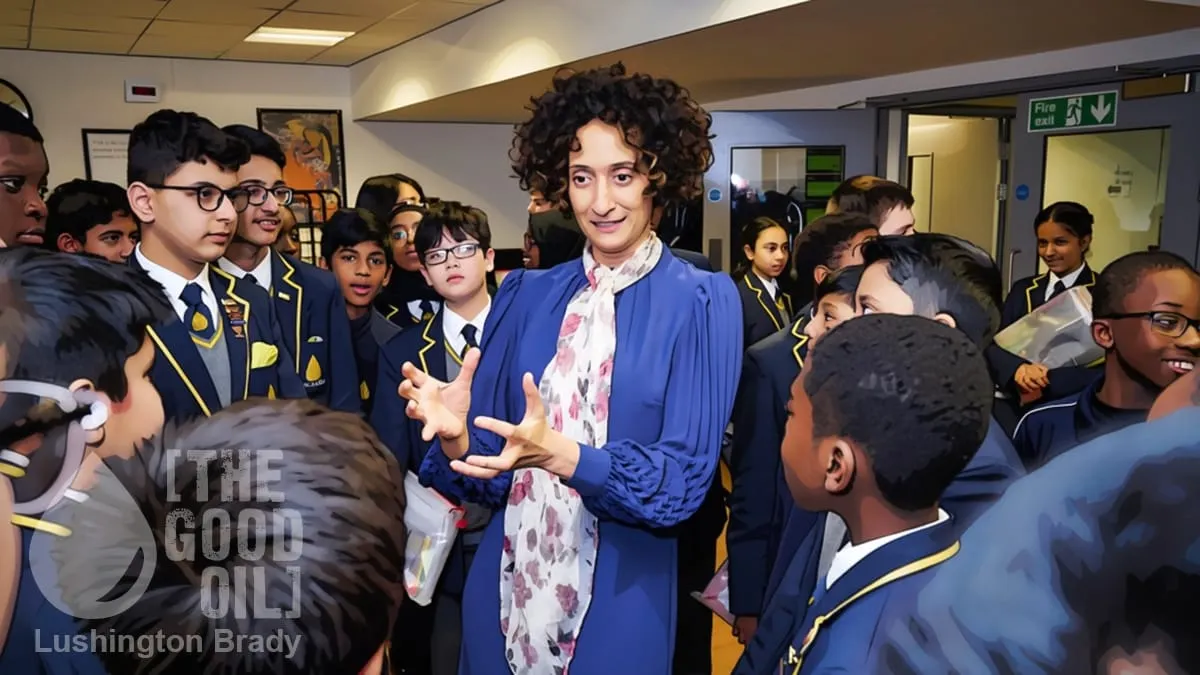
Michaela Community School in north-west London is the only free, non-selective state school in Britain whose results rival Eton’s. No sports hall, no field, no car park – and no prayer room. That last omission became the casus belli. A handful of Muslim pupils began unrolling mobile prayer mats in the playground, pressuring others to join, shaming those who refused, driving one girl from the choir because ‘music is haram’ and coercing another into a hijab. Headmistress Katharine Birbalsingh recognised the shift toward religious segregation and shut it down. Teachers confiscated the mats.
The backlash was immediate and ugly: an online petition against a teacher, racist and misogynistic abuse, violence, death threats and a bomb threat. Birbalsingh banned all group prayer. None of this should surprise anyone who remembers the Batley Grammar teacher still in hiding under police protection or Samuel Paty’s beheading outside his school in Paris.
One pupil, known in court as TTT, refused to comply. She kept pushing the prayer mat into shared space, was twice suspended for rudeness, defiance and threatening to stab another child and told a classmate she wanted to harm the school. She and her mother, backed by an extended network crying Islamophobia and funded by legal aid, took Michaela to the High Court. They demanded special treatment because… Islam.
They lost. Not least because, as the court said: if they hated everything that made the school what it was, why were they even there?
In an 83-page written judgment dismissing the case, Mr Justice Linden said: “The claimant at the very least impliedly accepted, when she enrolled at the school, that she would be subject to restrictions on her ability to manifest her religion.”
Mr Justice Linden found the ban proportionate to a legitimate aim. TTT could have changed schools at any time – her younger sister too. They did not, because they wanted Michaela’s academic results without the discipline and colour-blind fairness that produced them. Or, to put it more bluntly, they wanted to impose dhimmitude on the entire school.
The prayer campaign was not about piety: it was about dominance.
The school said the ban was necessary to avoid a culture shift towards “segregation between religious groups and intimidation within the group of Muslim pupils”.
The entire action was a travesty designed to drive a wedge rather than close one.
Still, the whole charade was not without cost: for everyone but the intolerant Islamics (oops, a tautology). The case cost the family nothing and the taxpayer and the school a great deal of time, money and energy. Birbalsingh fought it largely alone. Fellow heads offered little support and the government offered even less. After the verdict the education secretary managed only the usual platitude that heads are “best placed to make decisions in their school”: clarity that had been conspicuously absent while the threats were flying.
This is the pattern. Muslims are taught not to assimilate or obey the rules of the institution that educates them, but to claim special status, space and privilege and to shout, abuse and threaten if they do not get it – all while exploiting the despised colonialist taxpayer. They wanted a prayer room and a two-tier school. They got a permanent ban on prayer at Michaela and a warning for every other head teacher with a spine.
Birbalsingh is loathed on the left precisely because she is an old-fashioned head who enforces behaviour and values that were unremarkable a generation ago. Her victory upholds the right of a non-religious school to decide whether it will set aside time and space for ritual. That used to be considered none of the court’s business and it should be the last time they are asked.