The patronising, elitist conceit of the ‘Noble Lie’ goes all the way back to Plato. So do many of the other authoritarian hobby-horses that plague us to this day, as Popper showed in his The Open Society and Its Enemies. From the arrogant delusion that arts-educated middle-brow bourgies are naturally endowed to lead we hoi polloi in the social cattle-classes, to the ludicrous notion that the state knows what’s best for our children better than we do, the ignoble lies of the elites continue to wreak havoc and disaster.
Australia has more than our share of these dangerous myths, but perhaps the most pernicious for Aboriginal Australians, children especially, is the ‘Stolen Generations’ myth. To be clear: that Aboriginal children were for decades routinely taken into custody by the state is not beyond question. The myth is that, firstly, this was unique to Aborigines. In fact, more white children were removed from their parents, usually single mothers, during the same period. For the same reason: a paternalistic, elitist notion that the state was a better guardian for children than their parents.
The second, most persistent leg of the myth is that it was done as part of a ‘genocidal, racist’ policy. There was no such government policy, and the removals were, however paternalistic and misguided, on welfare grounds. So much so that no one has yet successfully taken up Andrew Bolt’s challenge to name a single Aboriginal Australian removed solely because of race.
Not only does this myth poison the ongoing debate about the status of Aboriginal Australians, it blights the lives of Aboriginal children. Timidity from officialdom, and the pernicious notion that ‘culture’ trumps child welfare has condemned even more generations of Aboriginal to poverty, violence and sexual abuse.
The latest ghastly proof sits in Port Hedland, one of the richest mining towns in the country. Four years ago Margaret Hawke, a meth-addicted Aboriginal mother, murdered her three children – Jamelia, 10, Arnda, 7, and four-month-old Kelvin – in a frenzied rampage. She is serving life. What never featured in the public accounting was that the West Australian Department of Child Protection had known for years the children were in mortal danger, but were paralysed by the legacy of ‘Stolen Generations’ myth into doing nothing.
Their grandmother, Dorothy Papertalk, a Yamatji-Wajarri woman, made at least five formal pleas for the children to be removed permanently into her care. Police filed incident reports and formally requested intervention. Dozens of domestic-violence call-outs documented the squalor, the ice and the revolving cast of violent men who bashed Margaret with fists, boots, golf clubs, hammers and bottles, one of them so severely she miscarried. DCP did nothing.
“In my world the parents are not parenting,” Dorothy tells this magazine. “My grandies were not safe. Jamelia and Arnda were sad but they still loved their mum and they wanted her attention, but they were scared of her and they wanted to live with me. DCP didn’t need to find a foster parent. They had me. But they just pushed all my papers under their carpet.
“Those innocent little babies didn’t deserve to be punished for growing up in a terrible, violent house. And the Department of Child Protection did nothing to rescue them from that life of physical abuse and neglect. I just wanted to keep my grandies safe and protect my daughter from three horrible partners who got her hooked on ice and beat her.”
Then comes the brutal, honest truth:
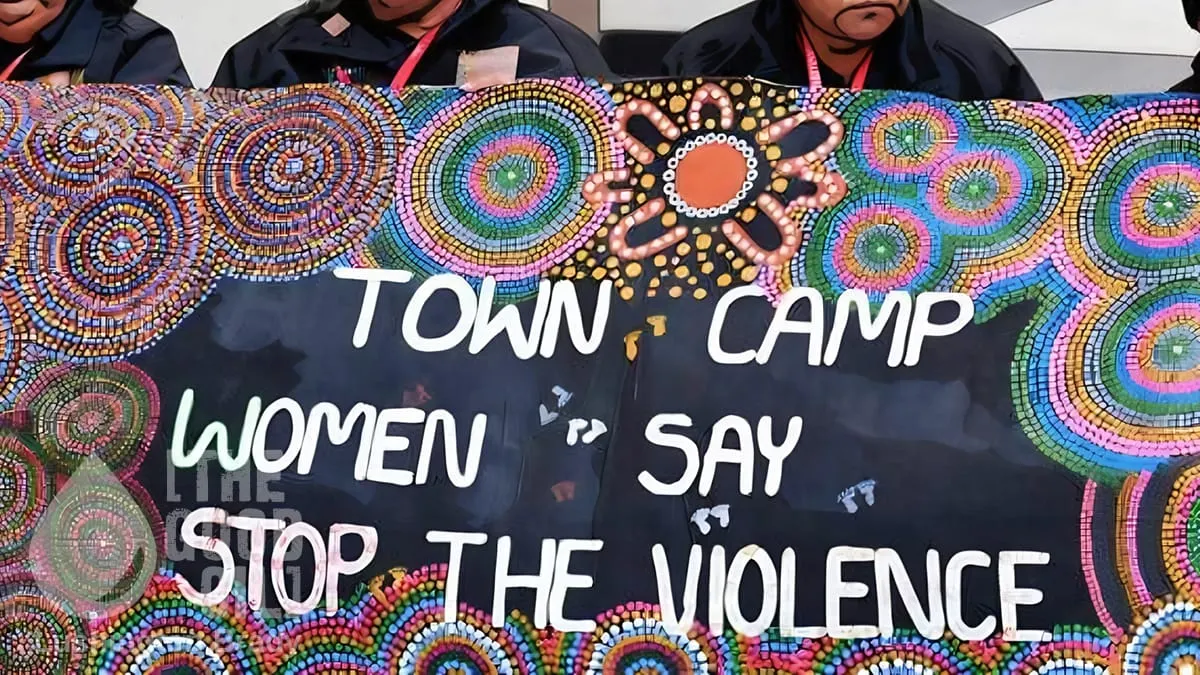
“[This is] about jealousy and hatred and brutality and the constant fighting over white money. Men too lazy to get off their arse and earn wages, to buy a car and keep their place tidy and look after their woman. What’s dividing our culture? It’s the men. Who’s the biggest threat to our children? It’s the men.”
A former teacher at a neighbouring school describes the same pattern: repeated reports of children arriving unfed, sleep-deprived, heads moving with lice and begging not to be sent home to meth-addled parents. Each time DCP replied, ‘We’re not concerned’, which is a lot easier than admitting, ‘we’re terrified of being called racist’. An anonymous government source confirmed that roughly 98 per cent of the at-risk children in the district are Aboriginal – and that intervention is ‘complicated’. As if there’s anything less complicated than starving, raped and beaten children.
The shadow of the Stolen Generations has produced a bureaucracy more terrified of being called racist than of leaving children to die. The problem is not some post-colonial distortion of Aboriginal culture. Archaeological remains examined by paleopathologist Stephen Webb show near-universal violent trauma across thousands of years, with head injuries especially common among women. William Buckley’s account of life among the tribes records women and children casually murdered. First Fleet diarists noted men beating women at the slightest provocation. This is the inheritance, not the invention of the welfare state.
Anglo-Saxon societies progressively abandoned the tribal brutalities of their own ancestors. There is no reason any other culture cannot do the same. Insisting that the state’s primary duty is to keep Aboriginal children inside violent homes out of respect for ‘culture’ does not empower anyone. It infantilises an entire people and signs death warrants for the next generation of children. Until Aboriginal communities confront the violence of their own men, and until officialdom stops treating race as a higher value than a child’s right to live, the body count will keep rising.