
Table of Contents
Here is a fact that should disturb every New Zealander who has ever stood before a judge expecting impartiality.
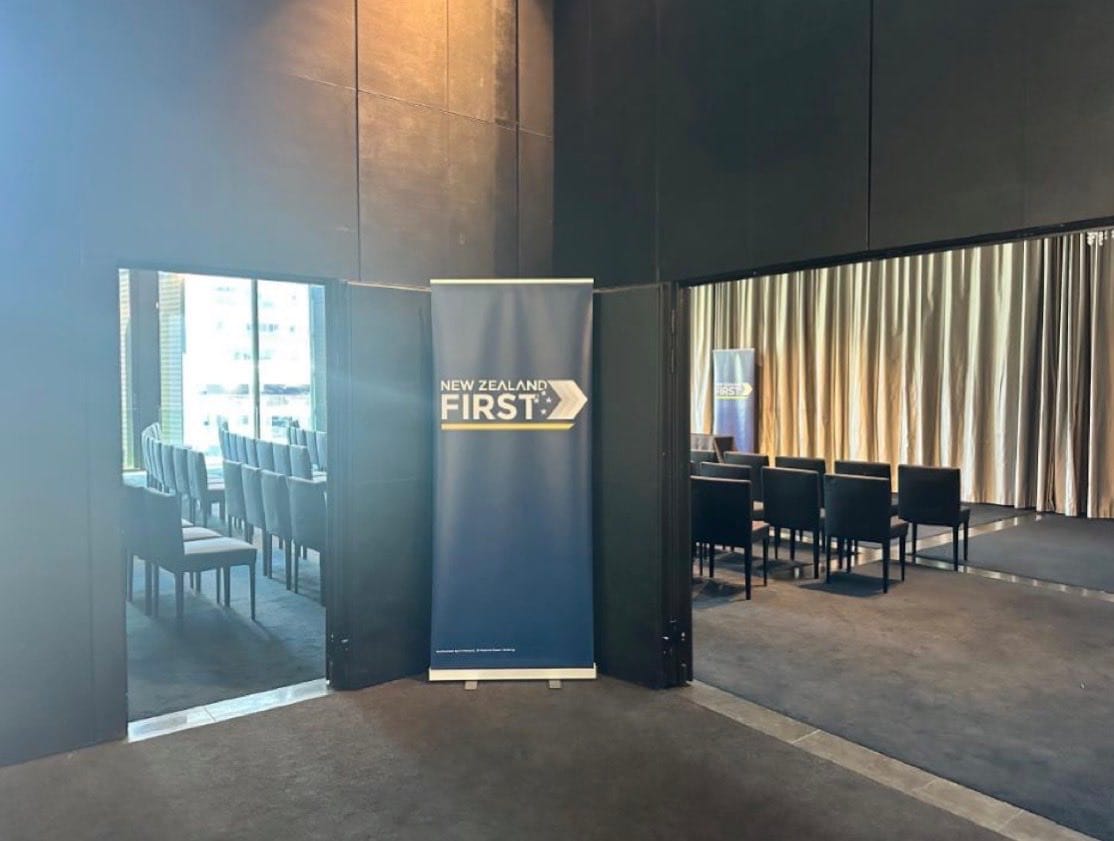
District Court Judge Ema Aitken disrupted a New Zealand First fundraiser at Auckland’s Northern Club in November 2024. She interrupted the then-Deputy Prime Minister Winston Peters mid-speech, accused him of lying, called his comments “disgusting”, and then – as she was being ushered out – told those removing her that “there’s a room full of judges next door who would be interested in what the deputy prime minister said”.
The Northern Club banned her. Permanently. She and two others involved in the disruption were told they would never be permitted to return.
The judiciary? It let her keep her gavel.
📌 Key Points
- A Judicial Conduct Panel – the first to hold a substantive hearing in New Zealand’s history – found that Judge Aitken’s actions were a “serious breach of comit”. Comity is the constitutional principle that requires the Executive, the Judiciary, and the Legislature to act with mutual restraint and respect toward each other.
- Despite finding a “serious breach”, the panel ruled her conduct fell short of the threshold for removal. She will remain an acting district court judge until her warrant expires in February 2027.
- Justice Minister Paul Goldsmith accepted the panel’s recommendation without further comment.
- Aitken’s lead counsel, David Jones KC, argued the incident was “a 30-second situation on a Friday night” and “a blip” on an otherwise exemplary record. He also claimed the case had been “politicised” and “blown out of all proportion”.
- Special Counsel Tim Stephens KC argued that Aitken’s conduct was “intemperate, rude and brought the judiciary into conflict with the executive” – and that judges are required to “abstain from entering the political fray”.
- One of the complainants to the Judicial Conduct Commission was Attorney-General Judith Collins KC, who stood aside to avoid a perception of bias, making Goldsmith the acting Attorney-General for this case.
🎯 What It Means
Let that sink in. A private members’ club in Auckland holds its guests to a higher standard of conduct than the New Zealand judiciary holds its judges.
The Northern Club looked at the behaviour and said: unacceptable. Banned. Do not return.
The Judicial Conduct Panel looked at the same behaviour – a sitting judge publicly heckling the deputy prime minister, accusing him of lying and attempting to weaponise her judicial colleagues against the Executive – and said: serious breach, but not serious enough.
What exactly would be serious enough? If a judge walked into parliament and started shouting from the gallery? If a judge held a press conference attacking government policy? Where is the line, if this isn’t it?
🔥 Why It’s Important
This isn’t about Winston Peters. It’s about the principle that judges must remain above the political fray. Tim Stephens KC made the case clearly: judges are required to abstain from political commentary and, when they do comment, it should be in a “dignified and cautious manner”.
Aitken didn’t just fail that standard. She demolished it. She heckled a serving deputy prime minister at a political fundraiser, accused him of lying and then invoked her judicial peers as backup.
David Jones KC called it “a blip”. A blip is forgetting to mute your phone in court. A blip is not a sitting judge inserting herself into a political event to shout down the deputy PM.
The defence that this was “politicised” is rich. Of course it was political – a judge made it political by heckling a politician. That’s the entire point. And the argument that it has “nothing to do with her being a judge” ignores the most damaging detail: she explicitly referenced “a room full of judges next door”. She didn’t just breach comity as a private citizen. She invoked her judicial authority in a political confrontation.
⏭️ What Next
Judge Aitken’s warrant expires in February 2027. She will continue to sit on the bench, hearing cases and passing judgment on citizens for another 10 months. Every defendant who appears before her has the right to wonder: if this judge couldn’t maintain restraint at a dinner function, can she maintain impartiality in my case?
The Judicial Conduct Panel has set a precedent – and it’s the wrong one. It has told every judge in the country that you can publicly heckle a senior government minister, accuse him of lying, invoke your judicial colleagues as political allies and still keep your job.
The Northern Club got this one right. The judiciary got it wrong.
📎 Sources
- Stuff: “Judge Ema Aitken to remain a District Court judge after Northern Club incident” (April 10, 2026)
- Beehive: “Panel finds Judge Ema Aitken’s conduct does not justify removal” (April 2026)
- Law News: “Judge Aitken’s Northern Club conduct ‘a blip’ on her exemplary judicial record, inquiry told” (February 10, 2026)
- NZ Herald: “Judge Ema Aitken appears before Judicial Conduct Panel” (February 9, 2026)
Want the real analysis on judicial accountability and why the system keeps protecting its own? Upgrade your membership at goodoil.news for the full picture.