One of the most infamous cases of malfeasance and outright disinformation by the environmental lobby is the Brent Spar case of 1995. When the Brent Spar North Sea oil storage and tanker buoy reached the end of its usefulness in 1991, owner Shell planned to scuttle. Enter Greenpeace, who organised a worldwide and high-profile media campaign against this plan, including occupying Brent Spar for more than three weeks. Shell was eventually forced to tow the Brent Spar and dismantle it on land, at great expense.
There was only one problem: Greenpeace lied through their teeth about the amount of oil that would supposedly be released by scuttling the platform. More notably, while the Brent Spar was being dismantled, it was found to be a haven for an endangered cold-water coral.
So much for the environment.
But the Brent Spar is not a unique case in that respect: discarded human objects often turn into havens for oceanic life, including, as it turns out, the much-demonised ocean plastics. Outraging their colleagues, some marine biologists are arguing against ‘plastic clean-up’ campaigns.
This is not some random idea that has popped out of thin air. It’s rooted in fresh observations about how certain sea organisms seem to have settled into their new environment.
[Rebecca Helm, a marine biologist], who is currently at Georgetown University, is not alone in her thinking. This view isn’t endorsed by any large public institution yet, but a number of smaller research groups have latched onto it.
Just as some ocean life latches onto plastic.
Helm and others highlight that a few organisms, collectively known as the neuston, appear to be using floating plastic as their new home.
The neuston is a group of living organisms that stay right on the surface of the water. Some are algae or bacteria. Others are tiny, almost invisible animals that drift on the ocean’s top layer.
Yes, but do they look appealing on camera? Can activists stuff their carcasses with plastic for photo-ops? Of course not, but that doesn’t mean they’re not important.
These animals are not famous, and they rarely get any attention. Yet, these creatures are critical components of the ocean’s life support system.
They help keep the food web running, take part in shifting gases between the atmosphere and the sea’s watery depths, and break down dead matter that is floating around so that other life forms can use it.
Without them, a lot of important processes might not unfold properly. The idea that these small organisms could be snatched away if we pull out the plastic is unsettling.
Even more unsettling is the garbage peddled by environmentalists.
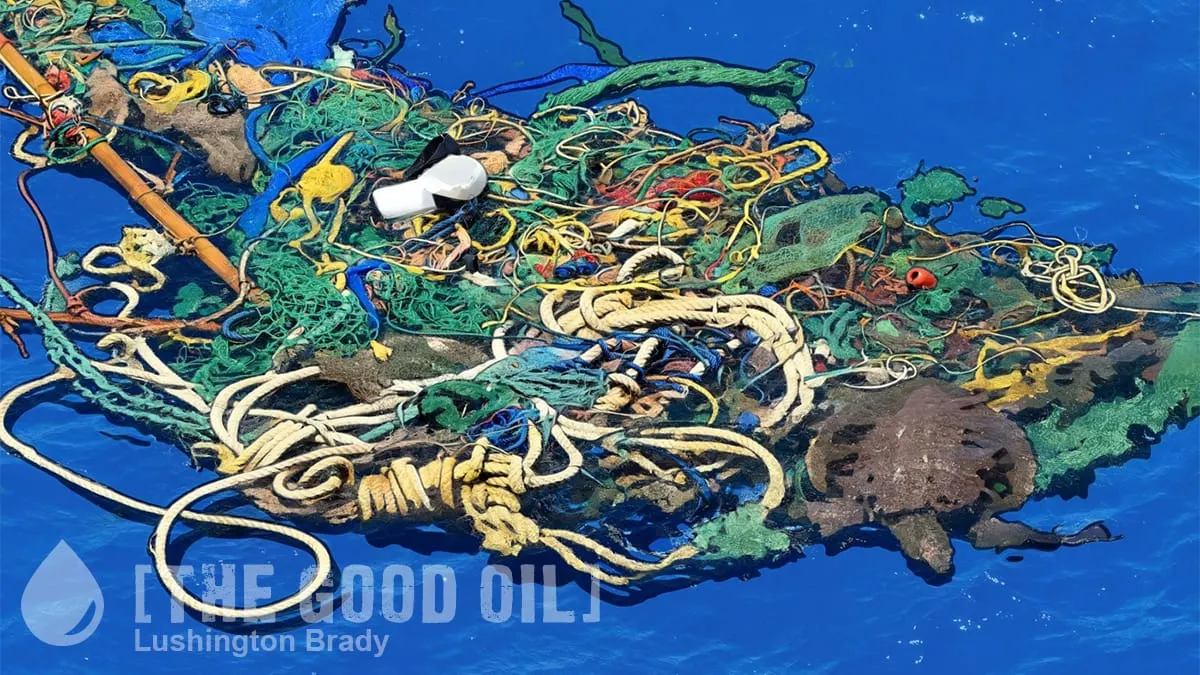
The Great Pacific Garbage Patch, sometimes called the “seventh continent” by environmentalists, stands out as a key example.
No one doubts it’s enormous size. No one thinks it is a good thing that millions of tons of plastic swirl in that area.
Ignoring the misused apostrophe, the simple fact is that the “Great Pacific Garbage Patch” is nothing like you probably think it is. It’s not a vast mass of swirling garbage (photos often used to illustrate it as such are almost always of rivers and bays in Asia and Africa): in fact, you would sail right through it and not even notice. It’s not visible from space, either. What it is, is a kind of ‘soup’ of mostly microscopic particles.
Yet, these researchers argue that, within this mess, some life forms have begun to adapt and maybe even thrive.
According to Helm’s findings, it’s possible that what looks like a plain old polluted section of the ocean could, in fact, hold entire communities we have never studied before.
“Some of these cleanup projects have the potential to get rid of an entire ecosystem that we do not understand and that we may never be able to restore,” Helm cautioned […]
It’s not just the neuston, either. The scientists hint that there are other species lurking around these floating bits of waste. Some are larger animals, while others may be important players in bigger food webs.
It may well be yet another example of what Michael Crichton illustrated at great length, in his novel State of Fear: by trying to ‘fix’ a ‘problem’ they don’t really understand, environmentalists instead end up making things much worse.
As the story concludes: “No one wants to see the ocean turn into a garbage dump, but to protect the delicate web of life in the ocean, we need to learn the full story before acting.”