Skip to content

Slogans, Hope and the Bad Ads

Are all promising things that will only come back to hurt them later. None of them has an emotional appeal that both creates and soothes anxiety.

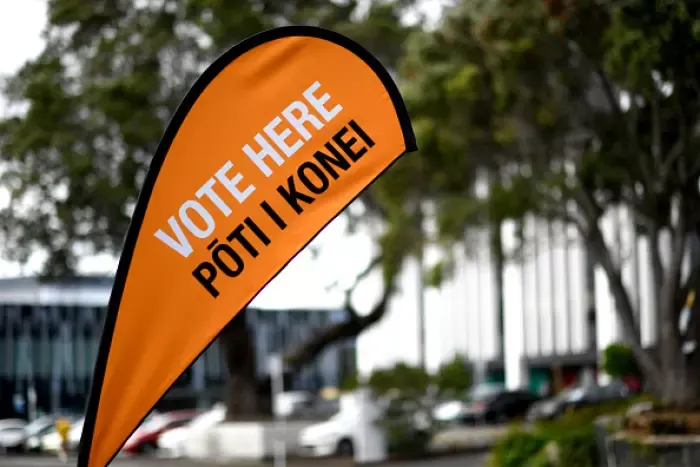
There are countless ways to critique democracy. But only during election campaigns do you get to see just how amateurish and weird it all is.

I’m a writer, so I love words. I also have plenty of experience using words in media, advertising and policy to get people to do things they may wish not to if they sat down for five minutes and thought about it. Some people in this life get to be farmers of livestock. My privilege (or punishment) was to play a small role as one of the farmers of men. And to get humans to move like livestock, you must feed them words.

Effective political language works by forcing several ideas under one label. The shorter, the better. Done correctly, the available room for thinking contracts, narrowing the pathways of possible action, is a bit like a sheep corral. If you get the words right, people either act in the required direction or, as with George Orwell’s idea of crimestop, they learn to stop a dangerous thought before it develops. No need for thought police when the brain can’t think.

Political language and propaganda are extremely effective. Good propaganda simply becomes accepted history. Even today, we still think of the god Baal as the epitome of evil. Baal was the main god of Carthage, Rome’s enemy. Similarly, people think Nazi Germany was a ruthlessly ordered, highly structured state. They believe this because of those cartoonish History Channel shows with clips of rallies festooned with banners and soldiers marching in lockstep. But all those clips come from Leni Riefenstahl’s films, and most are from her 1935 movie Triumph of the Will. Those shots, like any film shots, were meticulously staged. Riefenstahl’s propaganda was so good that even people who hate Nazis are convinced that Germany was the way she presented it.

As the great propagandist Edward Bernays said, “If you can use propaganda for war, you can certainly use it for peace.” And boy, oh boy, is that still true.

While “Make America Great Again” might come to mind, that phrase was still far too long and didn’t tap into the key ingredient: universalism. On the other hand, the undisputed king of universal sloganeering was used by the campaign of the former US President Barack Obama. The simple word “Hope” was the equivalent of saying “I’m going to pull troops out of Iraq and put them into Afghanistan,” which was too long and wasn’t going to get votes. What sold Obama was “Hope”, not because it was memorable, but because it allowed anyone to pour their own definition of hope into the campaign’s use of the word. Propaganda works by getting your words into the mouths of other people.

Advertising uses the same tactics, which should make you question the legitimacy of democracy. Nike sells its sneakers using phrases like “AIR” or “Just Do It” instead of saying “Nike shoes are superior to the competing brands because they are designed to support your foot, legs and body through the entire dynamic range of motion experienced during athletic activity.” Nike understands that paragraphs don’t sell shoes. What sells shoes is “AIR.” In the same way, the Labour Party’s phrase “Better Starts Now” is the sneaker equivalent of saying ‘We’re going to rearrange the economy so that it is fairer and more equal based on different criteria than presently being used.’ Or something like that.

If you can find the right word (AIR or Hope), you can get people to do anything. To one type of US voter, the idea that Obama represented hope meant he represented one person’s hope that the war would end. For their neighbour, it represented his hope of finding a job. For that person’s sister, it represented her hope to get a university degree, etc. All those inferences were valid because the whole point of political language is to allow people to draw them based on their anxieties. It is not enough to simply invent soap. The company also needs to invent the term ‘body odour’.

The reason you never see an ad for a microwave is that real solutions don’t require a marketing team. Advertising is only required when you need to create a ‘lack’ in people, because that ‘lack’ does not already exist. I’m sure those Obama voters could find a job or get a university degree on their own, but they had anxiety about doing so. Obama’s campaign propaganda soothed their anxiety by offering “Hope”. It was extremely effective. But this is precisely why advertising techniques in politics are a bad idea. Not because it doesn’t work, but because it works too well.

The assumed basis of democracy is that elections are a competition over rational arguments. But if elections become the process of selling yet another mass-market product, then they will eschew logic and reason in favour of irrational appeals. This only creates more cynicism in the political process in the same way that decades of advertising have made the public cynical of marketing.

“Better Starts Now”, “Make America Great Again” and “Hope” are all great slogans. But applauding these amounts to applauding propaganda. Because that’s what political language is, by definition. Propaganda is not a positive thing for democracy. Politicians, like businesses, know people won’t investigate things for themselves, because people aren’t motivated to act on logic and reason. The only thing that matters in propaganda is creating an emotional appeal that simultaneously manifests anxiety and soothes it. Obama’s message was not ‘With Obama, you can hope for a better future.’ The message was ‘Obama Is Your Only Hope.’ Feeling more anxious now?

In advertising, the emotional appeal is called ego involvement – the context of a product can be your context if only you act to buy it. This is why so many people felt that they had won when Obama did. In that brief moment, the campaign’s implied future became the present. This is the same thrill of shopping: the actual physical and psychological response that accompanies a purchase. I can’t remember the exact quote, but at Obama’s first inauguration, one of his key supporters said about the fighter jets flying over the Capitol Building, ‘these planes are ours now’. That person knows the planes aren’t really ‘ours’, but that didn’t change the feeling.

Compare Obama’s 2008 campaign to that of his opponent, John McCain. His slogan was a variant of the old phrase “America First”. But instead, McCain chose to use “Country First”. The message was that if US voters wanted to put the country first, then they should vote for McCain. However, the message wasn’t universal and it neither created nor soothed anxiety. Not everyone cares about putting the country first. Some people put their family, their religion, or their city first.

Obama’s message was effective because “hope” is for everyone, not just his target demographic. Every person of every political stripe hopes the future will be better. The word hope is a container word that operates on the specific hopes of all people. If you hope that your future will be better than it is now, then vote for Obama. Everyone agreed with the first part. The disagreement was over the second part, i.e., ‘I don’t agree that Obama can deliver what I hope for.’ But they still voted for him because they agreed that the word hope reflected something in their own hearts.

A good slogan is hard to invent. Obama’s slogan of “Hope” was pure propaganda, distilled by people who had deep experience in advertising. It worked in exactly the way that all good ads work: by not saying anything real. It worked by taking an anxiety held by the target of the ad (you) that relates only to your local, personal situation and expanding it – making the anxiety worse – to the scale of everyone before offering to relieve that anxiety if you vote for the politician behind that slogan as part of an implied transaction.

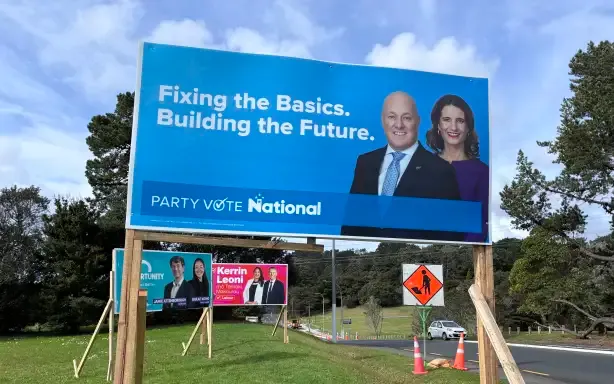
The slogans being used in the 2026 New Zealand election are hamfisted at best, and divisive at worst. The four main examples are “Better Starts Now” (Labour), “For All of Us” (Greens), “Fixing the Basics, Building the Future” (National) and “Let’s Take Back Our Country” (NZ First). Labour’s slogan doesn’t reward people who are already trying to succeed (“starts now”); the Greens haven’t defined what “us” means; “fixing the basics” makes voters feel like children; and NZ First treats us like we’re guerrillas in Vietnam.

But just like George H W Bush’s slogan, “Read my lips, no new taxes,” they are all promising things that will only come back to hurt them later. None of them has an emotional appeal that both creates and soothes anxiety. They should remember that most people are stupid. Trying to propagandise them with intellectual arguments is a fool’s game. You must appeal to their raw emotions. These all fall short.

Latest