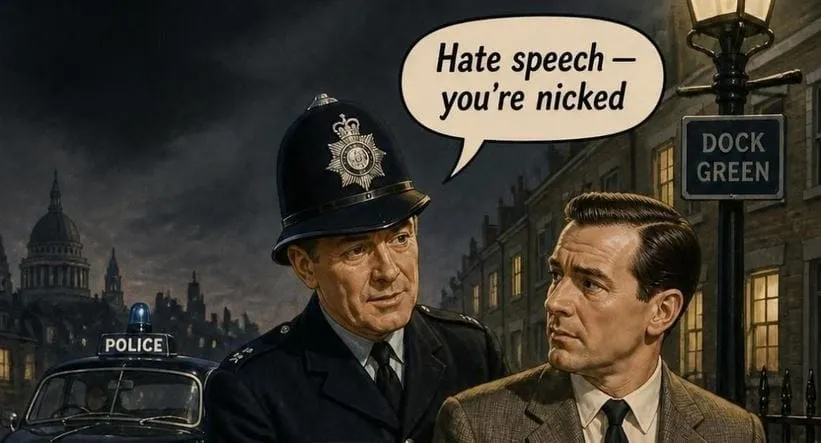
The past, as they say, is another country. Mostly because you wouldn’t like to live there. Especially not 1970s Britain. It truly was the best of times and the worst of times.
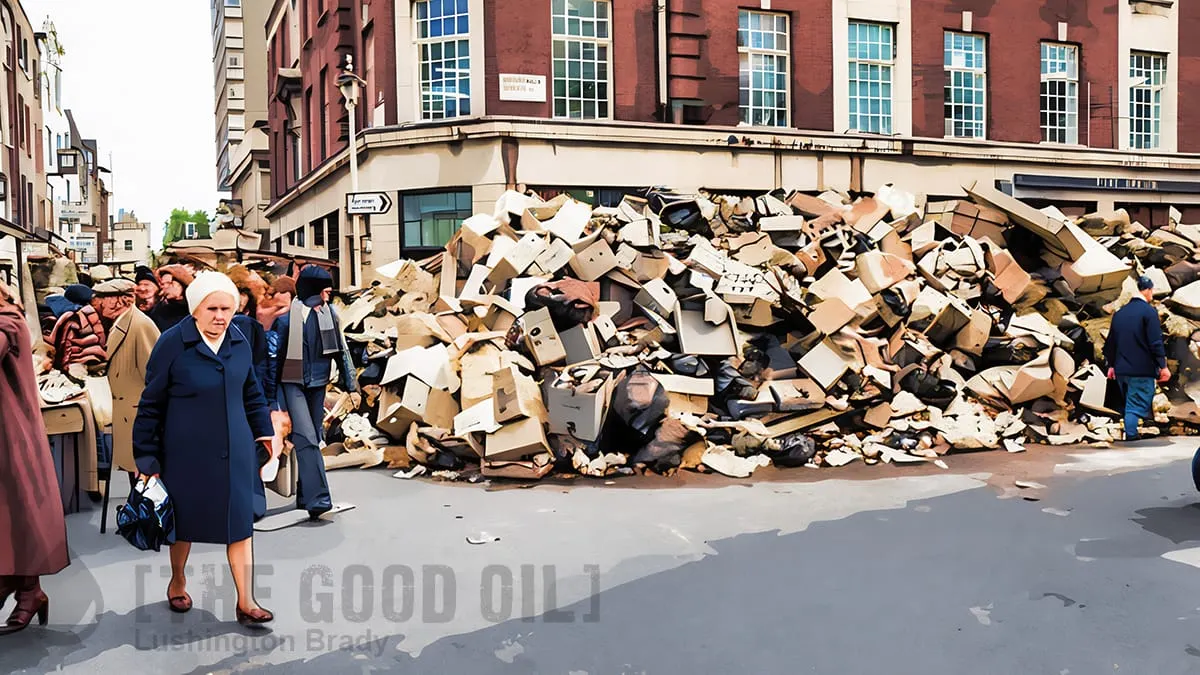
Mostly the worst. At the same time as Bolan, Bowie and the Pistols, they had power restricted, garbage piling up in the streets, unburied bodies piling up in disused subway tunnels, and a literal Marxist revolutionary party taking over much of industry. Led by bullet-headed communist thugs whose idea of a good time was raping their secretaries.
‘Ah, the good old days,’ sighs socialist cretin (apologies for the tautology) Andy Burnham.
Andy Burnham insisted Britain needs to go back to the 1970s today as he put the 'wealthy' South on notice for his Downing Street takeover.
Because nothing says ‘socialist’ like an Oxbridge Arts graduate from a middle-class family banging on as if he was raised in a mining pit in Wigan.
And nothing really says ‘socialist’ like said middle-class prat pining for the revolution that nearly beggared his country, and still moaning about ‘Thatcher!’, like Rik from The Young Ones without the comedic timing.
One man who actually lived through it has just issued a bracing corrective.
The early 1970s were a tumultuous era of adolescence for me. Growing up in Wimbledon, I hurtled around on my bicycle and regularly cycled to the West End, entirely unfussed by the thought of any danger. As were my parents. They never tried to stop me.
It was an exciting time, at least to start with.
Yes, there were thrills. Moon landings still happening. Concorde screaming overhead. Glam rock that made you feel electric: Bowie’s Hunky Dory bought for a couple of quid from Woolies and Marc Bolan exploding on stage at West Runton Pavilion months before he died. Fawlty Towers that left entire families howling. Star Wars that rewired a generation’s imagination. Cars that were simple enough to fix with a spanner and a bit of hope. Women who looked like women and wore perfume that could make a teenage boy dizzy. They didn’t even have beards or penises.
But the backdrop was grinding misery.
It was just as well, really, that we had all that escapism, since the backdrop to the 1970s was often an era of total despair. The endless strikes, Ted Heath’s three-day weeks which left us creeping round the house carrying naked flames in the gloom. Inflation was rampant and the news always seemed terrible.
The cars might have been easy to fix, but they rusted to death under winter salt and fell apart like they’d been built from Lancaster bomber scrap. Inflation ate pay packets alive. Smoking was so ubiquitous that the cinema projector beam turned blue before it hit the screen. Phones cost a fortune and lived in freezing, stinking boxes. Bedsits for eight quid a week still took a third of your wages.
Everyday technology was primeval: 1970 was only 25 years after the end of the second world war. I remember my father buying a new black-and-white Bush TV in 1972 to watch the Munich Olympics. That’s about £1,300 today – a staggering sum of money for a wooden box with a few valves and a lot of wires.
Credit cards were exotic rarities. Everything was cash or cheque. People looked sallow and pasty: foreign holidays were for the few. Allergies hadn’t been invented yet, but dying in your 50s and 60s was routine enough that a 1970s Covid would have been shrugged off as just another bad flu season.
Durham was still a mining town. Consett still belched red dust. The north’s heavy industry was in its death rattle, though no one quite realised it. Space Invaders machines the size of filing cabinets were the height of sophistication. And through it all, the thuggish Marxist shop stewards and their political enablers treated the country like a laboratory for class war.
Burnham, safe in his middle-class bubble, now gazes misty-eyed at all that and declares it the model for Britain’s future. He wants the wealthy South to fund a return to the glorious age of power cuts, unburied corpses and union barons who thought secretaries were perks of the job. The rest of us who remember, or who have simply read a history book, are left wondering what brand of ideological glue he’s been sniffing.
The 1970s gave us some cracking tunes and the odd comedy classic. But there was a reason the Sex Pistols exploded like they did: Britain was within a whisker of becoming a permanent Third World basket case. Fifty years later, Burnham and his immediate predecessors are on the verge of finishing the job.
Anyone who lived it and still wants to go back is either lying, mad or a uniparty politician.