Table of Contents
What does it take, these days, to be a BBC presenter? Apparently, either a paedophile (Jimmy Savile, Rolf Harris, Huw Edwards, etc, etc), an anti-Semite, a serial fabulist or an inveterate hater of white Britain and its history.
David Olusoga, falsely, claimed on the BBC that a Roman-era skeleton found at Beachy Head was ‘sub-Saharan’ and the first ‘black Briton’. In fact, she was a blonde, white-skinned, blue-eyed native Briton.
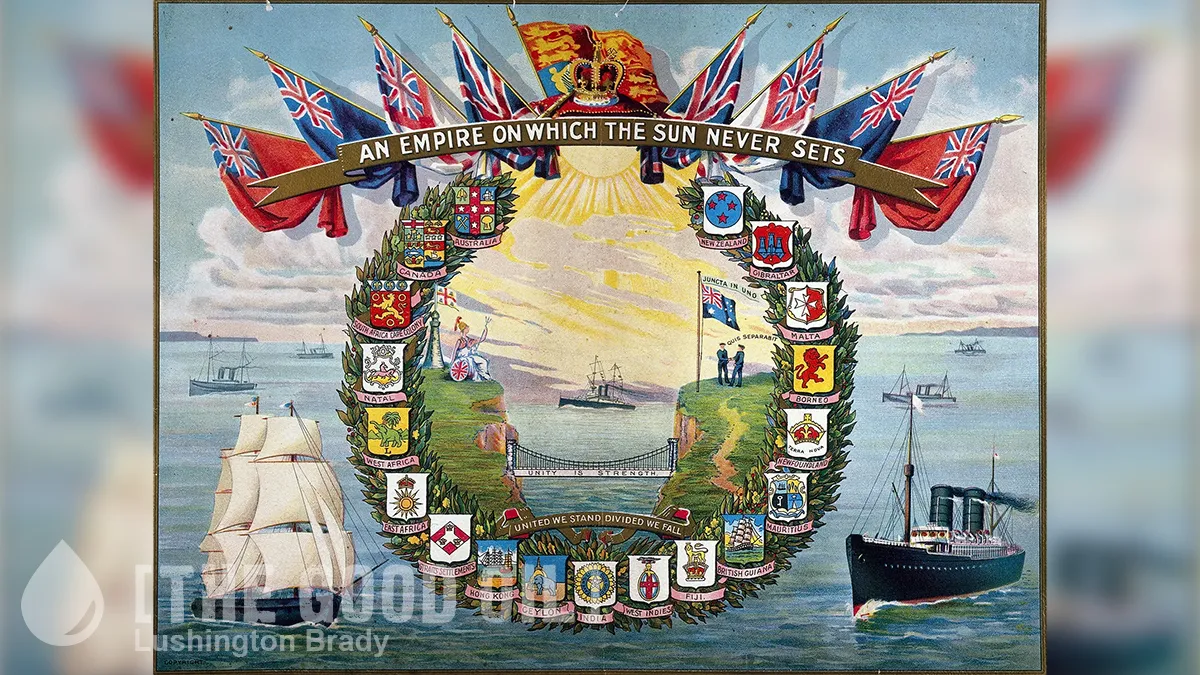
Undeterred, Olusoga has turned his sights on attacking what was once Britain’s pride: the British Empire.
To be sure, Olusoga makes a few stabs at objectivity, far more than is the wont for the modern UK left-elite. He even tells some of the truth.
They’re told that native Americans sometimes welcomed English colonists because they wanted the things they traded and coveted their alliance against native enemies. They learn of “the British commander” in New York City who, in 1783, defying the terms of the Treaty of Paris ending the American War of Independence, evacuated African American loyalists rather than return them to their ‘patriot’ slaveowners. And they hear the story of an Indian migrant whose indentured servitude enabled him to buy land in what is now Guyana and make a better life for himself.
And… that’s about it. The rest is an unremitting attack – and an overwhelming obsession with slavery. The fact that Britain was neither the first nor remotely the most assiduous slave-owning empire in the world (that dubious honour belongs to the Muslim Ottoman empire) is not mentioned at all. Britain’s astonishing and unique efforts to stamp out slavery for good are barely mentioned at all.
Whereas the evils of slavery take up a large part of the first episode and some of the second, Britain’s unprecedented abolition of the slave trade and slavery, and its century-and-a-half’s worth of worldwide suppression of them, are allotted an offhand 25 seconds.
Viewers who know nothing about the history of slavery learn that the British practiced it, but not that the practice was universal, conducted by people of every skin colour on every continent. They are given the impression that enslavement was something imposed by whites on blacks, not being told that black Africans had been enslaving other Africans for centuries before the Europeans arrived, and that, 20 years after British abolition, the Fulani people of what is now northern Nigeria were running vast plantations, where they exploited as many slaves (four million) as in the whole of the then United States.
Olusoga also spouts the false claim that Britain’s wealth today derives from slavery. Eminent historians and Nobel Prize-winning economists have debunked the claim.
Anything positive about the British Empire is either ignored or distorted.
About the settlement of Australia we learn that some convicts (somehow) managed to better themselves, but not that this was the fruit of the deliberate policy of rehabilitation promoted by the remarkably humane colonial Governor of New South Wales, Lachlan Macquarie.
Naturally, it’s the history of Aboriginal Australia that Olusoga focuses most heavily on – and lies about. He makes the common claim that the British were “intent upon extermination” of the Tasmanians. In fact, British policy, from Botany Bay on, repeatedly sought to ameliorate what they knew would be the inescapably devastating impact from the collision of two such vastly different cultures.
Among many things, what’s missing from this sorry tale is context. The truth is that modernity was coming to aboriginal Australia sooner or later, one way or another, and that the impact on stone-age peoples was bound to be shocking. If it hadn’t been the British, it would have been the French or the Americans. It could even have been the Māori.
Aboriginal Australians should be profoundly grateful that the Māori lost their ocean-going technology. Otherwise, they’d have received the same treatment meted out to the Moriori of the Chatham Islands: brutally slaughtered, enslaved, eaten and really exterminated.
Olusoga completely ignores that the removal of the remaining Tasmanian Aborigines to Flinders Island was motivated, not by genocidal intent, but by humanitarianism, however paternalistic and misguided.
Even the left-of-centre historian, Henry Reynolds, acknowledges that [Lieutenant-Governor George Arthur] had no wish “more sincerely at heart than that every care should be afforded these unfortunate people” and that he “begged and entreated” George Augustus Robinson, the commandant of the aboriginal settlement on Flinders Island, to “use every endeavour to prevent the race from becoming extinct”.
That is the literal opposite of genocide.
Reynolds also argues that Arthur matched his words with deeds, ensuring that the aboriginals were better provided for – not least in medical care – than other welfare recipients in Tasmania such as orphans, paupers and convicts. This well-intentioned endeavour was not sufficient, however, to prevent most of the aboriginal people on Flinders Island from dying, mainly from respiratory diseases inadvertently imported from Europe. None of this complicating detail, however, is allowed to muddy the stark, simple colours of Olusoga’s story of wanton white oppression of black victims.
This is exactly what the left-establishment at the BBC want.
It’s perfectly possible that David Olusoga didn’t quite know what he was doing. Evidently, there’s lots of British imperial history he knows nothing about. Perhaps that shouldn’t surprise, since he’s more a professional journalist than an historian, sporting only a bachelor’s degree in history from Liverpool University and a postgraduate degree in broadcast journalism from Leeds Trinity University. Nonetheless, the BBC has given him a prominent platform on which to tell a racially biassed story about Britain’s colonial past.
Which makes it a Thursday at the BBC.