Craig Rucker
Craig Rucker is a co-founder of CFACT and currently serves as its president.
Small modular reactors are a key component for keeping our power grid bright.
Dr Kelvin Kemm is a brilliant South African nuclear physicist and longtime dear friend of CFACT’s.
As Kelvin writes at CFACT.org:
Nuclear power is the future; there is no doubt about it. You can easily carry in your car enough enriched uranium to power your entire suburb for half a century. You certainly can’t do that with coal, gas, or oil.
And intermittent, inefficient wind and solar? Fuhgeddaboudit!
Dr Kemm posted further about the potential of small modular reactors, or SMRs.
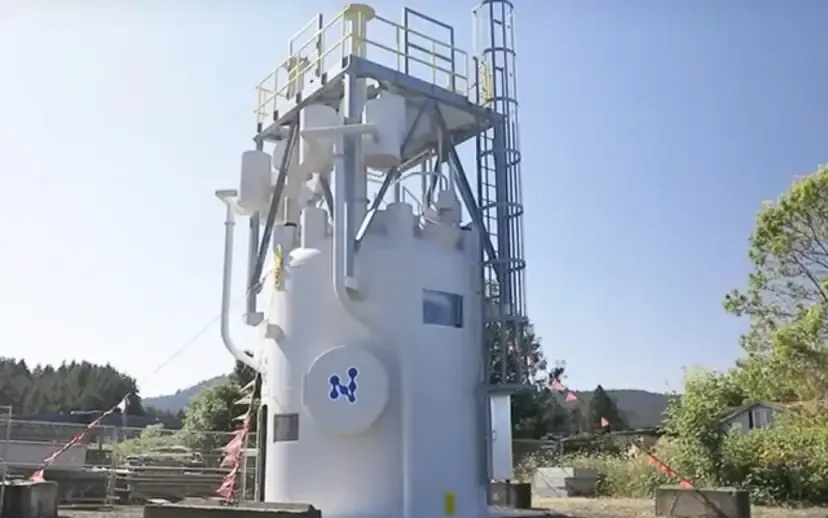
An SMR is defined as being less than 300 MW in size, with some being as small as 10 or 20 MW. So, it is possible to imagine a factory, mine, or town, owning its own nuclear reactor. In fact, a facility such as one of these can even have its own electricity grid, which is not connected into a national grid, and need only be half a dozen kilometers in diameter…or smaller.
The ‘modular’ in the name implies the goal of building most of the nuclear reactor indoors, like motor cars are made on a production line. Then, one merely transports the SMR in easily transportable subassemblies to the site, where they are essentially bolted together, thereby getting rid of many difficult processes such as cutting and welding outdoors on site.
So, this modular approach leads one to the obvious conclusion that SMR systems will be inexpensive to build and will drop in cost as their versatility catches on.
CFACT’s Duggan Flanakin has been studiously tracking developments in nuclear energy for decades.
Duggan is enthusiastic about what small modular reactors can do for Africa. Duggan posted:
Millions of Africans have no access to electricity, and millions more have only intermittent, often-interrupted access – at a price many cannot afford. Africa is looking to nuclear, because ‘it is clean [and thus compatible with UN climate goals], reliable, and does not depend on the rain or sun. It provides consistent power, day and night.’
Small modular reactors are available now and offer a very constructive way to meet our energy needs.
Then, on to cracking the design challenges of fusion.
Our energy future is bright.
No unreliable wind and solar required.
This article was originally published by CFACT.