David Shipley
The Daily Sceptic
In the aftermath of a man’s death by his own hand, it’s natural to believe that the proper and honourable thing is to keep our silence. But in the wake of Jason Arday’s apparent suicide, one side has not. Weyman Bennett, of Stand Up To Racism, has said that his death “was the result of a racist witch hunt”, and National Education Union general secretary Daniel Kebede claimed that Arday was subjected to “a public and brutal takedown that unleashed a tirade of racism”. Meanwhile, public figures and friends of his have called for a ‘public inquiry’ into the media coverage of him in the weeks before his death. It has been reported that over 100,000 people, including Diane Abbott, Jameela Jamil and Lord Woolley, principal of Cambridge’s Homerton College, have signed a letter organised by the Good Law Project, while HackedOff is supporting a petition to “demand an inquiry into the culture and behaviour of the press, following the death of Jason Arday”. Meanwhile, BBC News is reporting that Arday resigned from his role at Cambridge “amid a plagiarism row”, and Green leader Zack Polanski has posted that this is “the moment to tackle the press”.
This is all so cynical, manipulative and dishonest that it is, sad to say, not out of character with what Arday did in his own life. He didn’t just resign because of credible claims he’d plagiarised his PhD thesis, with large portions of it copied from Paula Zwozdiak-Myers’s 2009 PhD thesis. In fact, his resignation was forced by it becoming public knowledge that his entire high-profile career – and significant earnings including a claimed £1.4 million advance for his memoir – was built on lies designed to manipulate people into sympathy for him, and when faced with exposure he deployed Carter-Ruck and (we think) the Metropolitan Police to shut down legitimate journalistic inquiry.
In light of efforts to redefine this affair as “a plagiarism row”, it’s worth reflecting on just some of Arday’s lies. He claimed to have been diagnosed with autism aged three and to have been non-verbal until he was 11. A few days ago the Guardian reported that at least two former schoolmates “remember him speaking at primary school, describing a chatty child who loved making jokes”, with one describing him as “always cracking jokes”. He claimed to have been unable to read until he was 18, despite having gained two GCSEs. Arday’s athletic claims were similarly ridiculous. He’d run 600 miles between Edinburgh and London in six days. He ran 30 marathons in 35 days, despite suffering an epileptic fit during the 21st marathon and fracturing his leg.
Even his forthcoming memoir, Great and Unfortunate Things, contradicted its original proposal, according to reporting by the Atlantic, which saw both documents – the proposal claimed Arday survived testicular cancer, which had become two brain tumours by the time the book was finished. The proposal describes how he was hit by a car and spent several months in a coma, whereas in the memoir we are told he spent those months finishing school.
As for Arday’s academic misconduct, it went far further than ‘merely’ plagiarising his PhD. He claimed to have been a visiting professor for Nelson Mandela University in South Africa, the University of Glasgow and Ohio State University, all of which have denied that he held such a position. Arday’s research contained quotes purportedly from structured interviews he had conducted which very closely resembled quotes published by other researchers – a serious example of academic fraud. He also claimed to have published a book titled Being Young, Black and Male: Challenging the Dominant Discourse with Palgrave Macmillan. This book was never published.
Many of his lies seem to have been designed to elicit sympathy. Arday told the Guardian he had twice been confronted at his faculty building by a masked man, and that on the second visit the man had threatened him with a knife. The university’s CCTV did not detect the supposed visitor on either occasion, and Arday did not report either incident at the time.
Similarly, he told the Guardian that a severed pig’s head was delivered in a cardboard box to his parents’ address, and that the police investigated, finding a butcher which had sold a whole hog on the morning the head was supposedly delivered. Both the butcher and the police denied this.
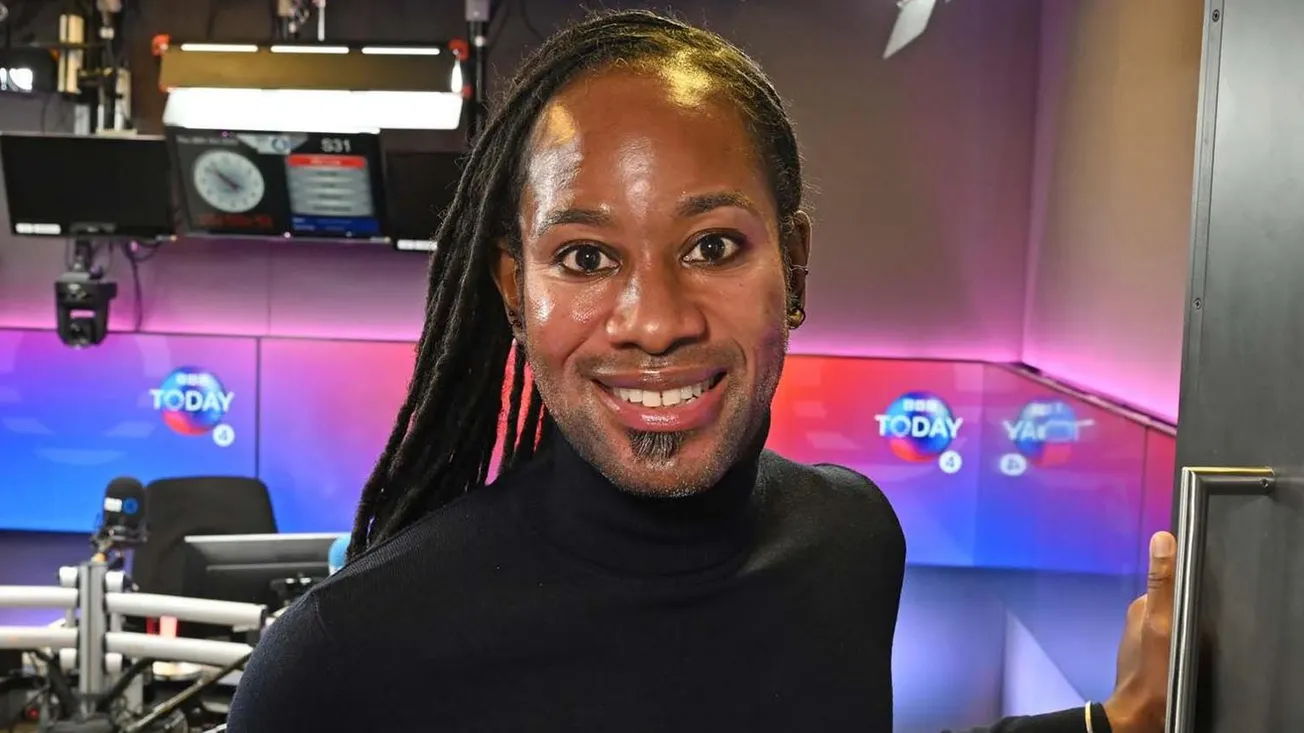
The truth, then, is that Jason Arday manipulated, lied and gained substantially from those lies, becoming a high-profile professor at one of the best universities in the world, regularly appearing in the media, earning a seven-figure advance for his memoir and even editing the Today programme. All of this, I believe, reached the level of criminal fraud by false representation. When faced with some of his wrongdoing being exposed by the Times Higher Education Supplement, Arday deployed Carter-Ruck and (we think) the Metropolitan Police to silence the journalist. In the end he chose to kill himself rather than live with the public disgrace of being exposed.
In a way, I can understand Arday’s decision to take his life. At Christmas 2019, just a few weeks before I would attend court to be sentenced for the fraud I’d committed, I came very close to suicide. My career and reputation was in tatters, and soon my freedom would follow. When everything feels lost, it is easy to succumb to despair. But in the end, had I killed myself, it would have been my choice. It certainly would not have been the fault of the press who reported on my case.
For that seems to be the demand here – that the press must never again investigate anyone who might commit suicide as a result of being exposed for their wrongdoing (or who might threaten suicide). The threat of suicide is, of course, well-recognised as a tool of manipulation and control, particularly in abusive relationships. It is also one regularly deployed to demand that men who claim to be women should be allowed into women’s bathrooms, changing rooms and sports. That Arday’s suicide is being weaponised by those who seek to muzzle the press tells you everything you need to know about them.
There was no ‘witch hunt’ into Jason Arday. There was absolutely legitimate press interest in a high-profile man who was a manipulative liar, and whose suicide is being used as a final act of manipulation – an attempt to transform him from sinner to victim, to distract attention from the credulous fools who elevated him and as a pretext to muzzle the press. Those who believe in a free press must not be silenced by this craven attempt to weaponise the suicide of a disgraced man.
This article was originally published by the Daily Sceptic.