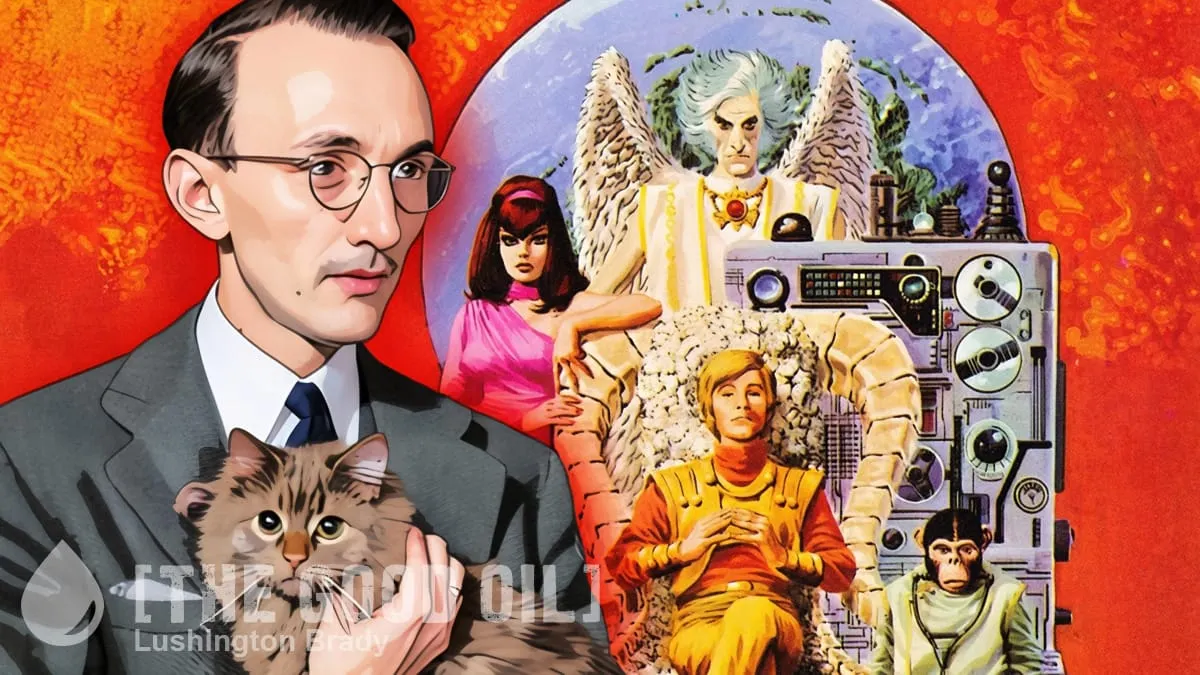
As a feminised, woke publishing industry is effectively banishing men from literature, especially children’s and young adult’s literature, it’s worth bearing in mind that this is nothing new, and has been a long time coming. It should also be no surprise that one of the first battlegrounds in the War on Men’s Literacy was that most masculine of genres, Science Fiction. Over a decade ago, a group of male SF authors noticed that the genre’s big-name awards had been hijacked by the Long March Left. So, they did what the left are so good at: they organised.
Now, it’s not as if there wasn’t a case for more ‘diversity’ in SF… in the ’50s. Back then, a book like Isaac Asimov’s Foundation could be a sausage fest of such epic proportions that literally only two female characters even appeared, only one of whom had a single line of dialogue. Yet, even by the sequel Second Foundation Asimov made a woman the protagonist of the story. So, the idea that SF needed a ‘diversity re-education campaign’ in the 2000s was at least 50 years out of date.
But, as we all know with the woke left, ‘balance’ is never the aim of the game. The sole metric is simply un-personing anyone who sits outside the ‘progressive’ echo chamber.
This is the story of the Sad Puppies.
Larry Correia started it in 2013 after noticing that the Hugo Awards had stopped rewarding the sort of science fiction that actually sold books and started rewarding the sort that sold politics. He put it humourously:
“The number one cause of puppy related sadness is bad science fiction winning awards for political reasons.”
The campaign took its name from a 1970s’ ASPCA commercial. Correia and, later, Brad Torgersen simply published recommendation lists and asked their readers to buy supporting memberships in Worldcon and nominate the works. That is how the awards have always worked. The difference was that the readers who showed up liked military science fiction, adventure and authors who did not treat the page as a sermon.
In 2015 the combined Sad Puppies and Rabid Puppies (the latter organised by Theodore Beale) filled large parts of the final ballot. Correia’s own novel made the shortlist. So did works by writers who had sold hundreds of thousands of copies and never troubled the Hugos before. The response was immediate. Correia recorded what happened next:
“So I got some right wingers on the ballot. The biased voters immediately got all outraged and mobilized to do exactly what I said they’d do. Point made.”
Within hours of the announcement, people who had not read the books were organising to vote “No Award” and discussing rule changes to keep the wrong sort of fans out. Correia noted that the same outlets which condemned his list had previously urged Wheel of Time readers to nominate the entire series as a single work. The objection was not to slate voting. It was to the slate.
Worldcon joined in the tantrum-throwing by awarding “No Award” in five categories. That had not happened in modern Hugo history. Correia and Torgersen publicly distanced themselves from Beale’s sharper rhetoric and insisted their goal had been inclusion of popular works that had been ignored. Beale treated the exercise as a demonstration that the awards could be captured by any organised group willing to buy memberships. Both readings were available on the evidence.
Worldcon then changed the rules, adopting the E Pluribus Hugo system to blunt coordinated lists. Participation spiked as both sides mobilised. The Hugos continued, but the argument about what they were for did not. Correia had already described the underlying mechanism:
“Authors can either cheer lead for left-wing causes, or they can keep their mouth shut. Open disagreement is not tolerated and will result in being sabotaged and slandered. Message or identity politics has become far more important than entertainment or quality.”
The institutional reaction proved the claim more effectively than any blog post. A male author who sold books and spoke about his politics was treated as an existential threat to literature. A campaign that simply asked existing readers to vote produced accusations of fraud, bought memberships, and moral collapse. The same voters who had spent years insisting the awards were free of political bias spent the following months organising to ensure that particular politics would not win.
A decade later the publishing industry is still having the same argument, only now the purges have moved from awards committees to children’s imprints and young-adult lists. The Sad Puppies episode was an early, public demonstration of the method: organise the readers, force the institution to show its hand, then watch the institution change the rules rather than the outcome. The Hugos still exist. The question of whether they still measure the books people actually read is no longer seriously contested by either side.