Table of Contents
As I wrote recently, the left love to yammer incessantly about ‘colonisation’ – except that they studiously ignore vast and brutal empires throughout history, simply because they weren’t European. The bloody empires of pre-Columbian Central America, for instance, and especially the track record of brutal imperialism that was the hallmark of Islam from its inception.
They’re even worse liars by omission when it comes to slavery.
That slavery was a near-universal human institution, for instance, is never mentioned. Even a society with such a rudimentary economy as pre-European Australia, for instance, bartered women like chattels. Across the Tasman Sea, the Māori were particularly nasty slavers. So were the Native Americans.
Also continually overlooked is that it was Europeans, especially Britons, who forcibly ended slavery while the rest of the world grimly clung to the vile institution.
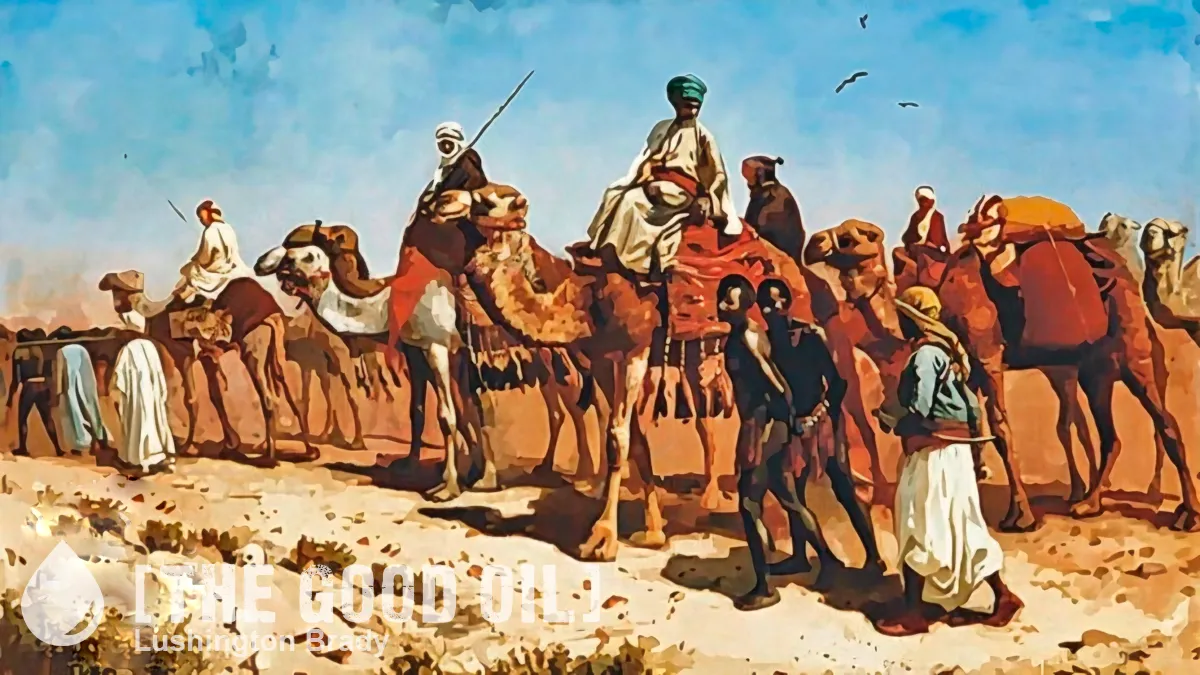
Especially in Africa, where Arab slavers blighted millions of lives – all with their consciences blessed by their religion.
The Quran has a lot to say about slavery. It deprecates the ill-treatment of slaves and attaches a high moral value to their emancipation. But it acknowledges the legitimacy of slavery and of the sexual exploitation of enslaved women. When challenged by European powers in the 19th century, Islamic rulers often cited the authority of their faith. In our own day, the so-called Islamic State in Syria and Iraq, and Boko Haram in northern Nigeria, have both justified their revival of slavery and forced concubinage on the founding texts of Islam.
Islam, it must be remembered, was founded by a literal slaver. A slaver, let’s not forget, whom Muslims regard as the ‘best example of a human being’, whose example must be followed in every way possible.
And so it no surprise that slavery is a near-constant in Islam. To damn them with faint praise, Arab Muslims didn’t just enslave blacks: they enslaved everybody they could lay their hands on.
The Arabs, like later generations of Europeans, looked down on black Africans as inferiors for whom slavery was thought to be a natural fate. But, unlike Atlantic slavery, which was exclusively sourced from sub-Saharan Africa, Islamic slavery was racially indiscriminate. North African corsairs enslaved Europeans captured at sea and in coastal raids on Europe. The Crimean Tartars trafficked slaves captured in eastern Europe to the shores of the Bosphorus and the Black Sea. There were many thousands of these white slaves.
It’s not entirely true, though, that Muslim slavery was “racially indiscriminate”. White slaves were generally worth twice to three times as much as black African. White women fetched the highest premium, around 20 per cent higher than white men. Black Africans were the least valued, with the men in particular treated like cattle, including castration.
And all of it justified by the unalterable ‘word of Allah’: the Koran. Prophet, We have made lawful to you the wives to whom you have granted dowries and the slave girls whom Allah has given you as booty, it says at 33:50. In other words, slavery is divinely ordained.
It’s a common mistake, though, to imagine that the Koran is the totality of Islamic scripture. Along with the sīrah (biographies of Muhammad), there is the vast compendium of hadith, the sayings and doings of Muhammad, that act as a Muslim’s guide to life. Remember: Muhammad is the ‘most excellent example’ of a human being, so his actions must be emulated by the devout Muslim as much as possible.
The hadith make clear that Muhammad owned many slaves, and forced himself on the females. He also enjoined his followers to rape their female slaves and not to practise coitus interruptus. The hadith also contain elaborate rules for dealing in and treating slaves.
In Islamic scripture, in other words, slavery is not just grudgingly accepted as an unavoidable reality of the society they lived in, and one to be overcome wherever possible, as it is in the New Testament. Instead, it’s a religiously justified, morally acceptable institution, practised by Islam’s founder and highest ideal of a human being. Unsurprisingly, then, slavery not only persisted in the Islamic world until within living memory, but was swiftly revived under the Islamic State.
Oddly, though, the mobs who have a mania for toppling statues of any European even remotely connected to the past slave trade, and demand ‘reparations’ from Western institutions, never go anywhere near the mosques.