David Harvey
Retired district court judge
Odysseus was a complicated man, according to Emily Wilson’s translation of Homer. It was he, after all, who devised the stratagem of the hollow wooden horse whereby a band of Greeks were able to get inside the walls of Troy. Once there, they let the Greek army in and the sack of Troy followed.
Recalling it was not the guilt-ridden recollections of a regretful man. Homer’s Odysseus was much prouder of his achievement than was the traveller portrayed in Chris Nolan’s movie retelling. And he was clever, cunning, wily in a way that was not made abundantly clear in the film.
We can reasonably conclude that Chris Hipkins is no Odysseus. He is bereft of cunning and is almost regularly predictable, whining his way through whatever speech notes he has or whatever complaint that he has about his political opponents. Stringing a bow and putting an arrow through axe heads would be beyond him.
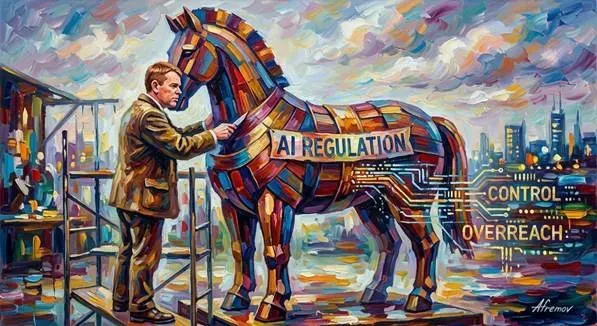
Yet on 9 September 2026 he announced Labour’s artificial intelligence (AI) policy which has been picked up – at least in part – by mainstream media. The interesting thing about the policy it is something of a Trojan Horse.
But unlike that of Odysseus which contained hidden Greeks, the Trojan Horse aspect of Labour’s policy is not new, not creative and not subtle. Indeed, it is eminently predictable.
In this article I will consider the policy and what it says. It speaks mainly to issues surrounding AI but some other aspects of technological and online regulation as well.
Policy or Action Plan?
To start with the Labour vision is not a legislative programme. It is more of an ‘action plan’ which sets a direction for various workstreams. As might be expected the plan is light on detail. That comes later and is to be settled through consultation with experts, business, iwi, educators, researchers, creators and communities.
The goals are delightfully vague. They are to protect what matters – things like privacy, safety, creative work. The unlocking of potential skills and the leadership, of course, is to come, not from industry but from the state.
The proposals run against the model advanced by the coalition government. That has generally been seen as a light touch approach which relies on existing law and systems. Labour proposes a more intrusive approach.
So what is proposed?
There will be four institutions.
The first will be an Office of AI within the Department of the Prime Minister and Cabinet, staffed from existing resources, to coordinate AI policy, develop “proportionate standards” for responsible AI use, produce a long-term workforce plan, set procurement expectations, promote public-service consistency and transparency, and identify emerging risks and opportunities.
Secondly there will be a senior minister responsible for AI with a published whole-of-government work programme.
Thirdly there will be an online safety regulator.
Finally there will be an AI Expert Advisory Panel reporting directly to ministers.
Immediately we can see the Trojan Horse element. These proposals are not just about AI. They are scoped much more widely than that. They include elements on online safety and the establishment of an online safety regulator.
This picks up on the National Party Online Safety Bill which has been talked about but which has not yet achieved a first reading, nor is it likely to in the current session.
There is some confusion about where the online safety regulator will ‘live’. One suggestion is that it will be within the Department of Internal Affairs, which would place online safety within the ambit of state control. The other is that it will be independent. The problem is that both these models have been discussed by Labour and it seems that they cannot obtain any consistency of vision or messaging.
When the National Party Online Safety Bill was being discussed, Labour’s IT spokesperson Reuben Davidson was clear that he saw a place for a stronger regulatory presence than was proposed by National.
He was not specific at the time and it seems curious that the regulatory model should go no further than AI.
But that in itself adds another layer of complexity to the proposals and one that seems to demonstrate a complete lack of understanding about what it is that is the target of regulation and what is the need for regulation in the first place.
What is AI?
The Labour Party website – from which this description of the proposals is drawn – is delightfully vague about what AI is. AI is not defined. Thus it is unclear whether the target of the proposals is generative AI and the various Large Language Modules (LLMs) like ChatGPT or perhaps it is something else.
We do not know and nor, do I venture to suggest, does Labour. And if they cannot identify with a degree of clarity what it is that is to be regulated how can their regulatory plans have any credibility.
I suggest that the references to AI are a cover for a wider model of regulation of online content and the reference to an online safety regulator is a veiled reference to a more widely scoped online policy that was advanced by the DIA under the Ardern\Hipkins regime – the Safer Online Service and Web Platforms proposals that were abandoned when the coalition came to power.
It is here that the real problem lies and this is the real agenda behind the proposals. Labour has picked up on AI because it is the flavour of the month without really understanding what they are talking about.
Perhaps that explains why their proposals are so vague. “We need to regulate this AI thing but we don’t quite understand what it is about but hey – we are Labour. Regulation is what we do.” That seems to characterise the thinking if it can be called that.
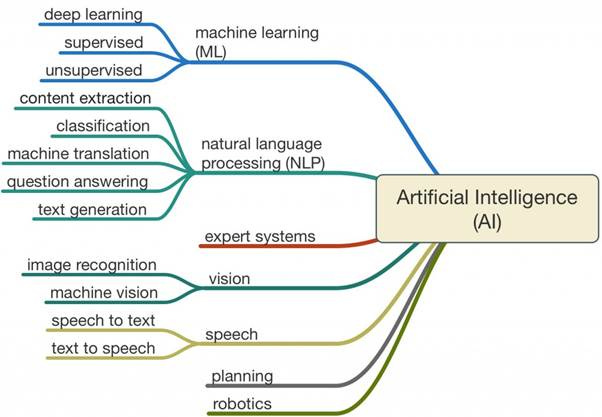
It might help if Labour could go a littler further and tell us what aspect of AI is the target of regulation. Are they referring to the rather basic level AI that underpins a Google search?
Or perhaps they are referring to natural language processing that has been a feature of legal research for the last ten years?
Or are they referring to the machine learning processes that accompanied relevant document location that is a characteristic or Technology Assisted Review in the electronic discovery space in litigation?
Or maybe they are talking about expert systems which mimic the thought processes of a human expert.
And if that is the case, what level of expert systems are they talking about – is it analysis and advice, or intake and assessment, or intelligent workflows or document automation?
And so far we haven’t mentioned generative AI or LLMs like Chat GPT.
The attached diagram may provide an idea of the complexity of what it is that Labour is trying to regulate.
AI and Copyright?
But the Labour proposals go further than that. One proposal is that there should be a framework for the use of material that is subject to copyright by AI systems. This clearly refers to the use of large amounts of data used to ‘train’ AI systems. What is proposed is a system whereby creators can control and be remunerated for use of their work. This will be developed with creators, publishers and technology companies.
This proposal has been praised by Sinead Boucher of Stuff, who has said:
We have worked very hard to have our voice heard on the desperate need for journalism and all New Zealand creative work to be protected from the wholesale plundering of it by the global tech companies.
Finally, one of the political parties has responded to those calls, and is proposing to do what so many other countries around the world are already doing and muscling up against this copyright theft.
We support Labour’s plan to harmonise our laws with those of Australia, who are so far ahead in this work.
Given the level of support from Ms Boucher, and her unqualified enthusiasm for the proposal it is clear what Labour is really proposing is a revitalisation of the Fair Digital News Bargaining Bill that has languished in a form of limbo since the assumption by Paul Goldsmith of the position of broadcasting and media minister.
Another form of “Greek” in the Trojan Horse of Labour’s “AI” policy?
Other Issues
There are some proposals in the policy that are relatively uncontroversial. Labour would like to identify gaps in the law relating to AI-enabled scams, deepfakes, non-consensual images and threats to children, and legislate where needed rather than rely on self-regulation and also ban non-consensual deep fake pornography.
That is already dealt with to some degree by the Harmful Digital Communications Act and there are amendments before the House to address this. Nothing new here.
Labour would also established rules for large data centres. The data companies should secure their own renewable energy supply, pay their own connection costs, reduce demand during peak grid stress, and use water efficiently. The stated principle is “right-sized data centre in the right place”, with beneficiaries paying.
Certainly this is a rather dramatic form of “user pays” for the use of otherwise public facilities and seems to be directed towards discouraging the development of large scale data centres.
Finally there are proposals regarding “data sovereignty” – a slippery concept in a digital world without borders. The proposal is to examine how to strengthen New Zealand’s control over data stored, governed and used here and work with iwi and hapū on Māori data governance.
Certainly some of these proposals will require new legislation. The online safety regulator, the proposals regarding a ban on deepfake pornography and the suggested copyright framework will all require legislative activity.
The Free Speech Union was quick to point out the effect that some of these proposals might have on freedom of expression.
Freedom of Expresion
Freedom of expression must be a guiding principle. These proposals involve regulating online activity which is communicative in nature. Indeed the internet is not more and no less than a communications system.
Section 14 New Zealand Bill of Rights Act 1990 (NZBORA) protects the freedom to seek, receive and impart information and opinions of any kind in any form. It covers not only the speaker but the audience, and it extends to unpopular, offensive and commercially motivated expression.
AI systems are themselves instruments of expression: they are used to write, draw, compose, translate, research and publish. Rules on AI training, output or deployment are therefore rules on expressive tools, and should be assessed as such rather than as neutral “technology regulation”.
Copyright is itself a limit on expression that the law tolerates because it incentivises creation. Expanding it changes the balance between the expression of creators and the expression of those who build on existing works — a balance the courts have long described as a bargain, not a property absolute.
The scope of a regulator matters more than its intent. Regimes established to protect children or victims tend to acquire broader ‘harm’ mandates over time. The design question is whether the enabling statute makes that drift difficult.
The Online Safety Regulator
The proposal for an online safety regulator requires the most careful scrutiny.
This is the proposal with the greatest potential to limit expression but it has the least detail.
The policy does not say what the regulator would regulate, what powers it would have, or how it relates to the bill the National Party floated in August 2026 (which places enforcement with DIA, with penalties up to NZ$40 million or 10 per cent of global turnover).
The March 2026 select committee report went further, recommending a regulator empowered to make or advise on secondary legislation, with mandates over algorithmic transparency and platform design.
There are three problems that are associated with this proposal.
The first relates to delegated lawmaking. A regulator that can make rules about what platforms must remove, demote or restrict is exercising a power that, in a free society, should be reserved to parliament in primary legislation, subject to NZBORA vetting and select committee scrutiny.
If Labour adopts the committee’s design, the statute should confine secondary rule-making to process (risk assessments, transparency, complaints) and not content. Given the Safer Online Service proposals I venture to suggest that this will be unlikely.
Secondly – what is harm? The Harmful Digital Communications Act already lists 10 communication principles and includes an express requirement to act consistently with NZBORA. Any new regime should replicate that structure and avoid open-ended ‘harmful but lawful’ categories, which in the UK’s Online Safety Act became the most contested and least workable element.
Thirdly the issue of focus. A child-safety rationale should produce child-safety measures. If the regulator’s jurisdiction extends to adult-to-adult communication, or to ‘misinformation’, the justification under s5 NZBORA becomes far harder to sustain and the chilling effect on platforms – which will over-remove to avoid penalties – becomes the dominant real-world outcome.
The Copyright Issue
There is no universal, world wide copyright law. Copyright law is jurisdiction specific. And there is inevitably a tension between creators who are entitled to reward for their effort and whether that material can be used for the purposes of learning, especially when the work is lawfully accessed.
Any framework should at minimum clarify that reading, indexing and analysing lawfully accessed material is not infringement, or it will chill academic and journalistic uses of AI that have nothing to do with commercial model training.
Furthermore, New Zealand is a small market. Models are trained off-shore. A domestic remuneration scheme is enforceable only against companies with a New Zealand presence and only for New Zealand works. Practically, it functions as a rule for local developers and a negotiating posture toward large foreign firms. The policy’s acknowledgment that enforcement must be ‘got right’ recognises this dfficulty.
A ‘licensing-by-default’ regime raises the cost of building New Zealand-based tools, including tools in te reo Māori and for local content, where the training corpus is small and the commercial case is marginal. That runs against the “unlock our potential” goal stated in the policy.
Perhaps Labour should be more honest and argue for the reinvigoration of the Fair Digital News Bargaining Bill.
Conclusion
Indeed the two most concerning proposals are the ones with the least detail. The online safety regulator and the copyright framework have no design structures at all. Certainly voters and affected industries cannot assess the reasonableness of the proposals from the paucity of detail provided.
A deepfake ban, an online safety regulatory function, an AI strategy, small-business AI support and an expert advisory panel all exist or are in train under the current government.
The policy’s real difference lies in emphasis (more state role, a standalone regulator, copyright intervention, data-centre conditions) rather than in novel instruments. Some of the contrast with National is rhetorical.
And Hipkins’ Trojan Horse conceals what really sits inside.
_________________________________________________________
Articles consulted in the preparation of this article:
AI in New Zealand’s Interests
https://www.labour.org.nz/election-policy-pages/ai-in-new-zealand-s-interests/
Labour releases ‘plan to make AI work for New Zealanders’ ahead of election
https://www.stuff.co.nz/politics/361031083/labour-releases-plan-make-ai-work-new-zealanders-ahead-election
Election 2026: Labour reveals rules it wants imposed on new data centres, artificial intelligence policy
https://www.nzherald.co.nz/nz/politics/election-2026-labour-reveals-rules-it-wants-imposed-on-new-data-centres-artificial-intelligence-policy/A7HJT7UA4RG3JDEWIORJKUAT6M/
Labour promises to set up AI regulator, copyright rules if elected
https://www.rnz.co.nz/news/politics_election-2026/1309382/labour-promises-to-set-up-ai-regulator-copyright-rules-if-elected
Labour pledges AI office, data centre rules, automated decision curbs
https://www.1news.co.nz/2026/09/09/labour-pledges-ai-office-data-centre-rules-automated-decision-curbs/?utm_source=substack&utm_medium=email
Labour plans ‘Office of AI’ and wider role for government in its adoption
https://www.thepost.co.nz/business/361076987/labour-plans-office-ai-and-wider-role-government-its-adoption?utm_source=substack&utm_medium=email
We must be more than passive AI customers
https://businessdesk.co.nz/article/opinion/we-must-be-more-than-passive-ai-customers?utm_source=substack&utm_medium=email
One NZ AI boss on sharing the frontier
https://businessdesk.co.nz/article/technology/one-nz-ai-boss-on-sharing-the-frontier?utm_source=substack&utm_medium=email
This article was originally published by A Halfling’s View.