Folk-horror is that sub-genre that depends on tropes of rural folklore and the supernatural or uncanny elements associated with rural or isolated settings. H P Lovecraft eloquently described the essential elements of the genre: “the ancient, lonely farmhouses of the backwoods… Sometimes one feels that it would be merciful to tear down these houses, for they must often dream.”
A pioneer of the folk-horror genre who was much admired by Lovecraft was Welsh writer Arthur Machen. In stories such as “The White People”, Machen explored the clash between ancient, pre-Christian traditions and modern society, blurring the line between the natural and the supernatural.
Machen set his stories among the ancient hills and standing stones of rural Britain. He also would have been well aware of the ancient traditions regarding fairy rings: traditions that still endure in the face of the onslaught of modernity and far away from their origins in the British Isles.
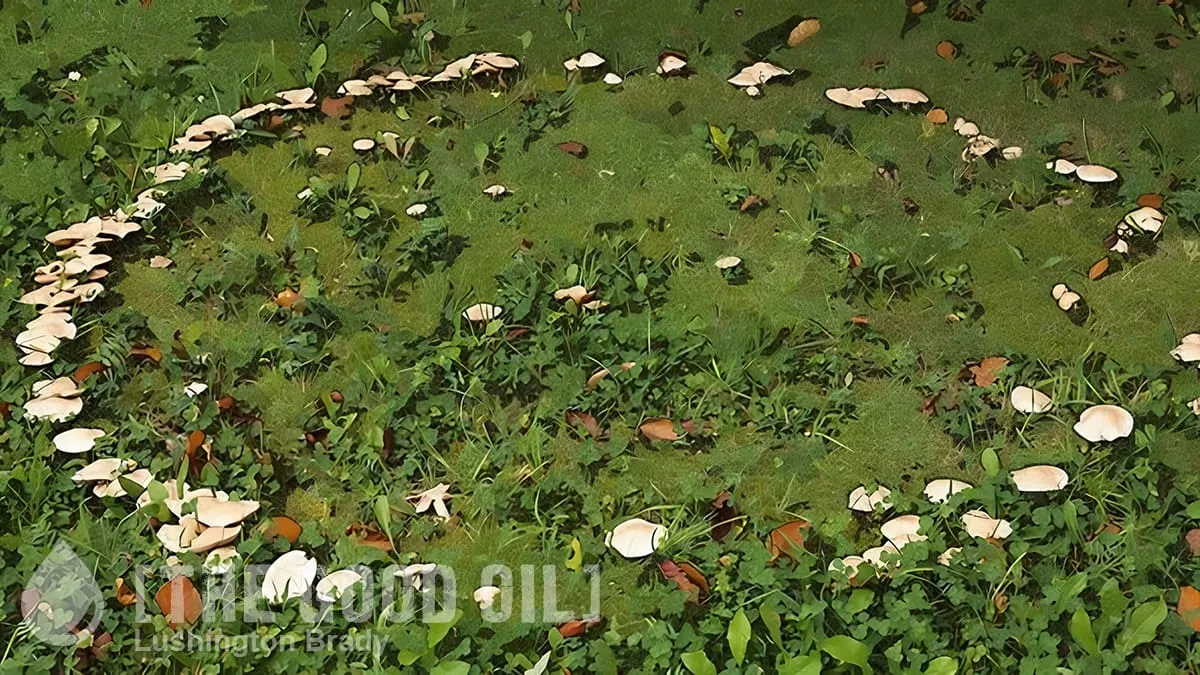
A woman named Angela on TikTok recently showed off a strange discovery she made in her lawn. According to her, she’s lived in the same place for 25 years and never seen anything like it. Immediately, commenters began to explain that what Angela was seeing was something called a “fairy circle” – and that she should stay as far away as possible.
Fairy rings form when underground fungal mycelia spread outward in search of nutrients, popping up in a circle when conditions are right. Perfectly natural, as the rationalists insist. So why should Angela avoid them?
“[You’re] standing in a fae circle,” wrote a user. “You need to get out of it and stay away from it.”
“Don’t! Don’t go in them because it brings bad luck,” added another.
English and Celtic tales warned of fairies dancing within, trapping mortals who stepped inside. Dutch legend claimed butter from cows grazing there would spoil.
On the other hand, some English traditions have it that houses built on grasslands with fairy rings will never fall down. In contradiction to the Dutch, Welsh tradition says farmers should grow crops near fairy circles and allow livestock to feed nearby. Yet, even the Welsh caution that humans should not enter the rings themselves.
Even today, the instinctive reaction is caution. The rings look wrong – too perfect and too sudden. Modern science explains the mechanism, but cannot dispel the ancient sense that something uncanny lingers at the edge of the known.
However, even if you don’t believe the mythology surrounding fairy circles, that doesn’t mean you’re free from danger.
At least 60 different species of mushrooms are known to appear in fairy rings. As a result, it’s impossible to say whether a fairy circle mushroom is inherently safe or dangerous […]
As some mushrooms can be dangerous to both humans and animals, many people choose to remove fairy rings when they pop up in their yard. This can be difficult, as mushrooms can easily regrow, but it can generally be done by removing the mushrooms by hand, aerating the lawn, and removing excess organic material in the area.
But doing so may anger the fairies. That’s the deeper resonance of folk-horror: a lingering awareness that the world holds mysteries older and stranger than our spreadsheets and safety audits can capture.
Machen understood this. His stories warned of the peril in dismissing the old ways – of assuming modernity had banished the wild and the weird. The fairy ring in Angela’s yard is a small reminder. Modernity mows the lawn and explains the fungus, but the old tales endure because they encode something true: some boundaries are better left untested.
The rationalists can scoff. The rest of us might still choose not to step inside. Just in case.