Peter Williams
Writer and broadcaster for half a century. Now watching from the sidelines although verbalising thoughts on www.reality check.radio three days a week.
We’ve been in Pilanesberg National Park for two nights. It’s about three hours north of Johannesburg, a place where tourists come to stay for a short time to look at wild animals.
The routine is straightforward. You’re up at 5.30am for a quick coffee before leaving on the morning game drive at 6.30. You’re back at 9.30 for breakfast, which is so sumptuous you don’t need lunch. Then it’s back for an afternoon coffee and snack before the evening game drive from 3.30pm.
As we stayed two nights there were four game drives for us on roads which make the dirt track access to my place in Central Otago look like a paved four-lane highway. The Pilanesberg network looked like it was sealed once about 30 years ago. Since then, decades of rainy seasons and no maintenance have left the surface pocked with literally millions of potholes. It says much for Toyota’s suspension engineers that the modified Hi Lux trucks used to transport the animal watchers around the park are only replaced once every 10 years.
Game watching is about finding the Big Five. You complete the set by observing an elephant, a lion, a hippopotamus, a leopard and a buffalo.
I can report four out of five over the four game drives. There were no buffalo to be seen and according to the rangers who drove and guided us, that’s the impact of Pilanesberg’s biggest threat – poaching.
Even though the 55,000 hectare reserve is surrounded by a two-metre-high electric fence topped with barbed wire, organised crime syndicates with suspected help from insiders are able to round up live animals to order and remove them under the cover of darkness.
Buffalo meat is highly sought after for its lean qualities. Poaching has reduced buffalo numbers significantly to the point where one ranger told me she’d only ever seen one in her four years in the job.
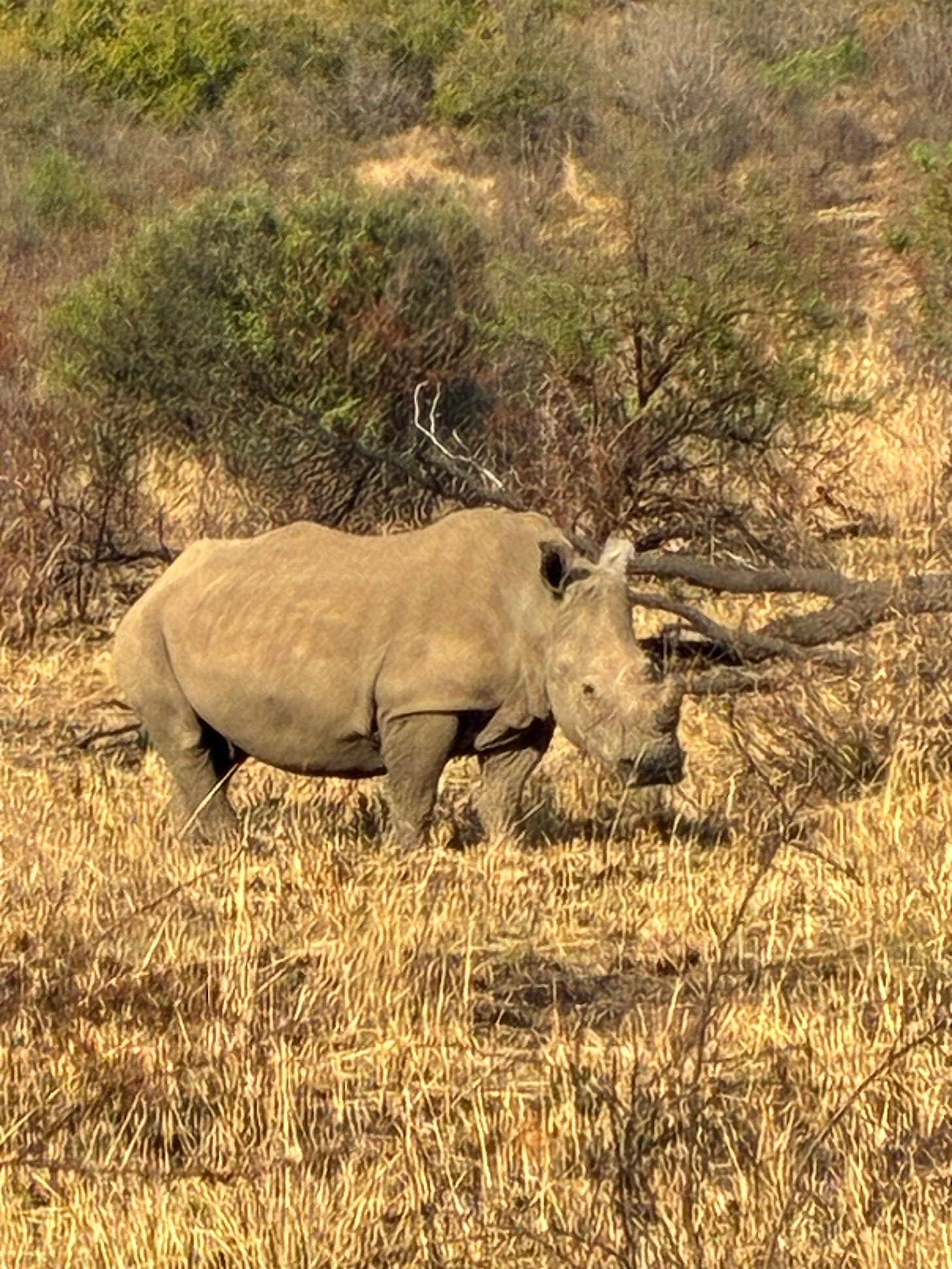
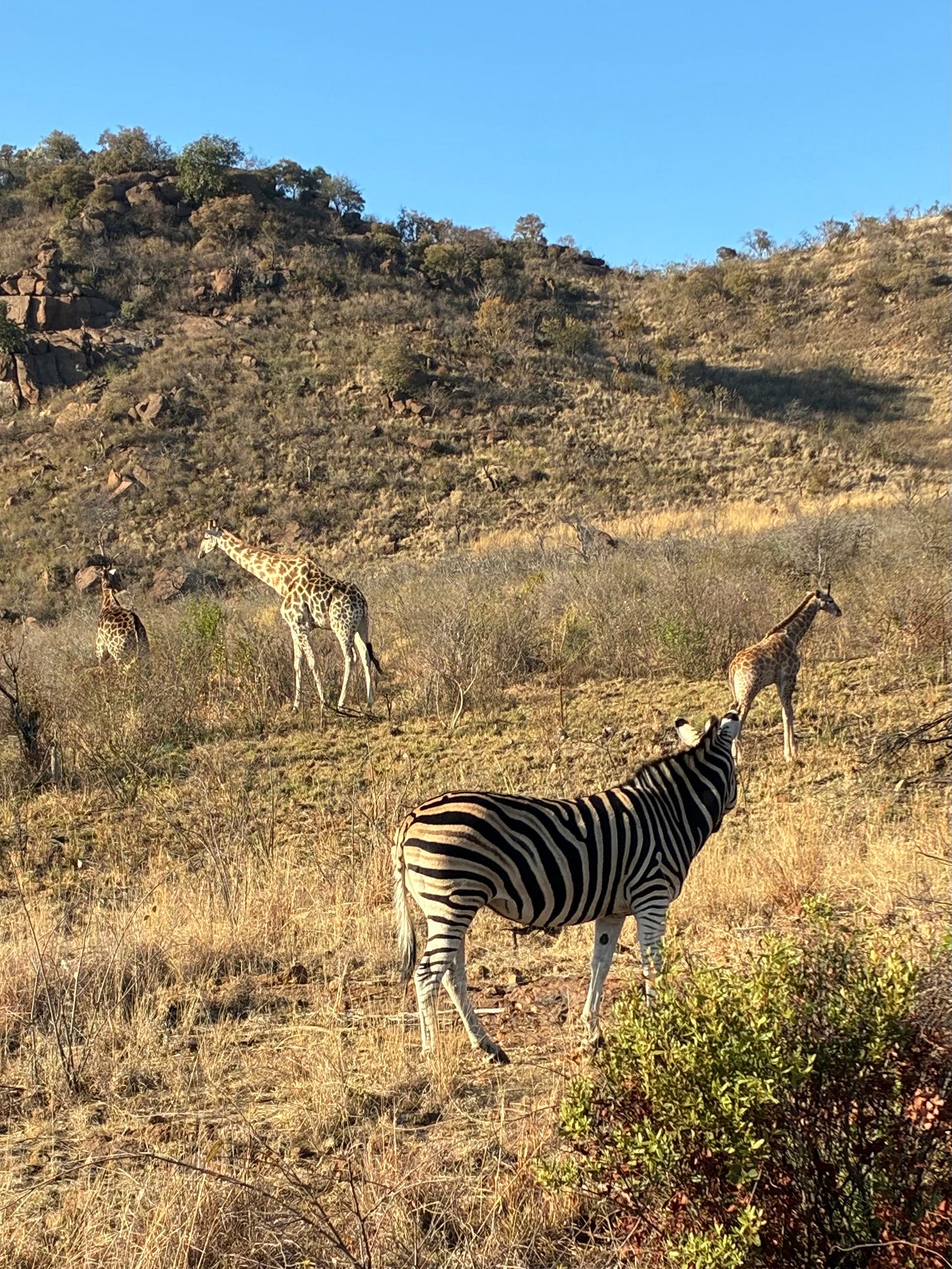
Other species under threat are zebra and rhino. At least we saw many of both and being close up to them, as in less than 50 metres, was an exhilarating sight.
Note how I just called them rhino and not rhinoceros. That’s because rhino means nose or nasal cavity and ceros is derived from keros, Latin for the horn of an animal. But because poachers have captured so many of these magnificent specimens in order to remove their horns and sell them to Asia as aphrodisiacs at $US250,000 a time, the park rangers have moved one step ahead of the criminals by surgically removing horns under anaesthetic and releasing the animal back to the wild without – so no more ceros!
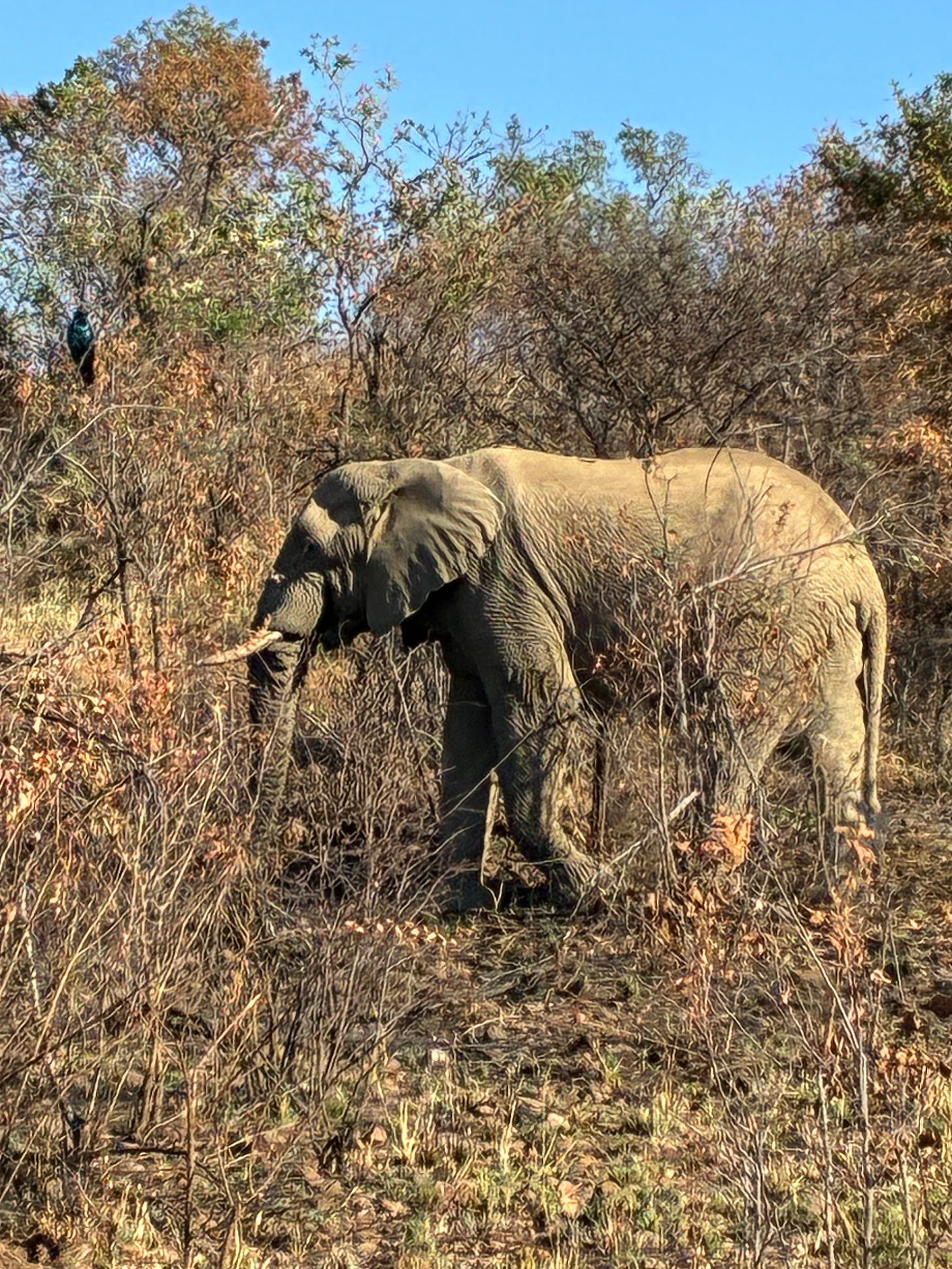
Perhaps our most exhilarating experience was watching a herd of elephants running parallel to a road we were driving, only metres away. Then we had to stop while they crossed the road in front of us.
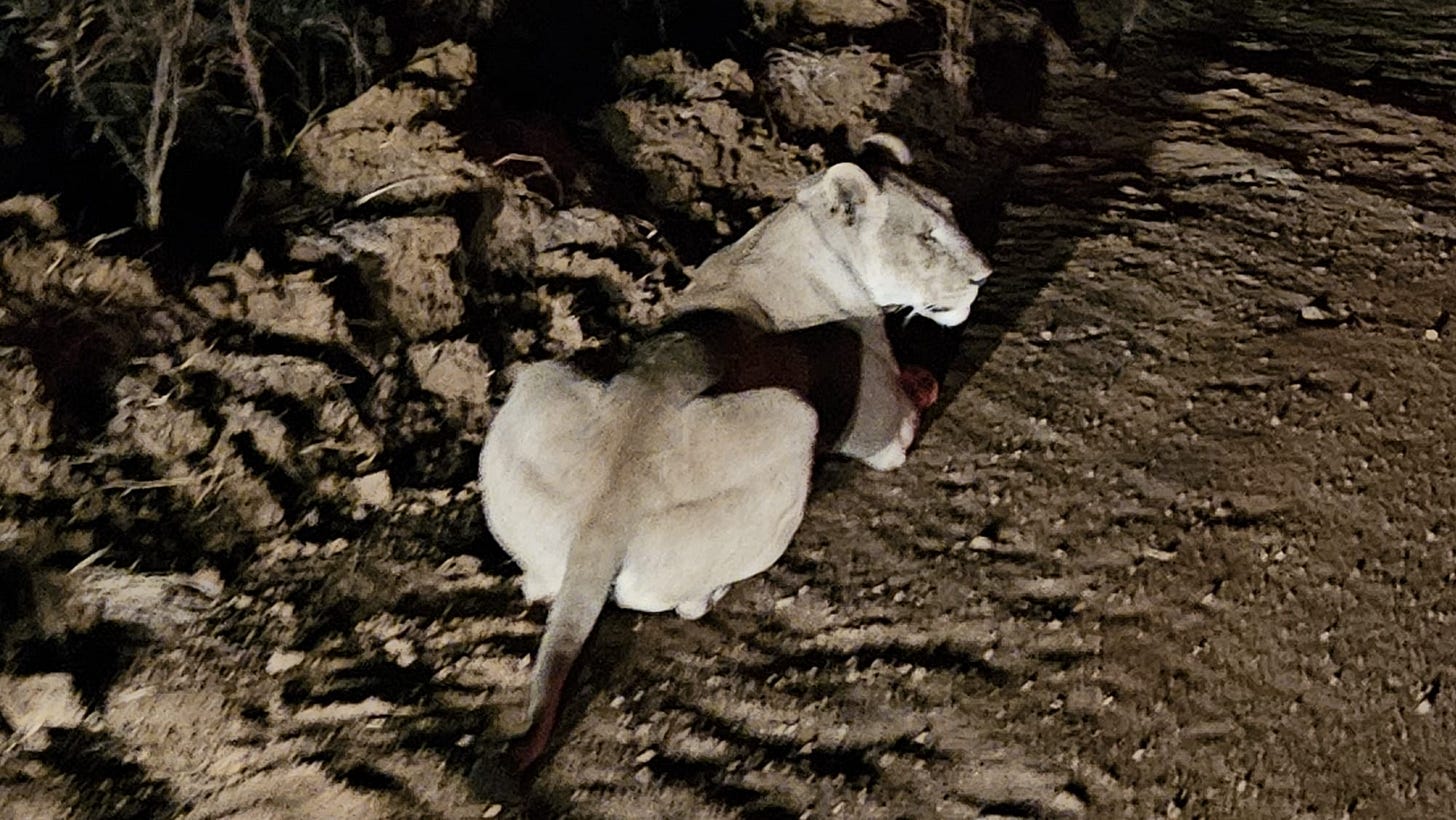
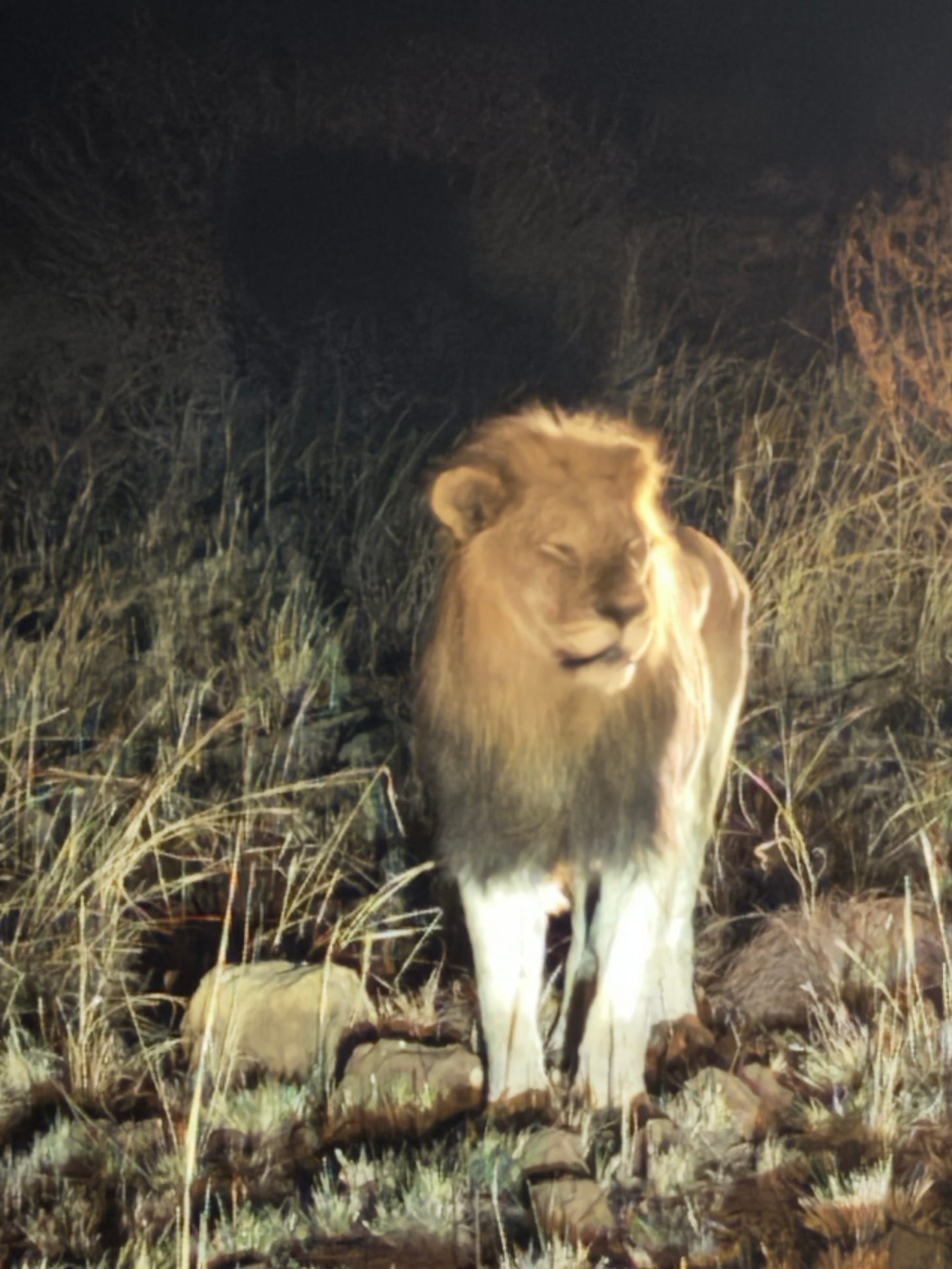
Finding a pride of lions was proving difficult until after dark on the second evening. Rangers communicate with each other regularly and the word got around for all the vehicles to assemble at a particular spot. There we saw the whole family lying in wait for their attack on a group of impalas.
The big fella with the mane, like Simba in The Lion King, waits patiently on his haunches while the sleek, sinewy lionesses do the kill. But Simba gets to eat first.
We didn’t wait for the inevitable but even in the dark I’m not fancying the future for those impala. It’s called nature, the law of the jungle and we all know who’s king.
Off to Cape Town now to hopefully watch the demise of that other famous South African species – the Springboks.
This article was originally published on the author’s Substack.