Simon O’Connor
Husband, step-father, foster dad, and longtime student of philosophy and history. Also happen to be a former politician, including chairing New Zealand’s Foreign Affairs, Defense, and Trade Committee.
I’m a big fan of the late Sir Roger Scruton. He was a powerful conservative voice and, among many writings, he warned of the censorship happening to conservative voices. In 2019, he said:
I am a conservative thinker, well known as such, outspoken but reasonable in my view, and there has been throughout this country and throughout Europe, in my view, an attempt to silence the conservative voice. We get identified, caricatured and demonised and made to look like we are some kind of sinister fascist, racist kind of people.
He also warned of ‘self-appointed vigilantes’, often amplified via social media, who decide what topics are to be discussed, which stories get coverage, which views are deemed acceptable and which are not.
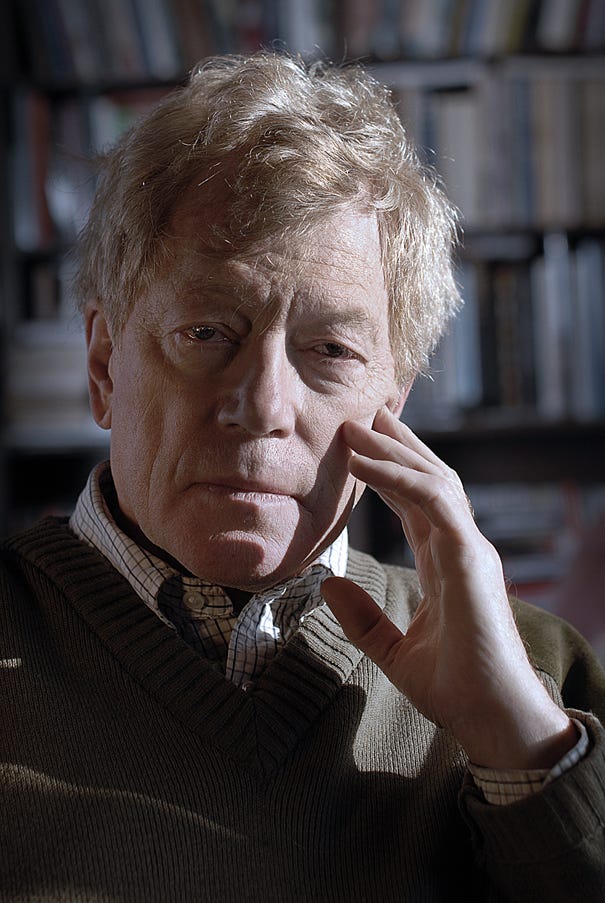
I think he is right, but there are further aspects to this censorship in play within modern media. The first is the careful curation of what information is shared and when. The next is only providing one view, or ensuring an article is almost 99 per cent one sided and with only a cursory response from the other. The final one is keeping in line with Sir Roger’s thesis, and that is outright censorship.
What strikes me with this though, and in the example I will give, it is not just censoring a particular story but the then deliberate decision to amplify another story that lacks any merit other than it fits an ideological preference of the news outlet.
I wrote recently about how the label ‘far right’ is thrown about with glorious abandon, while you rarely see the same for ‘far left’. This is just one example of what Sir Roger was talking about.
Where has the far left gone?Simon O'Connor 13 May Read full story
The careful curation of key information
I awoke a few mornings ago to news of a mass stabbing in Switzerland (Winterthur train station to be precise). As soon as I read the story, my immediate assumption was an Islamic terrorist attack. The public location, the weapon used, and the parts of the body all targeted were a strong indicator of the motivation behind the attack.
What also factored into my thinking was the BBC’s rush to say the attacker was a Swiss citizen. The desire to stress, by the third sentence, that they were Swiss was suspicious.
Now, this is factually true, but I’m frequently struck by how media choose when and how to deploy such details. There is either a near-gleeful rush to describe a person, or a hesitation depending on what identity group the person fits. In other instances, a detail is quickly shared to distract from deeper questions.
I think this attack is a case in point, for while true to say they are Swiss, there are further details which are salient. These of course, are not shared till the very end of the story, including that he was shouting “Allah Akbar”. This is not the behaviour of a typically Swiss person, and I have little doubt there will more context as to who he is.
It reminds me of the equally distracting ‘quiet Welsh choirboy’ reporting in 2024 around the mass stabbing at the Taylor Swift dance class in England. In this horrid attack, three children were murdered, and 10 others badly injured. The attacker was Axel Rudakubana, born in Wales to Rwandan parents who came to the UK in 2002 as refugees. Early reporting talked of him as this quiet choir boy, though once photos and more details were released, the absurdity of the description soon become a point of mockery and ridicule.
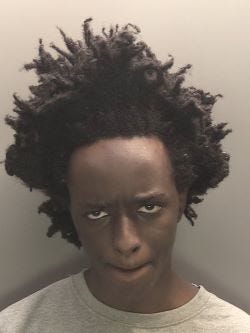
What we are dealing with is the denotation versus the connotation. That is, the strict facts versus the misleading impression a reporter is trying to give readers. When one thinks of a ‘Welsh choirboy’, they are not thinking someone like Axel any more than a person thinks of a Swiss person running into a train station with a knife calling on their god to help them murder people.
There are plenty more examples including media and police being reluctant to actually give an alleged person’s name or identity so as to protect a supposedly vulnerable group, yet in other cases racing to ensure the public know that the person is from a supposedly privileged group.
Unfortunately for the BBC in this instance – or wider media, police authorities, politicians, and others – the general public see right through the attempt to curate and manipulate information. It is one of the key reasons trust continues to decline in such institutions.
So one sided, it’s absurd
This situation is all too familiar, and so requires little comment. A recent case in point was Radio New Zealand running a puff piece for the Ministry of Education (and by extension, the minister of education) around homeschooling.
The article uses over 1000 words to justify changes to homeschooling, using various lines and excuses from the ministry. It reads like a press release. Only 66 words of the article are given to the homeschooling side of the story.
What more needs to be said!
Censorship and glorification
This last example is egregious bordering on reprehensible.
Around a fortnight ago, an independent Israeli group published extensive details of the rape and sexual abuse of Israelis on October 7th by Hamas terrorists and Gazan civilians. The report is forensic, collating in horrific detail what happened – much derived from the videos, photos, and phone calls from the terrorists themselves. The report also draws on testimonies from survivors.
Here in New Zealand, with a media obsessed with movements like #MeToo and the treatment of women, you would have thought there would have been some comment on an event that has had global consequences. Instead, silence. Nothing. Effectively, censorship by omission.
Then, only a few days ago, Stuff decided to run a story of a New Zealand activist who recently went on a flotilla towards Gaza, alleging his mistreatment by Israeli authorities. The story, and lengthy video which previewed on Three News as well, went out of its way to amplify – if not celebrate – his unchallenged version of events.
Personally, I find his claims highly dubious beginning with the fact that these pro-Hamas activists have a long history of emotive, performative, and false claims. They have a fundamentalist agenda, and everything needs to feed into that. I also have more lingering and deep bruises on my body from helping my step-son move house recently, than someone supposedly beaten so brutally. What he says doesn’t add up.
Yet the most egregious – and why I say reprehensible – is the all too familiar tactic of appropriating the horrific actions directed at Israelis on October 7 and then cheaply applying them to themselves. Many of his claims of abuse seek to echo what happened to Israelis at the hands of terrorists. It is appalling and yet all too familiar. It is the same as the pro-Hamas students at Columbia University who, in support of Hamas and Palestinians, occupied buildings and then started calling for humanitarian aid for themselves.
As with the flotilla activists, the tragedy of others has to be hijacked to make the story about them.
The key point however, is a media that chooses to ignore/censor one story while celebrating another – and, as worryingly, censor the story with substance in favour of celebrating a story with almost no credibility.
In Media
I’ve been busy across media, be it Family First, RCR, the Platform, Rhema, and of course the various podcasts I host. Two stand-out discussions both deal with the one issue – biological reality. You can see both below, firstly with Sall Grover from Australia and the second with Ani O’Brien from New Zealand:
This article was originally published by On Point.