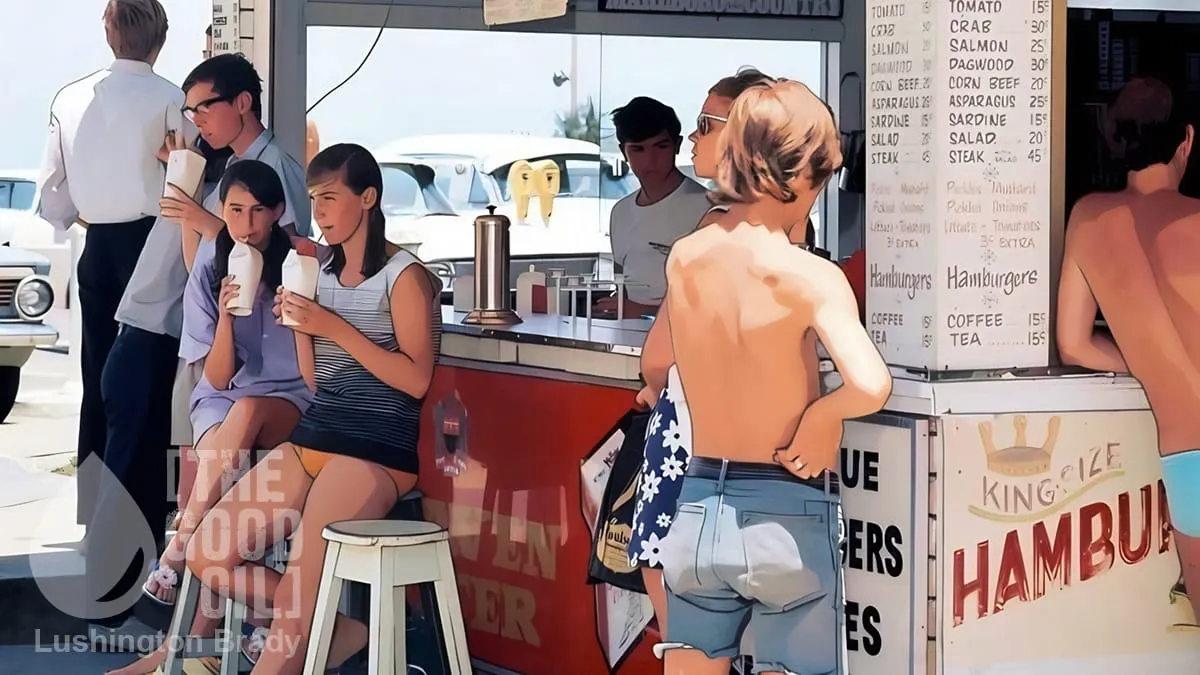
As new UK PM Andy Burnham gets all misty-eyed for the early ’70s, those of us who were there and not cosseted by middle-class parents and an Oxbridge education, can’t help but feel a reflexive shudder. Brits had it worse, for sure, with Sunny Jim Callaghan, Ted Heath and the Winter of Discontent, but here in Australia we had Whitlam and then Fraser. We didn’t know it at the time, but the end of the post-war good times was already being set in stone.
Gough Whitlam had damn near bankrupted the country, set in motion our slow insidious takeover by communist China and put a Mafia puppet in charge of selling the new cult of Multiculturalism. His ‘free’ university experiment also laid the foundations for the “dregs of the middle-class”, as old Labor stalwart Kim Beazley Sr lamented, to take the reins. Then Malcolm Fraser enacted the “Lebanese Concession” which paved the road to the Sydney rape gangs and the Bondi massacre. We were too busy being distracted by the wonderfully weird pop culture of the times to see what was bearing down on us.
In the last decades or two, the pigeons set loose in the ’70s have come home to roost with a vengeance. We’ve run out of our famed ‘luck’ – or, more correctly, had it pissed away by the uniparty elite.
I have been reading the excerpts of Paul Kelly’s new book, The Twilight of Exceptionalism, with great interest. But it did occur to me that instead of using the noun “twilight”, I might have been inclined to use “end”.
Australia once really was the lucky country that made its own luck. Even in the 1980s and 1990s, Hawke-Keating and Howard-Costello delivered growth in the high 3s and 4s, productivity above two per cent and per-capita incomes that left most of the G7 in the dust. By 2004 the Commonwealth was debt-free in net terms: a feat no other major Western nation managed. The Financial Times itself tipped its hat: we were adept at making our own luck.
But we were so busy whooping it up in the family sedan that we didn’t notice the road train of destruction that was slowly slowly rolling downhill from the blue yonder of the 1970s. By the 2000s, it was hitting top speed and bearing down on us fast. Politics being downstream from culture, the Long March through the Institutions quietly white-anted the universities, while it turned out a generation Red Guards. The Cultural Revolution was ready to run us down.
Tony Abbott inherited Kevin Rudd’s and Julia Gillard’s (both alumni of the Whitlam-era Australian universities) poison pills and fixed a couple – mining tax gone, boats turned back – but bottled the rest. Promises not to touch sacred spending cows locked in the Gonski and NDIS monsters. Joe Hockey abolished the debt ceiling, relieving future treasurers of even having to pretend restraint. Twenty years after zero net debt, we now owe $600 billion net, with gross debt racing toward a trillion. The Future Fund is our biggest ‘asset’, and Labor is fast spending it on solar panels and wind turbines that bulldoze vast swathes of the landscape and enrich communist China.
How the mighty have fallen.
Climate virtue-signalling became the new religion. Abbott signed Paris. Malcolm Turnbull doubled down with Snowy 2.0, that giant battery to nowhere, and the Safeguard Mechanism, a carbon tax in all but name. Scott Morrison, terrified of losing, dragged the party to net zero by 2050 and bought off the Nationals with billions in hush money. The famous lump of coal in parliament was the last flicker of defiance before total surrender.
Then Covid arrived and the spending spigots opened wide. Budget outlays rocketed from 24.5 per cent of GDP to 31.3 per cent. JobKeeper was a free-for-all. HomeBuilder turbo-charged building costs that still haven’t come down. No one bothered to tell the public the temporary largesse would one day have to be repaid. Inflation, the ultimate silent tax, was the inevitable result.
Exceptionalism was replaced by sloppy thinking and mediocrity. Handing out favours, spending more on programs, putting everything on the tab – this was the modus operandi of the coalition government when it was voted out in 2022. All those years of hard-fought reforms, of accepting the important trade-offs in managing the budget and the ever-looming threat of inflation, which is the ultimate tax – they were simply forgotten.
Labor has merely accelerated the decline, obsessing over how to slice a shrinking pie ever more ‘fairly’ (meaning, how effectively they could use it to buy the votes of tribal special interest groups). Productivity is flatlining. Real wages are stuck where they were in 2012. From top of the pops to clear laggard in under two decades.
The 1970s planted the seeds: Whitlam’s fiscal incontinence, Fraser’s demographic experiments and the long march of the credentialed dregs through the institutions. The seeds lurked quietly under the fertile loam of the ’80s and ’90s. The uniparty of the last decade simply watered them with borrowed money and green fantasy until the whole garden turned to weeds.
Australia’s exceptionalism didn’t die of natural causes. It was euthanised by people who preferred the warm glow of virtue to the hard graft of competence. And the bill, as always, lands on the rest of us.