Tom Armstrong
Just an old fashioned romantic libertarian conservative at heart. Or maybe a romantic conservative libertarian, depending on the stages of the moon
For years we so-called conspiracy theorists were mocked, censored, and treated as the lowest form of life by the mainstream media and the political class. We were told we were dangerous cranks, anti-science, far right, or worse. Yet the facts keep catching up with the official story. What was dismissed as wild speculation is now emerging, piece by piece, as uncomfortable reality. Two recent developments make the point with brutal clarity.
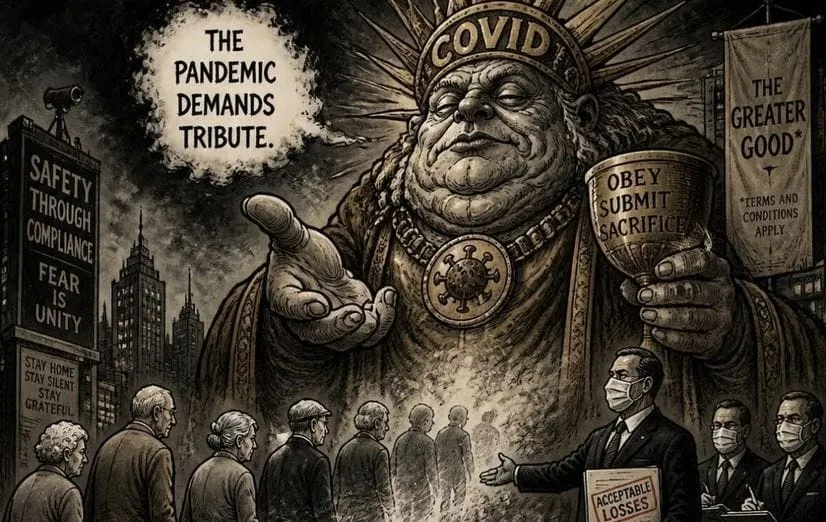
Start with the care homes. We are now being told, in carefully worded official language, that elderly people were “sacrificed” to protect the National Health Service. The phrase is designed to sound tragic but necessary. It is nothing of the sort. It is a rewriting of history that still refuses to face the ugliest part of what happened.
In the spring of 2020, hospitals across Britain discharged patients into care homes without testing them for the virus that was supposedly so lethal it justified locking down an entire country. Many of those patients arrived with “Do Not Resuscitate” notices already in place. Care homes were not hospitals. They had no isolation facilities worth the name, no spare staff trained for infection control, and no stocks of proper protective equipment. They were residential places for the frail and the elderly. Sending untested, potentially infectious patients into those settings was not a difficult policy choice. It was criminal negligence.
The official line claims this was done to free up hospital beds and “save the NHS.” That claim collapses under the slightest scrutiny. At the time, many hospitals were not overflowing. Elective surgeries had been cancelled. Wards stood half empty. Nightingale hospitals were built at enormous cost and then barely used. The system had capacity. At best, what it lacked was the willingness to treat the elderly as people rather than as a logistical problem to be moved out of the way.
But the logical conclusion is uglier still. By moving the virus into the exact population most vulnerable to it, policy makers guaranteed a wave of deaths among the old. The must have known this and it is reasonable to conclude that this was the deliberate intention of those responsible for the decision.
What is beyond serious dispute is that the outcome was predictable. Ordinary people, like me and many others then posting in the Spectator, all without fancy titles or television contracts, said so at the time. We pointed out that packing untested patients into care homes was a recipe for slaughter but were shouted down as conspiracy theorists. The BBC, the newspapers, and the politicians insisted that any criticism of the policy was an attack on the NHS itself. To question was to be beyond the pale.
Thousands of families lost parents and grandparents in those months. Many of those deaths occurred after the virus had been introduced into the homes by official policy. The people who raised the alarm were not vindicated by the media. They were ignored until the body count became too large to hide. Even now the preferred language is “sacrifice to save the NHS.” The truth is simpler and more damning: the vulnerable were treated as expendable, possibly necessary sacrifices to persuade the sceptics that Covid was a serious threat, and anyone who said so was gaslit.
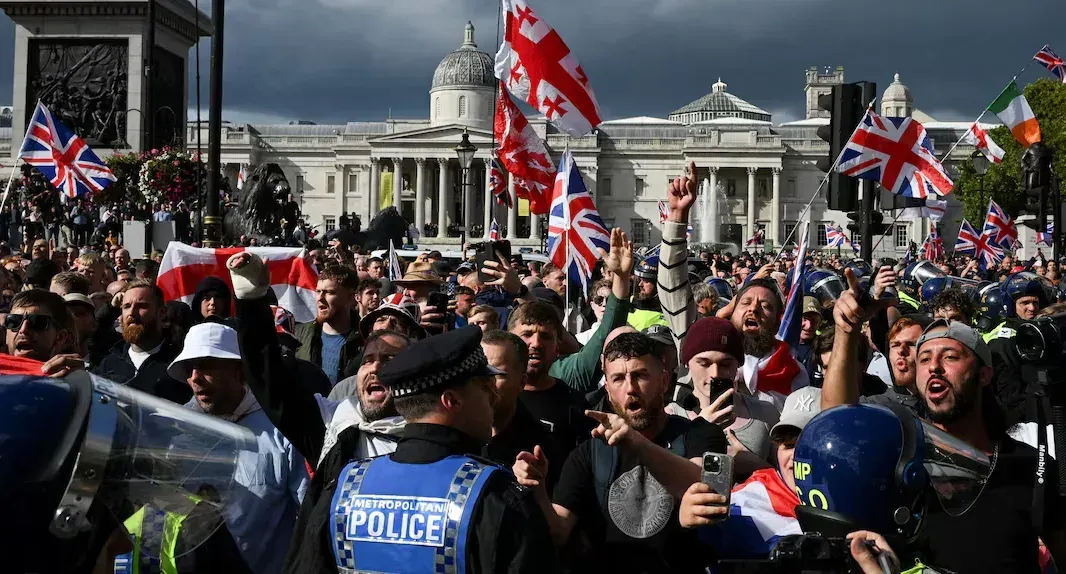
Turn now to the other story that refuses to stay buried. Keir Starmer, the former, utterly useless, utterly mendacious, prime minister, served as director of Public Prosecutions between 2008 and 2013. During those years the systematic sexual abuse of girls by organised groups of men, predominantly Pakistani Muslims, continued in towns across the country. The scale was industrial. The victims were children. The authorities knew. Police forces, social services, and local councils repeatedly failed to act, often citing fears of being labelled racist and/or to protect the establishment’s untouchable policies of diversity and mass immigration.
The Crown Prosecution Service, under Starmer’s leadership, was part of that system. It is now reported that Starmer may be called to give evidence to the inquiry into these rape gangs. That should surprise no one who paid attention at the time. The idea that the country’s most senior prosecutor was somehow unaware of the patterns of offending, the collapsed cases, the deliberate decisions not to pursue charges, is simply not credible. The information was available. The failures were repeated. The victims kept coming forward and were disbelieved, ignored, or threatened and silenced.
Those of us who said that the political and legal establishments were protecting a voting bloc rather than protecting children were dismissed as racists and conspiracy theorists. We pointed out the obvious: that Labour’s electoral dependence on certain communities created a powerful incentive to look the other way. We said that cultural sensitivity had been allowed to trump the basic duty to prosecute crime. We were told this was a fringe view peddled by the far right. The official line insisted that the problem was isolated, exaggerated, or imaginary.
It was not. The independent inquiries that eventually took place confirmed industrial-scale abuse and institutional cowardice. The same pattern appeared in Rotherham, Rochdale, Oxford, Telford, and elsewhere. Girls as young as 11 and 12 were raped, trafficked, and discarded while those in authority calculated the political cost of acting. If the director of Public Prosecutions of the day did not know the scale of the failure occurring on his watch, then he was not fit for the office. If he did know and failed to force the system to confront it, then he bears responsibility for the cover-up of a crime against the most vulnerable.
The motive is not hard to discern. Labour has grown steadily more reliant on the votes of communities in which these gangs found their recruitment base and their protection. Challenging the problem risked alienating that base. On top of that, to confront it would have risked criticism of the establishment’s most sacred policies. Better, the calculation went, to manage the scandal quietly than to confront it head-on. The result was years of additional victims. That is not a conspiracy theory. It is the documented record of institutional failure, now finally being examined with the seriousness it always deserved.
These two episodes are not isolated. They form part of a larger pattern. On issue after issue the public was told that the official account was the only acceptable one. Question the care-home discharges and you were an enemy of the NHS. Question the handling of the grooming gangs and you were a bigot. Question lockdowns, vaccine mandates, or the suppression of debate and you were a danger to public health. The media acted as the enforcement arm of the consensus. Dissent was not answered with evidence – it was answered with smears and cancellation.
The people who refused to accept the official story were not always right in every detail. No one is. But on the crucial points we were closer to the truth than the institutions that claimed a monopoly on it. The elderly and vulnerable were not protected: they were deliberately exposed. The girls were not safeguarded: they were abandoned. The authorities preferred narrative management to honest reckoning. And when the facts eventually forced their way into the open, the same institutions that had suppressed the questions began to rewrite the past in softer language.
A healthy society would treat this as a moment for humility. It would admit that the people it dismissed as cranks had seen more clearly than the credentialed experts and the political class. It would ask why the incentives of power so consistently favoured silence over justice. It would demand accountability from those who held the highest offices while the failures unfolded.
Instead we are offered carefully calibrated admissions that still protect the powerful. The care-home deaths become a necessary sacrifice. The grooming-gang scandals become a matter of “lessons learned.” The men and women who said from the beginning that both policies were disastrous are still treated as the problem rather than as the early warning system.
The pattern is clear enough for anyone willing to look. When the official story collapses under its own weight, the first response is not apology. It is redefinition. The second response is to move on and hope the public has a short memory. The conspiracy theorists, for all their occasional excesses, understood something the establishment still refuses to accept: power protects itself first. The vulnerable come second. The truth comes a distant third.
That is not a theory. It is the record of the last several years, written in the deaths of the elderly and the ruined lives of children. The people who pointed it out were right. The people who shouted them down have yet to account for their failure. Until they do, the next official narrative will deserve the same suspicion that the last ones earned.
This article was originally published by the Free Speech Backlash.