Here’s one to liven up your next trivia night: It’s life, Jim – but not as we know it – where does the line come from? If you answer Star Trek, you’re wrong. It was actually made up for the 1987 novelty hit “Star Trekkin’”, by the Firm.
Still, it’s a thought-provoking line: what is life? Would we even recognise truly alien life?
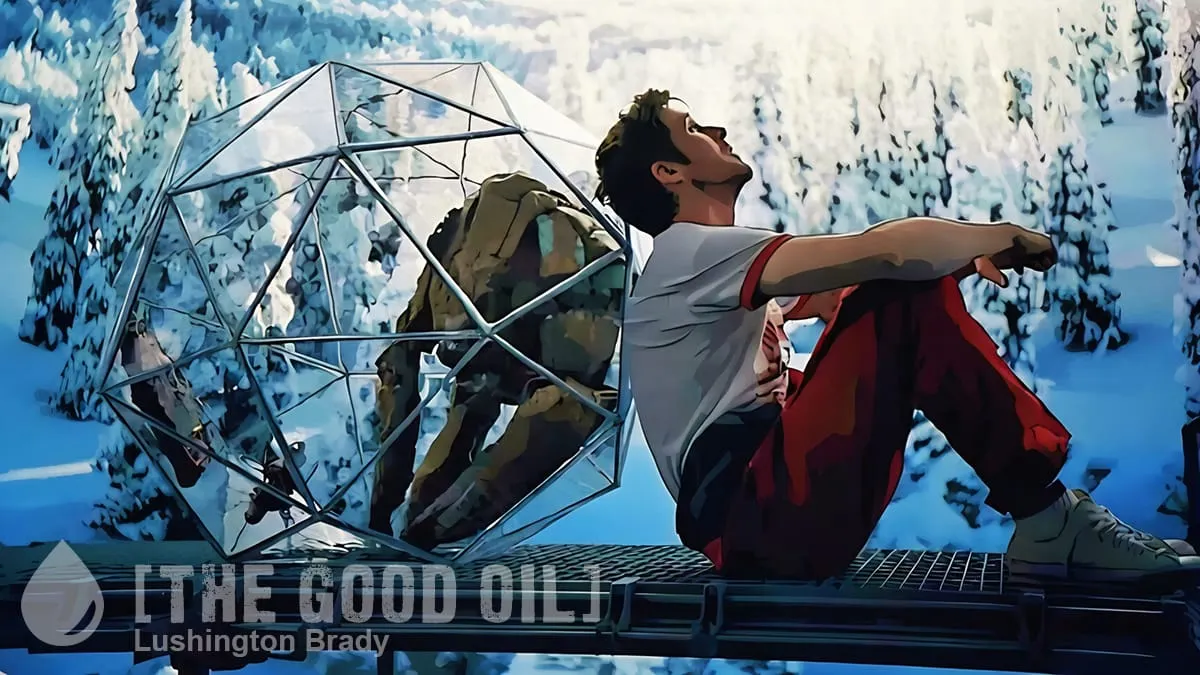
Project Hail Mary is that rarest of life-forms today: a genuinely entertaining, heart-warming Hollywood movie. In brief, scientist Ryland Grace (Ryan Gosling) is the last surviving member of an interstellar mission to save Earth from a Sun-eating microbe called the astrophage. Twelve light-years from Earth, he meets another last-surviving member of an identical mission from another planet – an alien he dubs Rocky.
Rocky is another rare life form: a movie alien who is genuinely alien. Unlike the usual Star Trek cop-out of glueing a funny prosthetic to a human actor’s head, Rocky resembles nothing so much as an animate pile of rocks. Like the astrophage itself – a life-form which feeds on stars – Rocky challenges all our notions of what life is and under what conditions it can appear.
While Rocky is friendly, they breathe caustic ammonia at an air pressure that would crush human lungs.
Rocky’s home planet is no less deadly. It’s a lightless, corrosive, crushing planet where life should be impossible to develop.
That’s an issue for real-world scientists searching for life beyond Earth. All the rules we know for life come from our observations of Earth.
In scientific practice, this means that the search for life beyond Earth is heavily biased. Even the search for exoplanets that might support life is biased towards Earth-like planets. Atmospheres containing oxygen, carbon dioxide and methane and, above all, liquid water. Suffice to say, those conditions are, so far as we know to date, extremely rare. Of the 6,273 exoplanets found so far, just 45 seem to meet these conditions. Most are truly bizarre worlds, where shards of glass rain through hurricane-force winds, or which orbit so close to their star that a ‘year’ is just 18 Earth days, or are so dark that they reflect just one per cent of the light they receive.
We simply can’t imagine that life – as we know it – could evolve on such worlds. But the key is: as we know it.
So how do we define life?
Early in Project Hail Mary, Grace struggles to classify the astrophage as alive […]
Today, there is no single definition, but many biologists accept seven characteristics of life.
These include a basic structure (a cell), environment response, reproduction, growth, regulation (chemical and physical) and energy processing.
We don’t even have to look off-world, though, to find biology that blurs those limits. For instance, most biologists classify viruses as non-living. The messed-up proteins called prions can cause all kinds of diseases and even arise in our bodies… but they aren’t actually alive.
And it’s not just in definition that life fights against our expectations. Life has thrived in environments we would never expect.
Project Hail Mary’s astrophage is what we would call an ‘extremophile’: an organism that can survive and thrive in environments we might not have thought possible. In the absolute blackness, crushing pressure and boiling temperatures around deep-sea volcanic vents, microbial life thrives. Deep in the Earth’s crust, too. Even in space.
In 1956, scientists tried to sterilise cans of meat with gamma radiation, only for bacteria to survive the deadly, mutating rays.
Deinococcus radiodurans was found thriving in the radioactive meat sludge. It was so tough it earned the nickname ‘Conan the Bacterium’.
In 2020, the bacterium was sent to space where it survived outside of the International Space Station for three years before returning – alive – to Earth.
So, the alien life forms of Project Hail Mary may not be real, but they’re at least conceivable.
The astrophage takes the spotlight as Project Hail Mary’s Big Bad. But Grace’s other alien encounter guides us in how we should search for life.
Which is – well – everywhere.
That is not to say that life is everywhere, but it could be.