With the AI boom continuing unabated, data centres are the latest hobby horse for the NIMBY set. The main objections to data centres is that they consume enormous amounts of energy to run what are basically enormous racks of computers, and water, to keep them cool.
The energy requirements are a particular challenge to an elite obsessed with climate change and ‘renewable’ energy. As Australia is the latest to experience, even a relatively modest reliance on wind and solar is a recipe for energy scarcity. Wholesale electricity prices soar and grids constantly teeter on the edge of collapse. Running data centres in that context becomes something like the days of peak demand in summer and winter when brownouts and even system-wide blackouts are becoming more common.
One solution would be to abandon the mad rush to wind and solar and embrace reliable nuclear energy. Or even revive the coal-fired plants mothballed at the behest of the Climate Cult. That would be anathema, though, to the climate-deranged ruling elites. How the Albanese government, which is pitching Australia as an AI-hub, plans to reconcile such a policy with Boofhead Bowen’s ‘Net Zero’ madness is anybody’s cognitive dissonance.
Another solution recently mooted is to move the data centres to orbit, where solar arrays can soak up the constant sunlight and keep ChatGPT and Claude churning out the slop. But that idea comes with two very big problems of its own: the sheer scale of data centres and the fact that they run very, very hot.
Space is indeed cold and empty, which sounds ideal – until you remember how heat actually moves. In a vacuum there is no air for convection or conduction. Getting rid of heat on a spaceship is thus a massive engineering problem, because the only way to shed heat is by radiation. That is why the International Space Station needs giant radiator panels just to avoid cooking the astronauts.
The radiators required to keep a satellite cool are enormous – the ones on the International Space Station (ISS) are each 13.6 metres long and can output 14 kilowatts of heat.
The only problem is that data centres don’t deal in footling kilowatts: they pump out megawatts of heat.
A single modest one MW space data centre would need the equivalent of 70 ISS radiators. That is a heat rejection surface the size of seven basketball courts. Getting that much hardware into orbit would cost a fortune even before you factor in the processors, racks, wiring and the constant need for maintenance that cannot be done by astronauts in any realistic way.
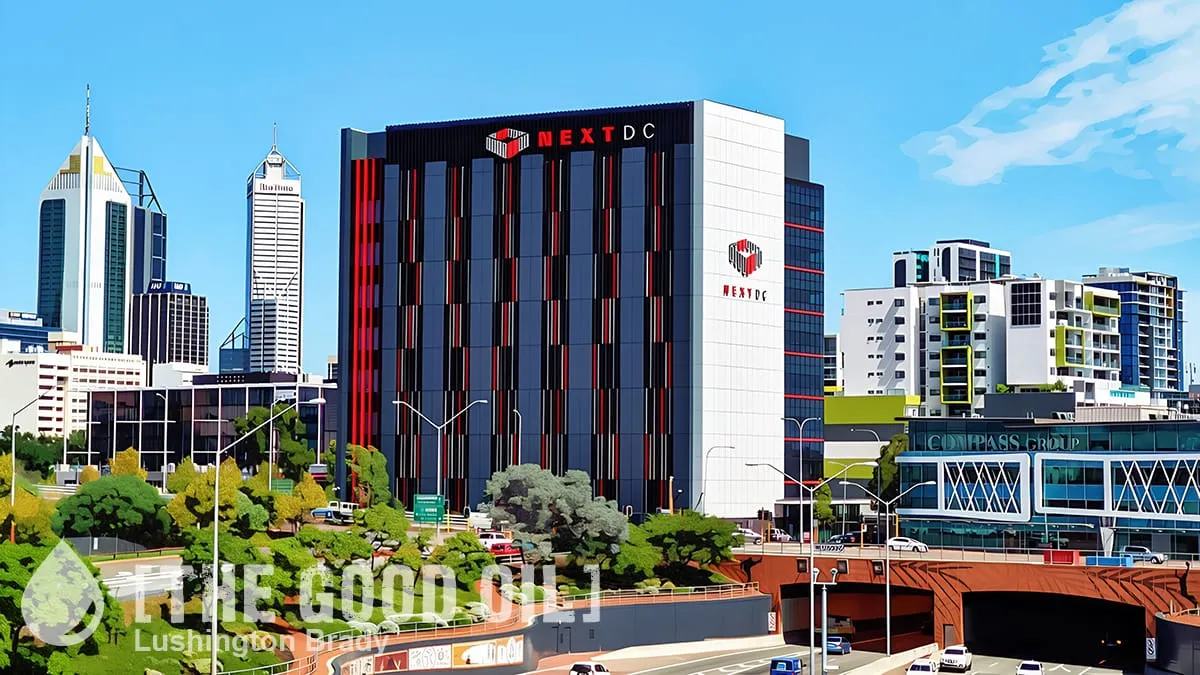
But radiators are only the beginning of the size problems. Data centres are big – really big. Processors weigh little individually, but tens of thousands of them add up to tonnes. Which is why a single data centre in Perth takes up an entire massive, multi-story building.
Launch costs alone make the whole notion absurd. Every kilogramme sent upstairs costs thousands of dollars. And that is before you add the radiators, power systems and the shielding needed to survive micrometeorites and radiation.
Even if you could somehow launch the hardware, keeping it cool would require radiators so large they would dominate the mass budget. The economics collapse before the first satellite reaches orbit.
Constellations of satellites might be more viable for space data processing, with each satellite completing one small part of a larger task.
It’s an idea the European Space Agency is pursuing to help refine the immense datasets produced by observation satellites before they’re sent to Earth.
Even that has its own problems. While it might work for refining satellite imagery, it does not solve the cooling problem for the kind of hyper-scale facilities that train and run large language models. Those systems need tight integration and massive parallel processing. Splitting them across dozens of orbiting boxes creates latency, complexity and new failure points.
There is also the small matter of orbital real estate. While the 2013 movie Gravity featured some of the most absurd abuses of real-world physics and stretched credulity to breaking point (such as a non-specialist somehow figuring out how to pilot a space capsule using the pictures alone from a Chinese-language manual), the catastrophe that sets off its action is a very real problem, known as the Kessler syndrome.
The more satellites we stuff into low Earth orbit, the greater the risk of collisions that could cascade into the Kessler syndrome. The Kessler syndrome is a scenario where the density of objects in low Earth orbit becomes so high that collisions between these objects create more debris, leading to a cascading effect that exponentially increases space junk over time. A cascade of shrapnel could take out the GPS, communications and weather satellites modern economies depend on.
Much of modern life relies on orbital infrastructure. It’s estimated that 18 per cent of UK GDP relies on satellite services like GPS, time keeping and weather forecasting.
Data centres are equally essential because they maintain all the functions and features of the internet.
Shoving them into space to dodge terrestrial energy constraints is not a serious plan. It is a fantasy that lets climate-obsessed policymakers pretend their renewable energy disaster and their AI pipe-dreams can coexist. And that, like all other pipe dreams about ‘coexistence’, simply cannot overcome the tyranny of reality.
The real fix remains obvious and politically toxic to the current crop of rulers: build reliable baseload power. Nuclear would do the job cleanly and densely. Even keeping existing coal plants running would be better than pretending orbital data centres are anything but expensive science fiction.
Until the Albanese government drops the net-zero pretence, every new data centre on the ground will be another reminder that ideology has collided with physics and lost.